
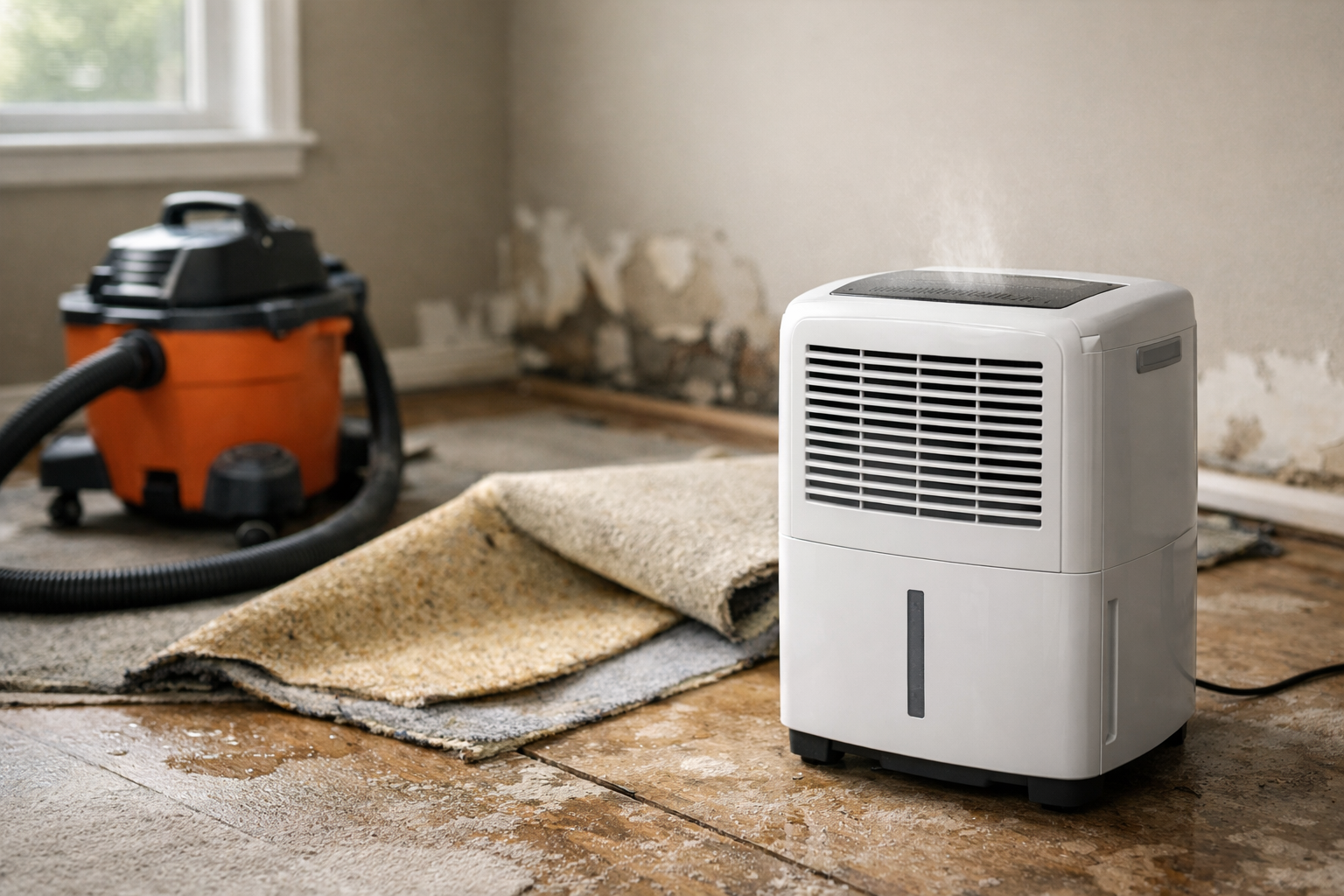
Mold can start growing on wet drywall in as little as 24 to 48 hours after a summer storm. In humid regions, that window shrinks even further. Fast post-storm mold prevention is the difference between a quick dry-out and a four-figure remediation bill.
Summer storms create a specific problem. Warm air holds more moisture, and standing water evaporates into an already-saturated indoor environment. This section covers the exact steps to take, hour by hour, and when to bring in a specialist.
Why Summer Storms Make Mold Growth Faster
Mold spores need three things to grow: moisture, organic material, and warmth. A summer storm supplies all three at once. Indoor temperatures between 77°F and 86°F sit in the ideal range for most household mold species.
Here is the part people miss. Even after you mop up visible water, high humidity keeps porous materials damp. Drywall, carpet padding, and wood framing hold moisture long after the floor looks dry.
Relative humidity above 60% indoors keeps mold active. In July and August across the Gulf Coast and Southeast, outdoor humidity regularly tops 80%. Opening windows to “air out” a flooded room can make things worse in those conditions.
The First 24 Hours: Your Post-Storm Mold Prevention Checklist
Act within the first day. The steps below stop moisture from settling into materials where mold takes hold.
- Cut power to affected areas before touching standing water. Flip breakers if outlets or panels sat in floodwater.
- Remove standing water with a wet/dry vacuum, not a household vacuum. A shop vac handles several gallons; a mop just spreads moisture.
- Pull up saturated carpet and padding. Padding acts like a sponge and rarely dries in time. Discard it if it sat wet for more than 24 hours.
- Run dehumidifiers, not just fans. Fans move air; dehumidifiers pull water out of it. In summer, a fan alone can spread spores without lowering humidity.
- Wipe hard surfaces with soap and water within hours. Detergent removes the biofilm mold uses to anchor.
Keep a hygrometer running. Aim to bring indoor humidity below 50% and hold it there for several days.
What to Throw Out Immediately
Some materials are not worth saving after a soaking. Discarding them fast protects everything around them.
- Carpet padding that sat wet more than 24 hours
- Soaked cardboard, books, and paper goods
- Insulation behind wet drywall
- Ceiling tiles with water stains or sagging
Summer Mold Control: Managing Humidity After the Water Is Gone
Water removal is step one. Summer mold control is about what happens over the next week. Trapped moisture inside walls and under floors is where most post-storm mold problems begin.
Keep the AC Running
Air conditioning does double duty in humid weather. It cools the air and strips moisture from it. Set the thermostat lower than usual for a few days to pull humidity out of the structure.
Do not turn off the AC to save power during dry-out. A closed, warm, damp house is a mold incubator.
Check the Spaces You Cannot See
Wall cavities, crawl spaces, and under-cabinet areas trap water. A moisture meter reads dampness inside drywall without cutting into it. If readings stay high after 48 hours, the cavity needs to be opened and dried.
Crawl spaces deserve extra attention in summer. Warm, damp soil under a home releases moisture upward for weeks. A crawl space that flooded in June can feed mold growth into August.
Signs You Have a Mold Problem Already
Mold does not always show up as black spots. Early warning signs matter because they appear before visible growth.
- A musty, earthy smell that lingers after cleaning
- Discoloration on baseboards, drywall seams, or ceilings
- Warping or bubbling paint and wallpaper
- Worsening allergy symptoms indoors
If you notice any of the above, stop DIY drying and call a specialist. Mold spreads inside walls faster than surface cleaning can catch.
When to Hire a Restoration Specialist
Hire a remediation company when water sat for more than 48 hours, covered a large area, or reached inside walls. Category 3 water, meaning floodwater or sewage backup, always requires a specialist. It carries bacteria that household cleaning cannot handle.
A qualified team brings equipment most homeowners lack:
- Commercial dehumidifiers that remove far more water per hour
- Air movers positioned to dry wall cavities
- Thermal cameras to find hidden moisture
- Antimicrobial treatments rated for structural drying
How to Choose the Right Provider on Restoration Locator
Use the directory to find a company that fits your situation. A few filters narrow the field fast.
- Sort by location to find crews who can arrive same-day, which matters inside the 24-48 hour window.
- Check reviews for mentions of storm and flood work, not just fire or general cleanup.
- Filter listings by IICRC certification for water damage and mold remediation.
- Confirm the provider handles both water extraction and mold remediation, so you avoid hiring two separate teams.
Ask any provider whether they document moisture readings before and after drying. That record helps with insurance claims and confirms the job is finished.
Preventing the Next Storm’s Damage
Post-storm mold prevention gets easier when you prepare before the next system rolls in. A few off-season fixes cut your risk.
- Clean gutters and extend downspouts away from the foundation.
- Seal foundation cracks where seepage enters during heavy rain.
- Add a sump pump with a battery backup in flood-prone basements.
- Install a crawl space vapor barrier to block ground moisture.
- Keep a dehumidifier and wet/dry vac on hand for fast response.
Summer storms are predictable in most humid regions. Having equipment ready turns a two-day scramble into a two-hour cleanup.
Key Takeaways
Mold can start within 24 to 48 hours, and summer humidity speeds it up. Remove water fast, run dehumidifiers, keep the AC on, and check hidden cavities for trapped moisture. Bring in a certified specialist when water sat too long or reached inside walls.
Ready to find help in your area? Browse Disaster Cleanup & Restoration listings on Restoration Locator and start your search today.
Sources
- U.S. EPA – Mold Cleanup in Your Home
- CDC – About Mold and Your Health
- FEMA – Dealing with Mold and Mildew in Your Flood Damaged Home