
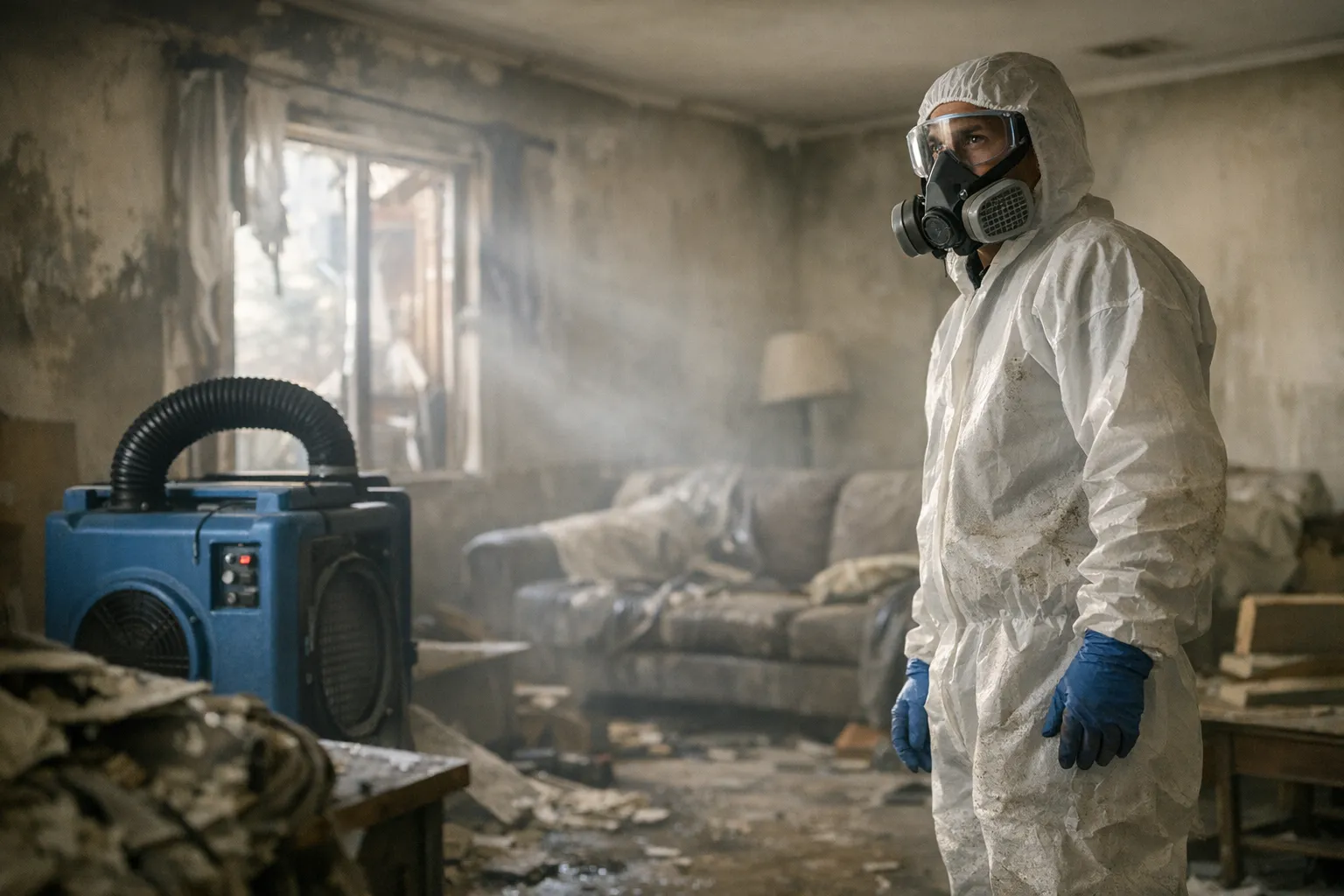
Why Air Quality Matters After Disasters
Air quality post-disaster becomes a hidden threat that can derail recovery efforts for months or even years. When floods, fires, or storms damage buildings, they release harmful particles and chemicals into the air that affect both health and the restoration process itself.
Poor air conditions slow down cleanup work and create health risks for families trying to rebuild. Understanding these connections helps you make better decisions about when it’s safe to return home and which restoration professionals can handle air quality issues properly.
Common Air Quality Threats After Different Disasters
Flood damage creates immediate humidity problems that lead to mold growth within 24-48 hours. Standing water releases bacteria and sewage contaminants into the air through evaporation.
Fire damage leaves behind smoke particles and toxic chemicals from burned materials. These particles embed in walls, furniture, and HVAC systems, continuing to release harmful substances for weeks.
Storm damage exposes building materials to moisture while creating openings for outdoor pollutants. Damaged insulation and drywall release fibers that irritate respiratory systems.
Invisible Contaminants That Persist
Many air quality problems remain invisible to homeowners but significantly impact recovery:
- Volatile Organic Compounds (VOCs) from damaged building materials and cleaning products
- Particulate matter from destroyed insulation, drywall, and furniture
- Biological contaminants including mold spores and bacteria
- Chemical residues from fire retardants, pesticides, and industrial materials
How Poor Air Quality Post-Disaster Slows Recovery
Contaminated air creates a cycle that extends recovery timelines beyond initial damage estimates. Workers face health risks that limit their time on-site, while families cannot safely occupy spaces during restoration.
Restoration teams must address air quality issues before starting other work. This means additional equipment, specialized procedures, and extended timelines that many homeowners don’t anticipate.
Health Impacts That Delay Return Home
Respiratory problems develop quickly in contaminated environments. Symptoms include persistent coughing, eye irritation, and breathing difficulties that worsen with continued exposure.
Children and elderly family members face higher risks from poor air conditions. Medical professionals often recommend extended displacement until air quality testing confirms safe levels.
Property Damage That Compounds
Airborne contaminants settle on cleaned surfaces, requiring repeated restoration efforts. HVAC systems circulate pollutants throughout the building, spreading contamination to previously unaffected areas.
Insurance claims become more complex when air quality issues expand the scope of necessary repairs. Documentation requirements increase as restoration teams must prove contamination levels before and after treatment.
Professional Air Quality Assessment and Restoration
Certified restoration professionals use specialized equipment to measure air contamination levels and identify specific threats. This testing guides the entire recovery strategy and helps prioritize which areas need immediate attention.
Professional assessment includes particle counters, moisture meters, and chemical detection tools that reveal problems invisible to visual inspection. These measurements create baselines for tracking progress throughout the restoration process.
Advanced Equipment for Air Treatment
Industrial air scrubbers remove particles and chemicals that standard ventilation cannot handle. HEPA filtration systems capture microscopic contaminants while activated carbon filters absorb chemical odors and VOCs.
Negative air pressure systems prevent contaminated air from spreading to clean areas during restoration work. This containment approach protects both workers and unaffected parts of the building.
Testing Throughout the Recovery Process
Air quality monitoring continues throughout restoration to verify that cleaning efforts achieve safe levels. Multiple rounds of testing occur before, during, and after major restoration phases.
Final clearance testing confirms that air meets safety standards before families can return home. This documentation also satisfies insurance requirements and provides legal protection for restoration companies.
Choosing Restoration Professionals with Air Quality Expertise
Not all restoration companies have the equipment or training to handle serious air quality problems. Look for certifications from organizations like the Institute of Inspection, Cleaning and Restoration Certification (IICRC).
Review previous projects that involved air quality restoration and ask about specific equipment they use for air treatment. Companies should provide detailed testing protocols and explain their containment procedures.
Key Questions for Restoration Companies
Ask potential restoration professionals these specific questions about their air quality capabilities:
- What air quality testing equipment do you use on-site?
- How do you establish containment areas during restoration work?
- What certifications do your technicians hold for air quality restoration?
- Can you provide references from recent air quality restoration projects?
- How do you document air quality improvements for insurance claims?
Using Directory Filters for Air Quality Specialists
When searching restoration providers, filter listings by specializations like mold remediation and air quality services. Check reviews that mention air quality work and response times for emergency situations.
Sort listings by location to find local professionals who understand regional air quality challenges. Coastal areas face different humidity issues than inland regions affected by wildfire smoke.
Steps to Protect Air Quality During Recovery
Take immediate action to prevent air quality problems from worsening while waiting for professional restoration services. Quick response in the first 48 hours makes the biggest difference in limiting contamination spread.
Immediate Actions After Disaster
Turn off HVAC systems to prevent circulating contaminated air throughout the building. Close doors and windows to limit additional moisture or outdoor pollutants from entering damaged areas.
Document air quality concerns with photos and notes about odors, visible mold, or respiratory symptoms. This information helps restoration professionals assess priorities and guides insurance claim documentation.
Avoid DIY cleaning of areas with suspected air contamination. Standard household cleaning products cannot address serious air quality problems and may actually worsen conditions.
Working with Insurance for Air Quality Issues
Contact insurance providers immediately to report air quality concerns as part of disaster damage claims. Many policies cover air quality testing and professional remediation when linked to covered disaster events.
Request that insurance adjusters include air quality assessment in their initial damage evaluation. Early documentation prevents disputes later about whether air problems resulted from the original disaster.
Long-Term Air Quality Monitoring
Air quality improvements require ongoing verification even after professional restoration completes. Some contaminants take weeks to fully dissipate, while others may indicate incomplete restoration work.
Install air quality monitors in previously affected areas to track particle levels and humidity. These devices provide early warning if problems return and help maintain healthy indoor conditions.
Signs of Continuing Air Quality Problems
Watch for symptoms that suggest air quality issues persist after restoration work finishes:
- Persistent odors that return after ventilation
- Respiratory symptoms that improve when leaving the building
- Visible moisture or discoloration in previously treated areas
- Unusual dust accumulation or particle settling on surfaces
Connecting Air Quality with Complete Recovery
Safe air quality serves as the foundation for all other recovery efforts. Families cannot fully return to normal life while breathing contaminated air, and property values remain depressed until air quality issues resolve completely.
Professional restoration that addresses air quality from the beginning creates faster, more complete recovery outcomes. This comprehensive approach reduces total restoration time and provides better long-term results for both health and property value.
Browse certified restoration professionals on https://restorationlocator.com who specialize in air quality restoration and can handle the complete scope of disaster recovery needs.