
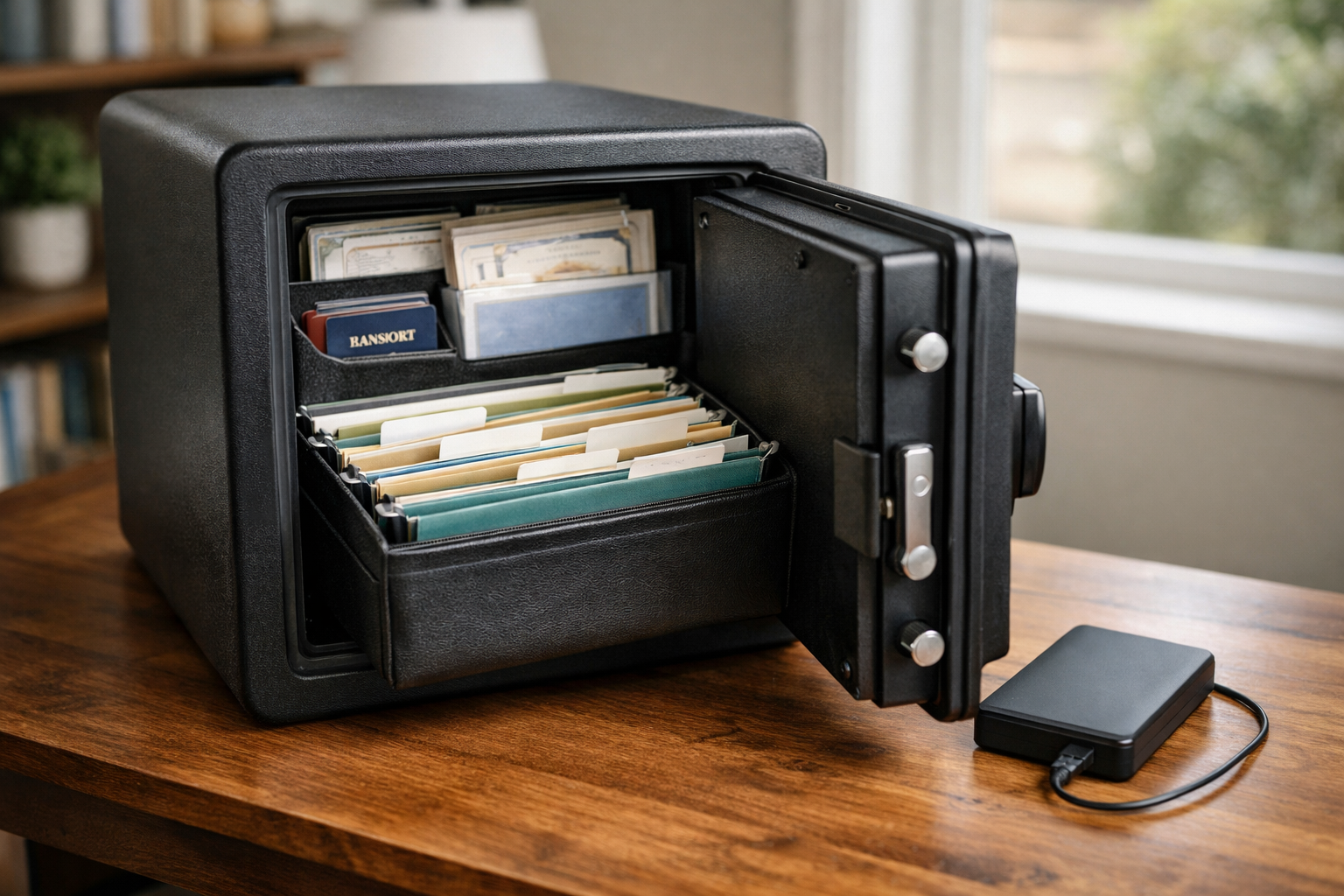
A single hour of standing floodwater can turn a birth certificate into pulp. Fire moves faster, and smoke damages paper even in filing cabinets that never burn. Document protection means shielding your records from both destruction and the slower rot that follows a soaked basement.
This post covers two tracks: physical safeguards for the paper you must keep, and digital backups that survive when the paper does not. Both matter, because relying on one leaves a gap when disaster hits.
Why Document Protection Deserves a Real Plan
Paper records fail in predictable ways. Water dissolves ink and warps sheets within minutes. Heat above 350°F chars paper, and household fires burn far hotter than that.
Insurance claims, mortgage deeds, and passports are hard to replace after a disaster. Replacement can take weeks when county offices and agencies handle a flood of requests at once. A plan built before an event saves that time.
The Documents Worth Protecting First
Not every paper needs a fireproof safe. Focus on records that prove identity, ownership, or financial standing.
- Identity records: birth certificates, passports, Social Security cards, immigration papers
- Property records: deeds, titles, mortgage statements, home inventory photos
- Financial records: tax returns, insurance policies, investment statements
- Medical records: prescription lists, vaccination cards, health directives
- Legal records: wills, powers of attorney, marriage and divorce decrees
Physical Document Protection Methods
Physical protection keeps original paper intact when water and heat arrive. The right container and location decide whether a document survives.
Choose the Right Safe
A fireproof rating alone will not stop water. Look for a safe rated for both fire and water immersion, not one or the other.
- Check the UL fire rating. A 1-hour rating at 1700°F suits most homes.
- Confirm a water submersion rating, measured in hours and depth.
- Pick a weight that resists theft but still fits your storage spot.
- Store the safe on an upper floor if flooding is your main risk.
Fireproof safes protect against heat, but internal temperatures still climb during a long fire. Paper survives; unprotected electronics and media often do not.
Use Waterproof Sleeves and Bags
Individual plastic sleeves add a second barrier inside a safe. Heat-sealed pouches keep humidity and minor water intrusion off single sheets.
After Hurricane Harvey, homeowners who bagged deeds in zip-seal pouches recovered readable documents from waist-high water. Loose paper in the same drawers turned to mush.
Store Copies Off-Site
Keeping originals and copies in the same building defeats the purpose. A bank safe deposit box holds a second set away from your home’s risk zone.
Ask a trusted relative in another town to hold a sealed envelope of copies. Geographic distance protects against regional events like wildfires or floods.
Digital Document Protection Methods
Digital copies survive events that destroy every physical record you own. Scanning turns fragile paper into files you can store in several places at once.
Scan Everything That Matters
Scan at 300 DPI or higher for legal legibility. Save files as PDF, which stays readable across devices and years.
- Name each file clearly: 2023_tax_return.pdf, home_deed.pdf
- Capture both sides of ID cards and signed documents
- Photograph odd-sized items like vaccination cards with a phone
Follow the 3-2-1 Backup Rule
The 3-2-1 rule is a backup standard: keep three copies, on two media types, with one stored off-site. It prevents a single failure from wiping out your records.
- Three copies: the original plus two backups
- Two media types: an external drive and cloud storage, for example
- One off-site: cloud storage counts, since it sits outside your home
Encrypt Sensitive Files
Scanned identity documents are a target for theft. Encrypt files or use password-protected archives before uploading them anywhere.
Cloud accounts should carry two-factor authentication. A stolen password alone should never open your Social Security card scan.
Building a Grab-and-Go Document Kit
A grab-and-go kit holds the records you need in the first hours after evacuation. Emergency managers recommend one bag per household, kept near an exit.
Pack copies, not originals, so losing the bag does not lose the record. Include a USB drive with encrypted scans as a compact backup.
- Photocopies of IDs and insurance cards
- One encrypted USB drive with full scans
- A written list of account numbers and emergency contacts
- Cash in small bills for the first day
What to Do After Documents Get Wet
Wet paper is recoverable if you act within 48 hours. Mold begins to grow after that, and ink continues to bleed while sheets stay damp.
Immediate Steps
- Do not rub or blot wet ink. Handle sheets by the edges.
- Separate stuck pages gently, or freeze them if separation risks tearing.
- Freeze soaked documents in a sealed bag to stop mold and buy time.
- Air-dry salvageable sheets flat, out of direct sunlight.
Freezing is a recovery trick from archivists. Frozen paper waits safely until you can dry it or reach a specialist.
When to Call a Restoration Provider
Large volumes, mold growth, or high-value records call for a specialist. Restoration firms use vacuum freeze-drying to recover documents that home methods cannot save.
On Restoration Locator, filter listings by location to find providers near your disaster zone. Check reviews and sort by proximity to reach help before mold sets in.
Combining Physical and Digital for Full Disaster Safety
Neither track alone covers every scenario. A fireproof safe fails if the building collapses; cloud files fail if you forget the password during a crisis.
Pairing both gives you a fallback for each. Physical originals handle official demands; digital copies handle speed and geographic loss. That pairing is the foundation of real disaster safety for your records.
A Simple Quarterly Routine
- Scan any new important documents you received
- Confirm cloud backups synced correctly
- Check safe seals and replace worn waterproof sleeves
- Update your grab-and-go kit contents
Conclusion
Strong document protection uses physical safes and off-site copies alongside encrypted digital backups following the 3-2-1 rule. Act within 48 hours on wet paper, and freeze what you cannot dry right away. Pairing paper and digital methods gives your records a way to survive fire, flood, and everything between.
When damage outpaces home recovery, find qualified help fast. Browse Disaster Cleanup & Restoration listings now at Restoration Locator.