Why Eco-Friendly Cleaning Matters After a Disaster
Floodwater, smoke residue, and mold trigger cleanup work that pulls harsh chemicals into your home. Eco-friendly cleaning reduces that chemical load without weakening results. It protects your family, your pets, and the ground around your property.
This post breaks down where green methods outperform conventional ones. It also shows how to spot restoration companies that use them.
What Eco-Friendly Cleaning Means in Restoration Work
Eco-friendly cleaning is the use of biodegradable, low-toxicity products and methods that limit harm to people and the environment. In disaster recovery, that covers mold remediation, soot removal, and sewage cleanup.
The label matters less than the ingredients. A credible green product avoids the following:
- Chlorine bleach at high concentrations, which off-gasses and irritates lungs
- Ammonia-based degreasers that react dangerously with bleach residue
- VOC-heavy sealants and deodorizers that linger in indoor air
- Quaternary ammonium compounds flagged for respiratory sensitivity
Green alternatives lean on hydrogen peroxide, thymol, citric acid, and enzyme-based cleaners. Many carry EPA Safer Choice or Green Seal certification.
The Health Case After Flood and Fire Damage
Post-disaster air is already compromised before cleanup even starts. Wet drywall breeds mold within 24 to 48 hours. Smoke leaves acidic soot on every surface.
Adding strong chemical fumes on top of that raises the risk of respiratory distress. This hits children, older adults, and anyone with asthma hardest.
A Real Scenario: Basement Sewage Backup
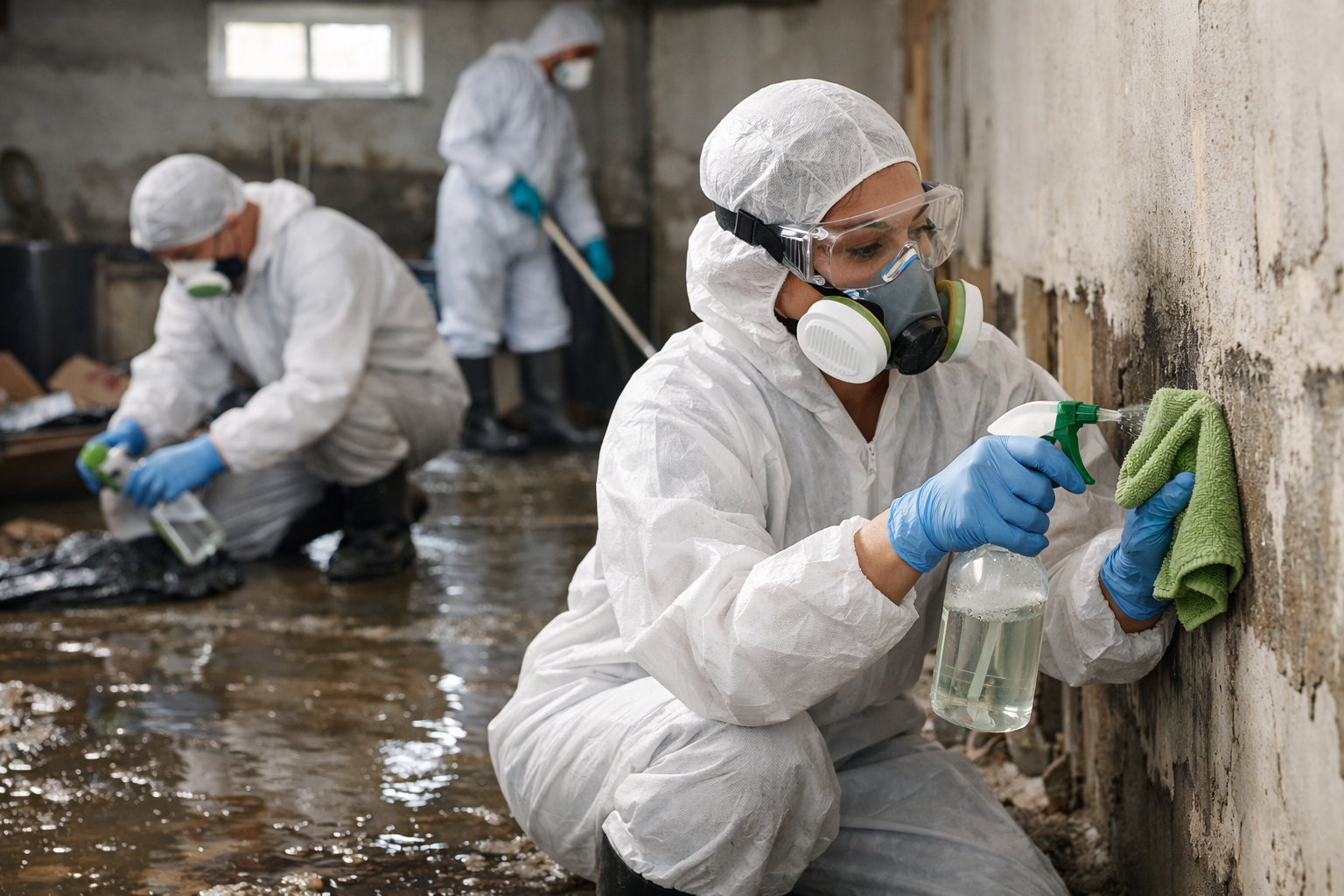
A category 3 water loss involves contaminated blackwater from a sewer line. Crews used to reach straight for concentrated bleach fogging. That method masks odor but irritates airways for days.
An enzyme-based approach digests the organic contamination instead of just covering it. The result is cleaner air and a home safe to reoccupy sooner.
Environmental Benefits That Extend Past Your Walls
What you rinse down a drain during flood cleanup does not vanish. It moves into storm systems, soil, and local waterways. This is where eco-friendly cleaning earns its place beyond the house itself.
Conventional restoration chemicals carry three environmental costs:
- Water contamination from phosphates and surfactants that harm aquatic life
- Soil damage around foundations where runoff pools after cleanup
- Air quality decline from VOCs released during and after application
Biodegradable products break down faster and leave less residue. For homes near wetlands, wells, or farmland, that difference is measurable.
Does Green Cleaning Work as Well? A Side-by-Side Look
Effectiveness is the honest question every homeowner asks. Green methods now match conventional ones in most disaster tasks. The gap has closed as certified products improved.
Mold Remediation
- Conventional: Bleach kills surface mold but does not penetrate porous drywall
- Eco-friendly: Hydrogen peroxide and thymol reach deeper and stop regrowth
Soot and Smoke Removal
- Conventional: Solvent degreasers cut soot fast but leave heavy fumes
- Eco-friendly: Citrus and soy-based cleaners lift oily soot with far less off-gassing
Odor Control
- Conventional: Chemical foggers cover odor temporarily
- Eco-friendly: Enzyme treatments and thermal fogging with plant oils remove the source
For structural drying and heavy grease fires, some crews still combine methods. A skilled contractor explains that choice rather than defaulting to the harshest product.
How to Find Restoration Providers That Use Green Methods
Not every company advertises its cleaning philosophy up front. You have to ask direct questions and check credentials. Restoration Locator makes that search faster.
Questions to Ask Before You Hire
- Which certifications do your cleaning products carry?
- Do you offer a low-VOC or fragrance-free protocol for sensitive occupants?
- How do you dispose of contaminated water and materials?
- Can you share product safety data sheets on request?
A company that answers clearly has done this work before. Vague responses are a warning sign.
Use Directory Filters to Narrow Your Search
On https://restorationlocator.com, you can move from a long list to a short one quickly:
- Sort by location to find crews that can respond fast in your area
- Check reviews for mentions of low-odor or green cleaning methods
- Filter listings by service type such as water, fire, or mold remediation
- Compare provider profiles for certifications and specialties
Reviews from past clients reveal what marketing pages hide. Search terms like “no strong smell” or “safe for my kids” inside listing feedback.
When Eco-Friendly Cleaning Is the Smarter Choice
Certain situations make green methods the clear pick. Match your circumstance to the right approach.
- Occupied homes: Families staying on-site during repairs breathe every fume
- Medical sensitivities: Asthma, COPD, and chemical allergies demand low-VOC work
- Well water or septic: Runoff reaches your own drinking supply
- Pets and gardens: Animals and soil absorb residue fast
For a post-disaster home with young children, the choice is straightforward. Reduced chemical exposure speeds a safe return to normal life.
Cost Reality: What Green Cleanup Actually Runs
Green restoration rarely costs more than conventional work. Certified products carry a small premium per gallon. Labor and equipment are the larger line items, and those stay the same.
Some homeowners save money over time. Fewer re-treatments and less material replacement offset the product cost. A mold job done right the first time avoids a second visit.
Key Takeaways
Eco-friendly cleaning protects your health, your property, and the ground around your home after a disaster. Green methods now match conventional ones for mold, soot, and odor work. The right questions and directory filters help you find a crew that uses them.
Browse Disaster Cleanup & Restoration listings on https://restorationlocator.com and start your search today.