
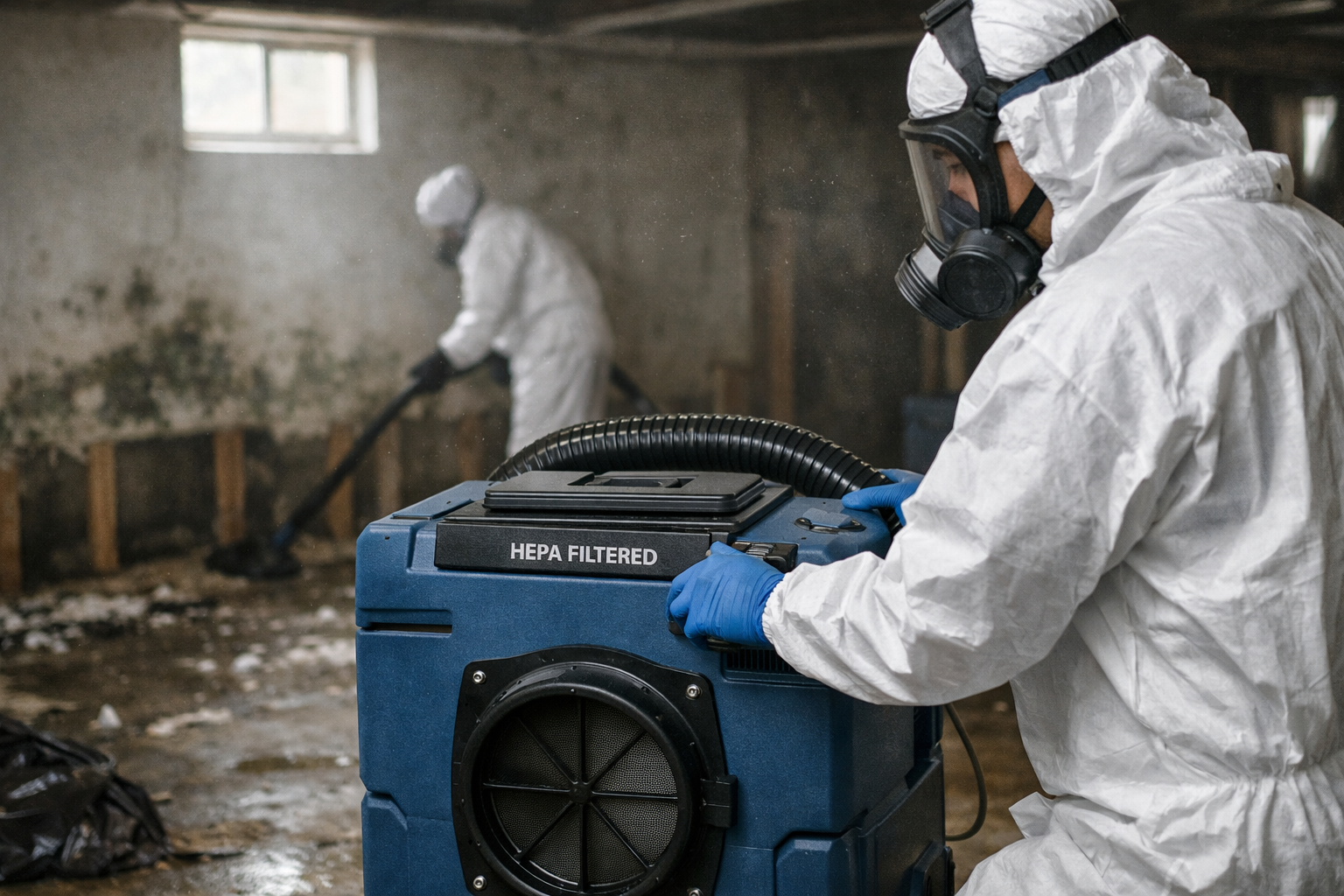
A single water-damaged basement can release millions of mold spores into the air within 48 hours. HEPA filters are the defense between those airborne contaminants and the air your family breathes during disaster cleanup. Knowing how they function helps you judge whether a restoration crew is doing the job right.
This post breaks down what HEPA filtration does, where it matters most, and the specific scenarios where it changes the result. You will learn how to spot proper equipment use and how to vet providers who take air quality seriously.
What HEPA Filters Actually Do During Disaster Cleanup
A HEPA filter is a mechanical air filter that traps 99.97% of airborne particles measuring 0.3 microns in diameter. The acronym stands for High-Efficiency Particulate Air. That 0.3-micron rating targets the hardest particle size to capture.
Particles larger or smaller than 0.3 microns get caught at even higher rates. This matters because mold spores, fine soot, and dust mite debris fall within the range HEPA handles best.
During disaster cleanup, crews run HEPA filtration inside two machines:
- Air scrubbers — pull contaminated air across the filter and return clean air to the room
- HEPA vacuums — capture settled particles from surfaces without kicking them back into the air
A standard shop vacuum recirculates fine dust back into the room. A true HEPA vacuum locks it inside the filter media instead.
Why the 0.3 Micron Standard Matters
Mold spores range from 1 to 30 microns. Fine drywall dust from a demolition sits between 1 and 10 microns. Both fall well within the capture window of a HEPA filter.
The threats you cannot see are the reason HEPA exists. A particle at 2 microns floats in still air for hours and lodges deep in the lungs when inhaled.
Ordinary filters rated MERV 8 miss most of this fine material. That gap is why a crew relying on box-store filters leaves a room that still triggers allergy symptoms after cleanup.
Specific Scenarios Where HEPA Filtration Changes the Result
HEPA filtration earns its value in particular disaster types. Each one carries a different airborne threat.
Water Damage and Mold Remediation
Mold releases spores when disturbed during teardown of wet drywall or carpet. An air scrubber running HEPA media pulls those spores out before they settle in unaffected rooms.
Certified remediation follows a rule: contain the area, then run negative air pressure. The HEPA scrubber vents contaminated air outside while filtering it, keeping spore counts in adjacent rooms low.
Without this step, a bathroom mold job can seed spores across an entire floor. Post-remediation air testing frequently fails when crews skip HEPA containment.
Fire and Smoke Damage
Smoke residue includes ultrafine soot particles under 1 micron. These carry the acrid odor that lingers long after visible char is cleaned.
HEPA air scrubbers capture the particulate portion of smoke damage. Crews pair them with activated carbon filters to catch odor molecules the HEPA media cannot trap.
A house fire in one bedroom pushes soot into HVAC ducts throughout the home. HEPA vacuuming of registers and ductwork stops that residue from recirculating for months.
Sewage Backups and Category 3 Water
Sewage water carries bacteria and biological debris that becomes airborne as materials dry. HEPA filtration removes the particulate matter these contaminants ride on.
After a sewage backup, crews HEPA-vacuum every hard surface once the affected materials are removed. This clears the settled biological dust that a mop would spread.
Asbestos and Lead Renovation Work
Older homes damaged in a disaster may release asbestos fibers or lead dust during demolition. HEPA filtration is the legal standard for capturing both.
OSHA and the EPA require HEPA vacuums for lead-safe work practices. A crew handling a pre-1978 property must show HEPA equipment on site.
How to Tell a Crew Uses HEPA Correctly
Owning a HEPA machine and using it right are separate things. Filters clog, seals fail, and shortcuts happen under deadline pressure.
Ask a prospective provider these questions before hiring:
- How many air changes per hour does your scrubber provide for this room size? Proper remediation targets 4 to 6 air changes hourly.
- How often do you replace the HEPA media? A clogged filter loses airflow and capture efficiency.
- Do you set up containment with negative air pressure? A scrubber without containment lets contaminants escape.
- Will you provide post-cleanup air quality testing? Independent clearance testing confirms the work held up.
A crew that answers these clearly has done the work before. Vague replies signal a provider who bought the equipment but skips the discipline.
Common Mistakes That Undermine HEPA Filtration
Even good equipment fails when handled carelessly. Watch for these errors during a job:
- Running a scrubber without sealing the work area — contaminated air bypasses the machine entirely
- Reusing a saturated filter to cut costs — capture rates drop below the HEPA standard
- Placing the scrubber in a corner with poor airflow — dead zones leave particles suspended
- Skipping the HEPA vacuum after demolition — settled spores get disturbed and re-airborne later
A machine sitting in the driveway does nothing. Placement and containment determine whether the filtration works.
Using Restoration Locator to Find Qualified Providers
The directory helps you match a provider to your exact disaster type. Not every crew carries the same air-quality equipment.
Here is how to narrow your search:
- Filter listings by service type — mold remediation, fire damage, and sewage cleanup each call for different HEPA setups
- Sort by location — a nearby crew reaches you faster, which limits mold growth after water damage
- Check reviews — past customers mention air testing results and whether odors returned
- Compare certifications — IICRC-certified firms follow standards that require HEPA containment
Reviews that mention passed clearance tests point to crews who use HEPA the right way. That feedback is hard to fake.
Key Takeaways
HEPA filters capture 99.97% of fine particles that carry mold spores, soot, and biological contaminants during disaster cleanup. The equipment only works when paired with containment, negative air pressure, and disciplined placement. Vet any provider by asking about air changes per hour, filter replacement, and post-cleanup clearance testing.
Ready to find a crew that handles air quality correctly? Browse Disaster Cleanup & Restoration listings at https://restorationlocator.com and start your search now.