
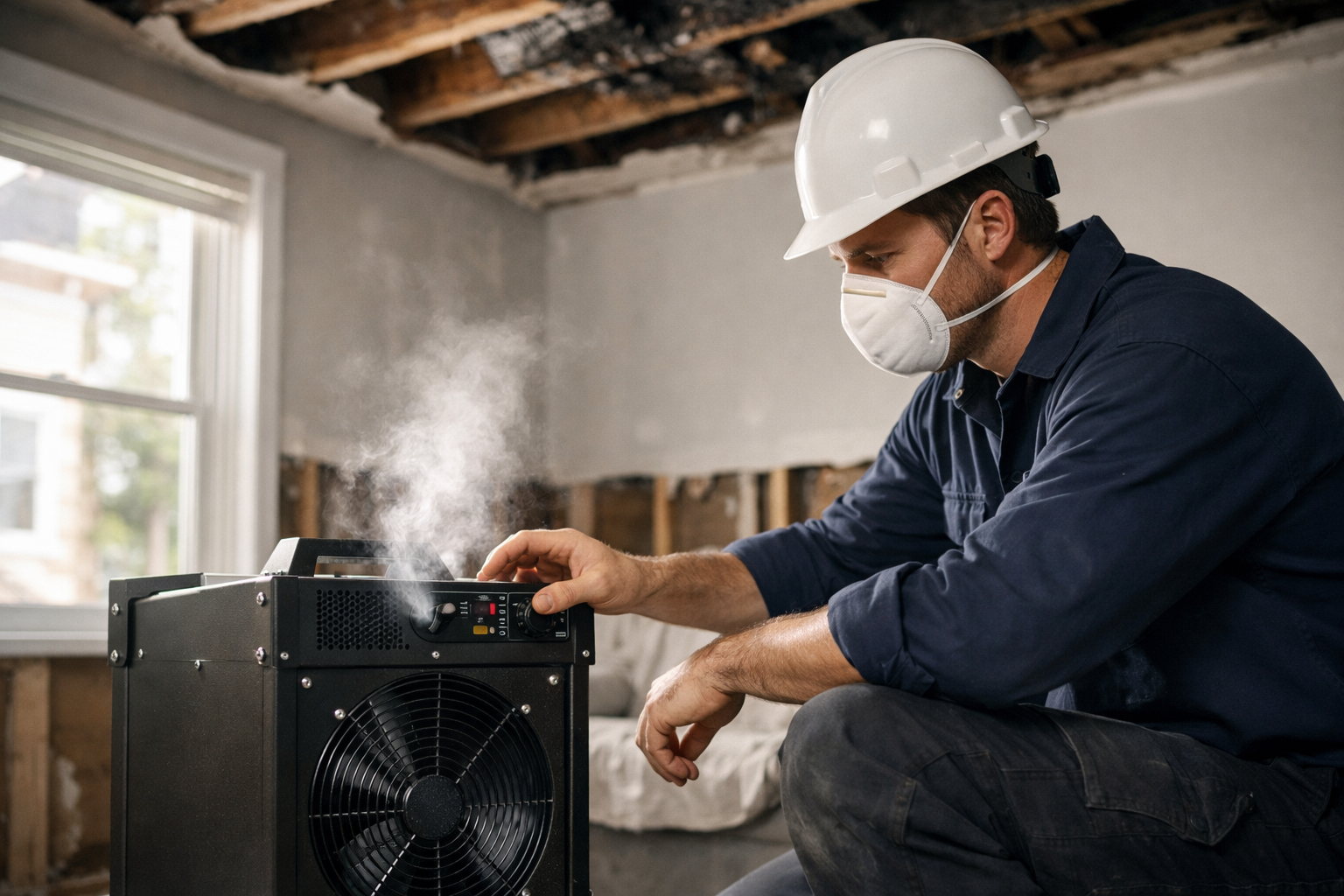
Smoke smell can linger for months after the visible damage is gone. Scrubbed walls, replaced carpet, repainted ceilings — and yet the acrid scent returns every time humidity rises. Odor neutralizers address the chemical source of that smell, not just the surface it clings to.
This post covers what odor neutralizers do in a post-fire home, how they differ from air fresheners, and when a restoration provider should apply them. You will learn how to spot a provider who handles odor correctly during fire cleanup.
What Odor Neutralizers Actually Do After a Fire
Odor neutralizers are compounds that chemically bond with or break down smoke molecules, eliminating the source of the smell rather than masking it. A candle or spray covers odor. A neutralizer destroys it.
Fire smoke leaves behind microscopic particles and volatile organic compounds. They embed in drywall, wood framing, HVAC ducts, and soft materials. Cleaning the surface removes soot but leaves the odor-causing residue behind.
Why Smoke Odor Returns After Cleaning
Smoke molecules are small enough to penetrate porous materials. Heat during the fire opens the pores of wood and drywall, driving particles deep inside.
When temperature or humidity rises later, those trapped molecules re-release into the air. That is why a home can smell fine in winter and reek in July. Neutralizers reach the trapped molecules that wiping cannot.
Types of Odor Neutralizers Used in Fire Cleanup
Restoration crews match the neutralizer to the smoke type and material affected. A grease fire in a kitchen leaves different residue than an electrical fire in a wall cavity.
- Thermal fogging — Heated fog mimics how smoke traveled during the fire, reaching the same cracks and pores. Used for structural odor in framing and drywall.
- Hydroxyl generators — Produce hydroxyl radicals that break down odor molecules. Safe to run in occupied spaces, unlike ozone.
- Ozone treatment — Oxidizes smoke molecules quickly. Requires an empty, sealed space because ozone is harmful to breathe.
- Encapsulant sealers — Applied to framing after cleaning to lock in any residual odor that cannot be removed.
- Water-based counteractants — Sprayed or wiped onto surfaces to pair with and cancel odor compounds.
Matching the Method to the Damage
A protein fire from burnt food produces a sharp, greasy odor with almost no visible soot. Crews rely on counteractants and hydroxyl treatment for that scenario.
A structure fire with charred framing needs a layered order: cleaning, sealing, then fogging. Skipping the sealing step lets odor bleed back through fresh paint within weeks.
The Benefits of Using Odor Neutralizers in a Post-Fire Home
Odor neutralizers restore a home to a livable state faster and prevent the recurring smoke smell that plain cleaning leaves behind. The gains go past comfort.
- Health protection — Lingering smoke residue contains compounds linked to respiratory irritation. Neutralizing removes the source, not the symptom.
- Preventing permanent odor set-in — Untreated smoke residue bonds harder over time. Treatment within the first weeks is far more effective.
- Protecting resale value — Buyers and inspectors notice smoke odor instantly. A neutralized home passes scrutiny that a masked one fails.
- Salvaging contents — Chamber ozone or hydroxyl treatment can save books, clothing, and furniture that would otherwise be discarded.
- Avoiding rework — Painting over untreated framing wastes money when odor returns. Neutralizing first protects the finish work.
The Hidden Cost of Skipping This Step
Homeowners sometimes ask a crew to skip odor work to lower the bill. The smell returns in weeks, and the repainting starts over.
Redoing drywall and paint after odor bleeds through costs more than the neutralizer treatment would have. Order matters as much as method in fire cleanup.
How to Evaluate a Provider’s Odor Treatment Approach
A capable restoration company explains its odor plan before starting work. Ask specific questions to separate thorough crews from quick cleaners.
- Ask which neutralizing method they use for your smoke type — protein, synthetic, or wood.
- Confirm they seal framing before drywall goes back up.
- Ask whether they treat the HVAC system and ductwork, a common odor reservoir.
- Request a follow-up humidity test, since odor re-releases when moisture rises.
- Verify they hold IICRC certification for fire and smoke restoration.
Red Flags to Watch For
A provider who quotes odor removal without inspecting the smoke type is guessing. Different fires demand different chemistry.
Be cautious of any crew that relies only on air fresheners or a single ozone pass. Full odor recovery layers cleaning, sealing, and treatment across every affected surface.
Finding Fire Cleanup Providers on Restoration Locator
Restoration Locator lists Disaster Cleanup & Restoration providers who handle fire recovery and odor treatment. You can compare crews before committing.
Use the directory to narrow your search with these steps:
- Filter listings by location to find crews that respond fast in your area.
- Sort by fire and smoke restoration to see providers who handle odor neutralizers, not just water damage.
- Check reviews for mentions of returning smoke smell — a clear signal of incomplete treatment.
- Compare certifications listed on each provider profile.
Reading reviews for the phrase “smell came back” tells you more than any sales pitch. Past clients report whether the odor work held up over a full year.
Conclusion
Odor neutralizers destroy the trapped smoke molecules that surface cleaning leaves behind, preventing the smell from returning when humidity climbs. Choosing a provider who seals framing, treats ductwork, and matches the method to your smoke type protects both your health and your home’s value.
Browse fire cleanup and restoration listings on https://restorationlocator.com to compare providers and start your recovery today.