
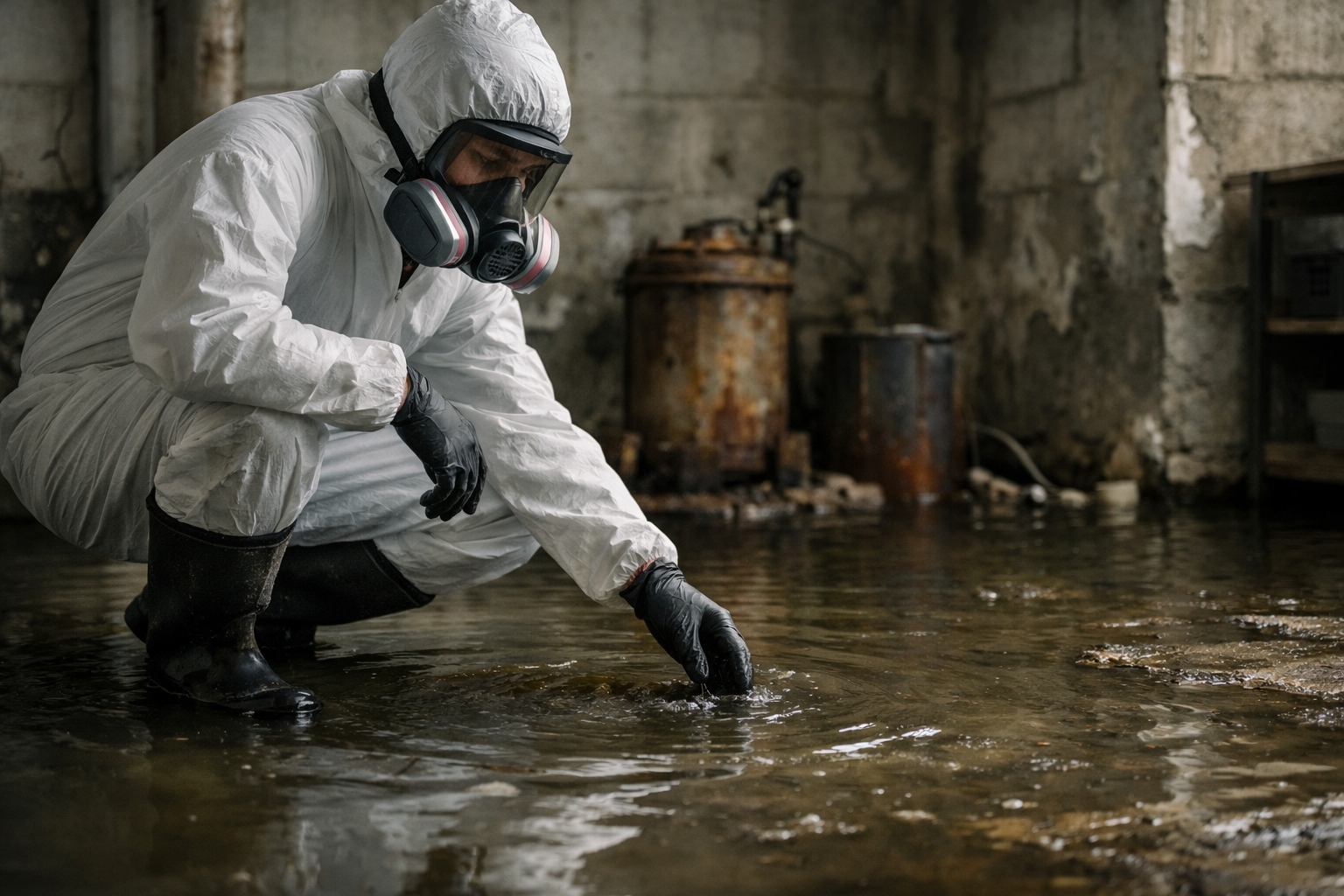
Floodwater that sits in a basement for 48 hours becomes a chemical soup. The clear puddle you see hides water contaminants that can burn skin, corrode metal, and trigger respiratory illness. The chemical makeup of that water decides how dangerous the cleanup will be.
This post breaks down the acids, bacteria, and toxins that appear in water damage. You will learn how each type affects your health and your building materials. You will also learn how to find cleanup crews equipped to handle contaminated water.
Why Water Contaminants Matter More Than the Water Itself
The damage impact of a flood depends less on volume and more on chemistry. A hundred gallons of clean supply-line water is a nuisance. A hundred gallons of sewage backup is a biohazard.
Restoration crews classify water into three categories based on contamination level:
- Category 1 (clean water): Broken supply lines, overflowing faucets, rainwater with no soil contact.
- Category 2 (gray water): Dishwasher discharge, washing machine overflow, toilet overflow with urine but no feces.
- Category 3 (black water): Sewage, river flooding, groundwater, and any water sitting long enough to grow bacteria.
Category 1 water degrades fast. Left for 24 to 48 hours, it drops into Category 2 as bacteria multiply. This is why response time changes the chemistry of the job.
The Acids Hiding in Flood Water
Acidic water damage attacks both your body and your building. Low pH water dissolves grout, corrodes pipe fittings, and etches concrete over time.
Where the Acids Come From
Acids enter floodwater from several sources. Each one leaves a chemical signature that affects cleanup methods.
- Sulfuric acid: Leaks from car and backup batteries during garage flooding.
- Carbonic acid: Forms when rainwater absorbs carbon dioxide, lowering pH.
- Organic acids: Released as wood, drywall paper, and food rot in standing water.
- Hydrochloric acid: Present in some pool and cleaning products swept up during a flood.
What Acids Do to Your Body
Skin contact with acidic floodwater causes irritation, dermatitis, and chemical burns at higher concentrations. Splashes to the eyes need immediate flushing with clean water.
Breathing vapors from acid-contaminated water inflames the airways. People with asthma react faster and harder to these fumes.
Biological Contaminants and Their Health Risks
Bacteria are the most common water contaminants in Category 2 and 3 losses. They cause the majority of flood-related illness.
Common Pathogens in Contaminated Water
E. coli and Salmonella appear in sewage backups and cause severe gastrointestinal illness. Contact through cuts or ingestion drives infection.
Leptospira bacteria spread from rodent urine in floodwater. This causes leptospirosis, which starts with fever and can progress to kidney damage.
Mold spores follow within 24 to 48 hours of moisture exposure. Stachybotrys chartarum, known as black mold, releases mycotoxins that irritate lungs and eyes.
Who Faces the Highest Risk
Some people should stay away from contaminated water damage entirely:
- Children and infants with developing immune systems.
- Older adults and anyone with chronic respiratory conditions.
- People with open wounds or weakened immune function.
- Pregnant individuals, who face added risk from certain toxins.
Chemical Contaminants From Household and Industrial Sources
Floods redistribute every chemical stored in a building. A single basement can hold pesticides, solvents, and heavy metals.
The Chemical Inventory in a Flooded Home
Standing water pulls chemicals from garages, laundry rooms, and storage shelves. The result is a mixture no test strip fully predicts.
- Petroleum products: Fuel and oil from generators, lawn equipment, and heating tanks.
- Cleaning agents: Bleach and ammonia, which form toxic gas if mixed.
- Heavy metals: Lead from old paint and pipes, plus arsenic from treated lumber.
- Pesticides: Lawn and garden products dissolved into the water column.
Mixing these chemicals during cleanup creates new hazards. Bleach and ammonia together release chloramine gas, which damages lung tissue.
How Contaminants Change Building Materials
The chemistry of the water dictates what can be saved. Porous materials absorb contaminants and hold them.
Materials That Must Go
Category 3 water forces removal of certain materials. No amount of drying makes them safe:
- Carpet and padding: Fibers trap bacteria and cannot be sanitized reliably.
- Drywall below the waterline: Paper backing feeds mold and holds toxins.
- Insulation: Absorbs water and loses R-value while breeding microbes.
- Particleboard furniture: Swells and delaminates once saturated.
Non-porous surfaces like sealed concrete, glass, and metal can be cleaned and disinfected. The line between save and discard comes down to porosity and contamination level.
How to Find Cleanup Crews Equipped for Contaminated Water
Contaminated water cleanup demands protective equipment, antimicrobial treatment, and proper disposal. Not every provider handles Category 3 work.
What to Check Before Hiring
Match the provider to the contamination level of your loss. Use these steps to screen candidates on Restoration Locator:
- Filter listings by location to find crews that respond fast enough to stop Category 1 water from turning Category 2.
- Check reviews for mentions of sewage, biohazard, or mold remediation jobs.
- Confirm IICRC certification, which covers water damage and applied microbial remediation standards.
- Ask about testing, since a crew that measures pH and contamination knows what it is treating.
Questions That Reveal Real Expertise
A qualified crew answers technical questions without hesitation. Ask how they distinguish Category 2 from Category 3 water on site.
Ask what protective equipment their technicians wear for sewage work. The answer should include respirators, gloves, and full body suits.
Ask how they document contamination for your insurance claim. Photos, moisture readings, and category classification support your payout.
Steps to Protect Yourself Before Help Arrives
Your safety matters more than saving belongings. Treat any standing water you did not personally see appear as contaminated.
- Shut off electricity to flooded areas if the panel is dry and reachable.
- Keep children and pets away from the water entirely.
- Wear rubber boots and gloves if you must enter the space.
- Avoid mixing any cleaning chemicals during your initial response.
- Ventilate the area to reduce vapor buildup from acids and solvents.
Do not run HVAC systems that pull air across contaminated surfaces. This spreads spores and vapors to dry parts of the building.
Key Takeaways
The damage impact of water depends on its chemistry, not its volume. Acids burn tissue and corrode materials, bacteria cause infection, and household chemicals form toxic gases when mixed. Matching a certified crew to your contamination category protects both your health and your property.
Browse Disaster Cleanup & Restoration listings on Restoration Locator to find crews equipped for contaminated water. Start your search today and filter by location to get fast help.
Sources
- CDC – Personal Hygiene After a Disaster or Emergency
- EPA – Mold Cleanup in Your Home
- OSHA – Flood Cleanup Hazards