
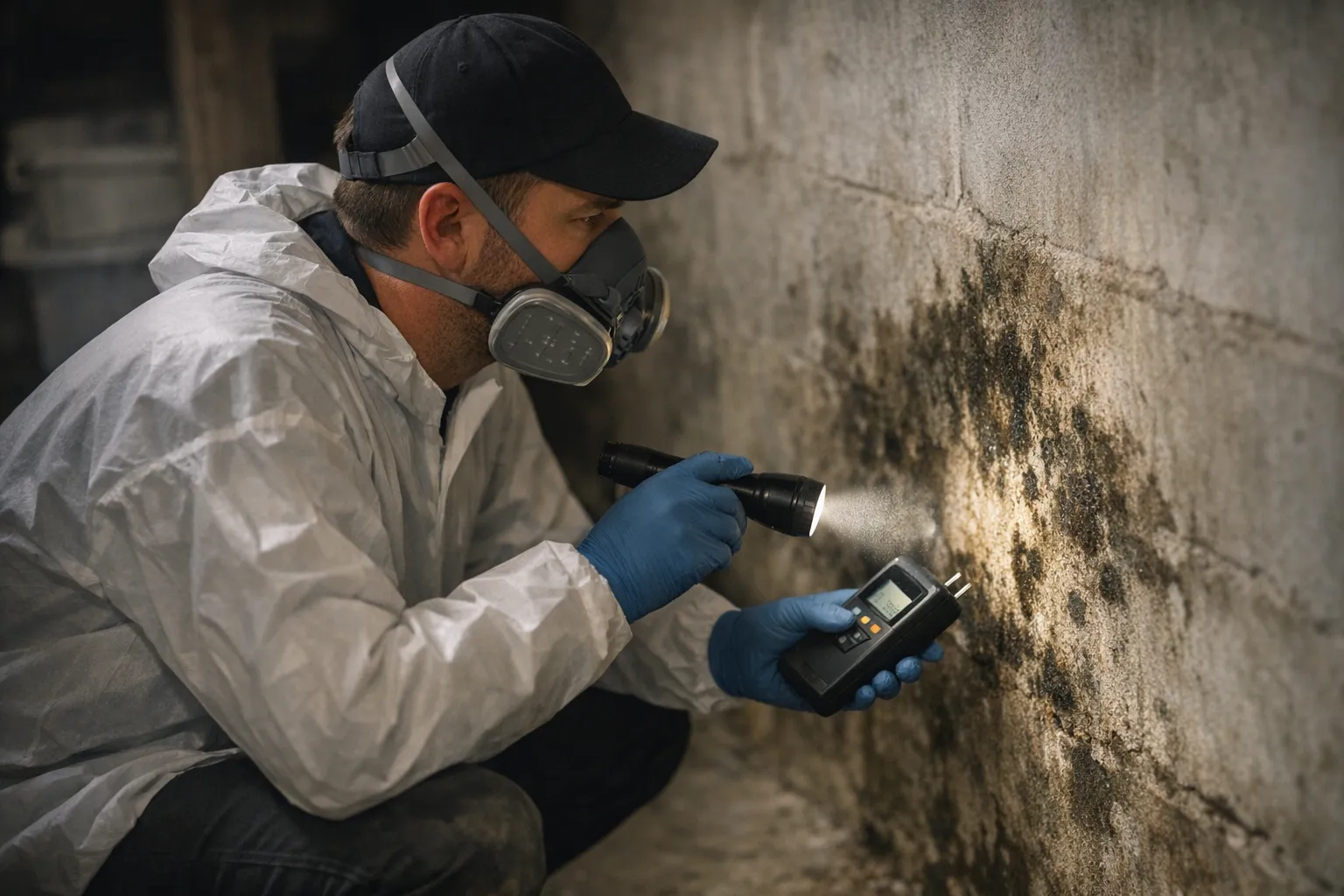
Understanding the Professional Mold Inspection Process
A professional mold inspection involves systematic examination of your property to identify mold growth, moisture problems, and indoor air quality issues. The inspection typically takes 2-4 hours depending on property size and complexity.
Most homeowners feel uncertain about what happens during this process. Understanding each step helps you prepare and know what to expect from start to finish.
Pre-Inspection Consultation and Planning
The inspector starts by discussing your concerns and any visible mold problems you’ve noticed. This conversation shapes the inspection approach and helps identify priority areas.
You’ll review your property’s history, including recent water damage, plumbing issues, or HVAC problems. The inspector also asks about health symptoms family members may be experiencing.
The inspector explains their methodology and equipment. They outline which areas will be tested and why certain rooms require more attention than others.
Visual Assessment of Your Property
Visual inspection forms the foundation of every mold inspection. The inspector examines all accessible areas where mold commonly grows.
Interior Areas Examined
Inspectors check these key locations systematically:
- Bathrooms: Behind toilets, around tubs, shower enclosures, and ventilation fans
- Kitchens: Under sinks, around appliances, and near dishwashers
- Basements: Foundation walls, floor joists, and storage areas
- Attics: Roof decking, insulation, and ventilation systems
- HVAC systems: Ductwork, air handlers, and return air vents
- Windows: Sills, frames, and surrounding wall areas
The inspector photographs any visible mold growth or water damage. These images become part of your inspection report.
Exterior Inspection Points
Outside examination focuses on moisture entry points. The inspector checks roof conditions, gutters, grading around the foundation, and exterior wall penetrations.
They identify areas where water might enter your home. Poor drainage or damaged roofing often contributes to indoor mold problems.
Moisture Detection and Measurement
Moisture meters help locate hidden water problems that create mold-friendly conditions. The inspector uses both pin-type and pinless meters to measure moisture content in building materials.
Normal moisture levels in wood should stay below 20 percent. Readings above this threshold indicate potential mold growth conditions.
Thermal imaging cameras reveal temperature differences that suggest moisture problems behind walls. These tools detect issues invisible to the naked eye.
Air Quality Testing Procedures
Air sampling measures mold spore concentrations throughout your home. The inspector collects samples from multiple locations to compare spore levels.
Indoor Air Sampling
The inspector places air pumps in different rooms for 5-10 minutes each. These devices capture airborne mold spores on specialized collection media.
Sampling locations include problem areas and control rooms. This comparison reveals whether certain areas have elevated spore concentrations.
Outdoor Control Samples
Outdoor air samples establish baseline mold levels for your geographic area. Indoor concentrations should generally match or stay below outdoor levels.
Significantly higher indoor readings suggest active mold growth inside your home. The inspector compares both spore types and quantities.
Surface and Material Sampling
Direct sampling identifies specific mold species growing on surfaces. The inspector takes samples when visible growth appears or suspicious staining occurs.
Tape lift samples capture mold from flat surfaces like walls or furniture. Bulk samples involve removing small pieces of contaminated materials.
Swab samples work best on irregular surfaces or areas where tape lifting isn’t practical. Each method provides different information about mold contamination.
Documentation and Evidence Collection
Detailed documentation supports inspection findings and remediation planning. The inspector records moisture readings, sample locations, and environmental conditions.
Digital photographs show problem areas and sampling locations. GPS coordinates may be recorded for large properties or complex buildings.
The inspector notes temperature and humidity levels during the inspection. These factors affect mold growth and air sample interpretation.
Laboratory Analysis Process
Collected samples go to accredited laboratories for analysis. Results typically arrive within 24-48 hours for most sample types.
Air samples receive microscopic analysis to count and identify mold spores. Surface samples may undergo culture analysis to determine viability and growth characteristics.
Some inspectors offer rapid testing for immediate results. These tests provide basic presence/absence information but lack the detail of laboratory analysis.
Report Preparation and Findings
The inspection report summarizes all findings and includes laboratory results. This document serves as your roadmap for addressing mold issues.
Key Report Components
Complete reports contain these essential elements:
- Executive summary: Brief overview of findings and recommendations
- Moisture assessment: Areas of concern and moisture readings
- Visual findings: Photos and descriptions of problem areas
- Laboratory results: Detailed analysis of all samples collected
- Recommendations: Specific steps for remediation and prevention
The report explains which areas require immediate attention versus monitoring. Priority rankings help you focus remediation efforts effectively.
Understanding Your Results
Laboratory results show mold types and concentrations found in your home. The inspector explains what these findings mean for your health and property.
Some mold types pose greater health risks than others. Toxic species like Stachybotrys require immediate attention and professional remediation.
Spore concentrations help determine contamination severity. The inspector compares your results to established guidelines and outdoor baseline levels.
Next Steps and Remediation Planning
The inspector outlines recommended remediation approaches based on contamination extent. Small areas may qualify for DIY cleaning while larger problems need professional treatment.
Moisture control receives equal importance with mold removal. The inspector identifies necessary repairs to prevent future mold growth.
Timeline recommendations help you prioritize urgent issues. Health-threatening situations require immediate action while minor problems allow more planning time.
Choosing Qualified Inspection Professionals
Certified mold inspectors complete specialized training and maintain current credentials. Look for inspectors certified by recognized organizations like ACAC or IAQC.
Independent inspectors avoid conflicts of interest that arise when the same company performs both inspection and remediation services. This separation ensures objective assessment.
Experience with your property type matters. Residential inspectors understand home construction while commercial inspectors know building systems and code requirements.
Professional mold inspection gives you the information needed to address contamination effectively. The structured approach identifies both visible problems and hidden moisture issues that could lead to future mold growth.
Understanding this process helps you work effectively with qualified professionals and make informed decisions about remediation. Browse Disaster Cleanup & Restoration listings at https://restorationlocator.com to find certified mold inspection specialists in your area.