
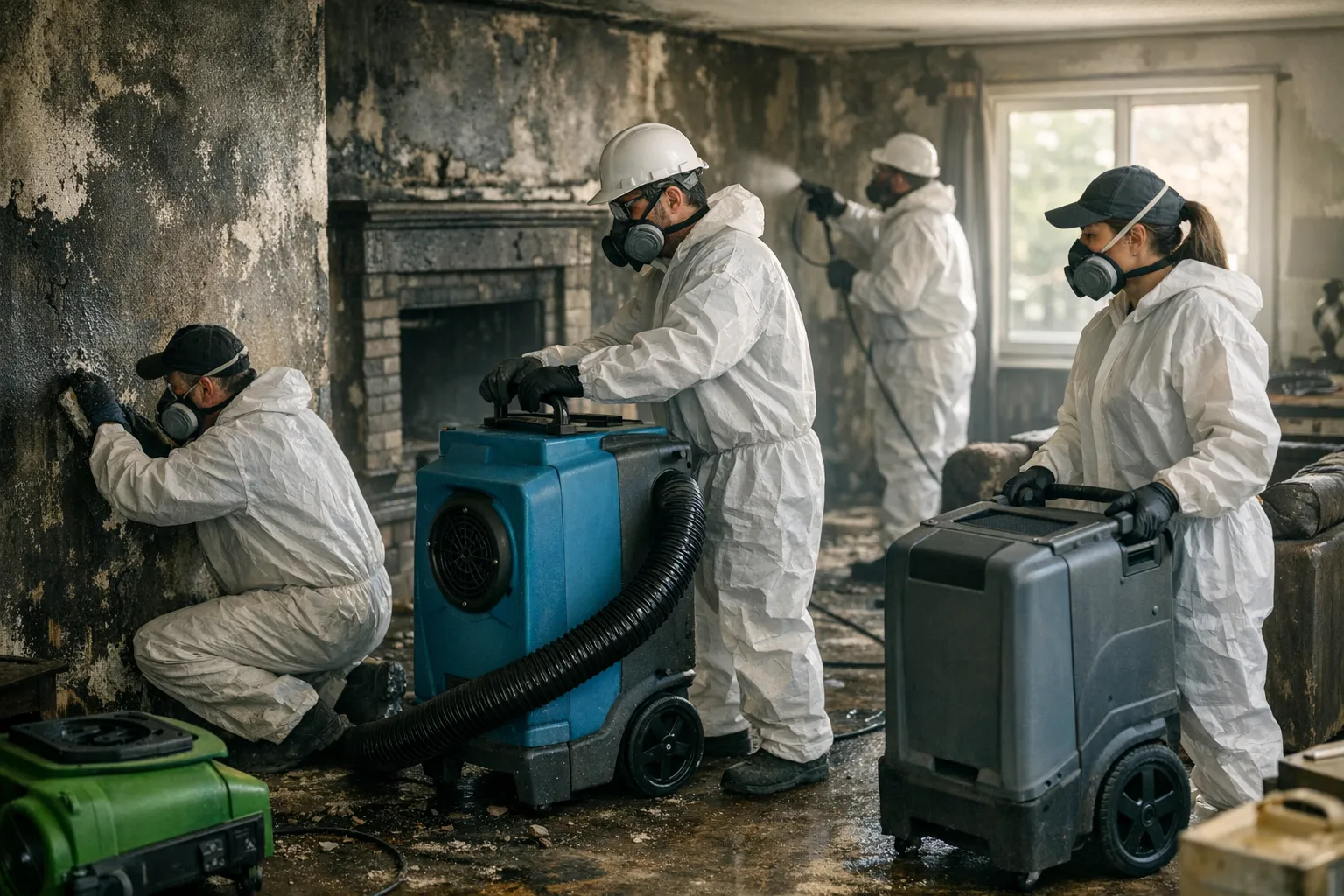
Spring Fires Create Unique Restoration Challenges
Spring fires spread rapidly due to dry vegetation and windy conditions, leaving behind extensive smoke and heat damage that requires immediate professional attention. Selecting the right fire damage restoration company after a spring fire determines how quickly your property returns to normal and prevents long-term structural issues.
The restoration process involves smoke removal, structural repairs, and content cleaning that most homeowners cannot handle alone. Professional companies bring specialized equipment and expertise to address fire damage comprehensively.
Response Time Matters Most After Fire Damage
Fire damage worsens every hour after the initial incident. Smoke particles continue penetrating surfaces, while moisture from firefighting efforts creates secondary damage risks.
Look for companies that guarantee 24-hour response times. Spring fires often occur during peak season when restoration companies face high demand, making immediate availability critical.
Companies with local presence respond faster than those traveling from distant locations. Use location filters on directory sites to find restoration providers within your immediate area.
Certification Requirements for Fire Restoration Work
Proper certifications ensure your chosen fire damage restoration company follows industry standards and uses proven techniques. The Institute of Inspection, Cleaning and Restoration Certification (IICRC) provides the gold standard for fire restoration training.
Required certifications include:
- Fire and Smoke Restoration Technician (FSRT) – covers smoke removal and structural cleaning
- Applied Structural Drying (ASD) – addresses water damage from firefighting efforts
- Odor Control Technician (OCT) – eliminates persistent smoke odors
- Contents Restoration Technician (CRT) – handles damaged personal belongings
Verify certifications directly with IICRC rather than relying solely on company claims. Current certifications require ongoing education and renewal.
Insurance and Licensing Verification
Licensed contractors carry proper insurance coverage and meet state regulatory requirements. Check license status through your state’s contractor licensing board.
Required insurance coverage includes general liability, workers compensation, and professional liability. Request certificates of insurance before work begins.
Equipment and Technology for Effective Fire Restoration
Modern fire restoration requires specialized equipment that small or inexperienced companies may lack. Professional-grade tools make the difference between complete restoration and ongoing problems.
Essential equipment includes thermal foggers for odor elimination, hydroxyl generators for air purification, and moisture meters for structural assessment. Companies should own rather than rent core equipment to ensure immediate availability.
Advanced Cleaning Technologies
Ultrasonic cleaning systems restore electronics and delicate items that traditional methods cannot salvage. Dry ice blasting removes smoke residue without water damage.
Ozone generators eliminate odors at the molecular level but require proper ventilation and safety protocols. Ask about specific technologies used for your damage type.
Comprehensive Service Scope Beyond Basic Cleanup
Fire damage extends beyond visible smoke stains and requires comprehensive restoration services. Companies offering complete solutions coordinate better and deliver faster results.
Full-service restoration includes:
- Emergency board-up and tarping services
- Structural cleaning and deodorization
- Contents pack-out and restoration
- Reconstruction and repair work
- Final inspection and clearance testing
Companies that subcontract major portions of the work create coordination problems and delays. Verify which services the company performs directly versus through subcontractors.
Content Restoration Capabilities
Personal belongings often suffer smoke damage that appears irreversible. Professional content restoration saves items with sentimental or financial value.
Specialized services include document recovery, electronics restoration, and textile cleaning. Companies with dedicated content facilities achieve better results than on-site cleaning only.
Pricing Structure and Payment Options
Fire restoration costs vary significantly based on damage extent and property size. Reputable companies provide detailed written estimates rather than vague verbal quotes.
Avoid companies requiring full payment upfront or charging for initial inspections. Standard practice involves insurance billing with minimal out-of-pocket costs for covered damages.
Request itemized estimates that separate emergency services, cleaning, and reconstruction costs. This breakdown helps compare proposals and prevents surprise charges.
Insurance Claim Assistance
Experienced restoration companies work directly with insurance adjusters and understand claim documentation requirements. This expertise accelerates claim processing and maximizes coverage.
Companies should photograph damage before beginning work and maintain detailed records throughout the restoration process. Documentation supports your insurance claim and protects against coverage disputes.
References and Past Performance Review
Past performance predicts future results better than marketing materials or sales presentations. Contact recent customers to ask about work quality, timeline adherence, and communication.
Request references from jobs completed within the past six months. Spring fire damage creates specific challenges that recent experience addresses most effectively.
Online reviews provide additional perspective but focus on detailed reviews over simple star ratings. Look for patterns in customer feedback rather than isolated complaints or praise.
Better Business Bureau Ratings
BBB ratings reflect complaint resolution and business practices over time. A+ ratings indicate consistent customer satisfaction and ethical business practices.
Review complaint details rather than just overall ratings. How companies handle problems reveals more about their character than perfect records.
Communication and Project Management
Fire restoration involves multiple phases and coordination with insurance companies, requiring clear communication throughout the process. Poor communication creates stress during an already difficult time.
Established companies assign dedicated project managers who serve as single points of contact. Daily updates and progress photos keep you informed without constant phone calls.
Ask about communication preferences and frequency during the initial consultation. Companies should accommodate your preferred communication methods and schedule.
Selecting Your Fire Damage Restoration Company
Compare at least three qualified companies before making your final selection. Focus on response time, certifications, and comprehensive service capabilities rather than price alone.
The right fire damage restoration company combines immediate availability with proven expertise and clear communication. Spring fire damage requires prompt action to prevent additional problems.
Browse local fire damage restoration providers and compare qualifications, services, and customer reviews at https://restorationlocator.com to find the right company for your specific needs.
Sources
- Institute of Inspection, Cleaning and Restoration Certification – Fire and Smoke Restoration Technician Certification
- Environmental Protection Agency – Indoor Air Quality and Mold
- Federal Emergency Management Agency – Spring Wildfire Season Preparation
- Better Business Bureau – Disaster Restoration Consumer Tips