
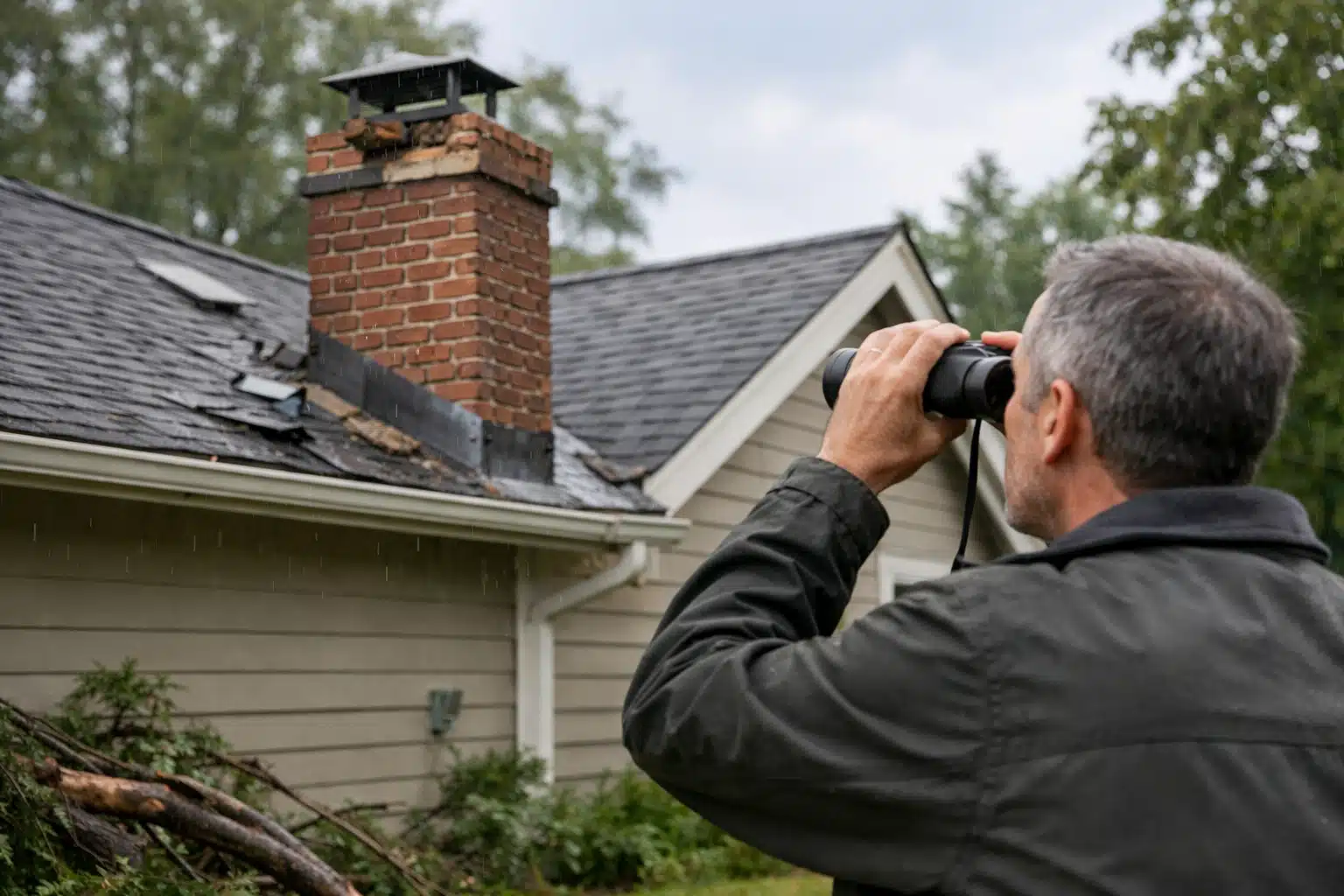
A single windstorm can crack a chimney crown, loosen flashing, and let water seep into your attic before you notice a thing. Chimney storm damage hides in places you cannot see from the ground, which makes early assessment the difference between a minor fix and a structural rebuild.
This post walks you step by step: how to inspect your chimney safely after a storm, which damage signs demand fast action, and how to find a qualified repair contractor. By the end, you will know exactly what to check and who to call.
Start With a Ground-Level Safety Check
Chimney storm damage assessment begins from the ground, never the roof. After a storm, loose bricks and cracked mortar can shift under your weight.
Stand in your yard and look up at the full chimney stack. Use binoculars if you have them. Watch for leaning, missing caps, and debris piled against the base.
What to Look For From Outside
- Leaning or tilting stack — a sign the footing or masonry shifted during high winds.
- Missing or displaced chimney cap — this exposes the flue to rain and nesting animals.
- Cracked or crumbling crown — the concrete slab on top that sheds water away from the brick.
- Loose or bent flashing — the metal seal where the chimney meets the roofline.
- Fallen bricks in gutters, on the roof, or in the yard.
Spalling brick is a common aftermath. Spalling is when brick faces flake, pop, or crumble after water freezes inside them. One freeze cycle after a storm can accelerate this damage.
Check for Interior Signs of Water Intrusion
Interior clues reveal damage the exterior hides. Water from a cracked crown or lifted flashing travels down the flue and into your walls.
Walk your attic with a flashlight first. Look at the framing around the chimney chase for dark stains and swollen wood.
Interior Warning Signs
- Water stains on ceilings or walls near the chimney.
- A damp, musty smell in the firebox or nearby rooms.
- White chalky deposits on brick, called efflorescence, which signals moisture movement.
- Rust on the damper or firebox metal.
- Peeling wallpaper or bubbling paint on an adjacent wall.
A musty firebox smell after heavy rain points to a failed crown or cap. Catching this early keeps repair costs in the hundreds instead of the thousands.
Document Everything Before You Touch It
Photograph the damage before any cleanup or repair. Insurance adjusters need proof the damage came from the storm, not slow wear.
- Take wide shots showing the chimney and the roof together.
- Capture close-ups of every crack, missing brick, and bent flashing edge.
- Photograph interior stains and date each image.
- Save any fallen debris until the adjuster reviews it.
- Note the storm date and weather conditions in writing.
Many homeowner policies cover sudden storm damage but exclude gradual deterioration. Clear timestamps strengthen your claim.
Common Types of Chimney Storm Damage
Different storms produce different damage patterns. Knowing which type you have helps you describe the problem to a contractor.
Wind Damage
High winds rip off caps, loosen the top courses of brick, and tear flashing. A toppled or leaning stack after a windstorm means stop using the fireplace immediately.
Lightning Strikes
Lightning can blow out mortar joints and crack the flue liner from the inside. Damage may look minor outside but render the flue unsafe to vent smoke.
Hail and Freeze Damage
Hail chips the crown and mortar caps. When trapped water freezes afterward, it widens those cracks fast, especially on north-facing chimneys that stay cold longest.
Falling Trees and Limbs
A limb strike can shear bricks off or crack the stack through the middle. Even a glancing blow can misalign the flue liner and create a fire hazard.
Post-Storm Chimney Repair: What the Fixes Involve
Post-storm chimney repair ranges from a quick cap replacement to a full masonry rebuild. Scope depends on how deep the water or impact reached.
Minor Repairs
- Cap replacement — stops rain and animals from entering the flue.
- Crown sealing or recoating — restores the top slab’s water shedding.
- Flashing reseal — stops leaks at the roof joint.
- Tuckpointing — replacing failed mortar between bricks.
Structural Repairs
- Partial rebuild — removing and relaying damaged brick courses.
- Flue liner replacement — required when heat or impact cracks the liner.
- Full stack rebuild — for leaning or severely spalled chimneys.
A cracked flue liner is the most dangerous outcome. It can let heat and carbon monoxide reach framing and living space, which is why a Level 2 inspection matters after any major storm.
Why a Level 2 Chimney Inspection Matters
A Level 2 inspection uses a camera to scan the flue interior. Storm impacts and lightning crack liners in spots no flashlight can reach.
The National Fire Protection Association calls for a Level 2 inspection after any event likely to have caused damage. A severe storm qualifies.
Ask any contractor whether they run a camera scan of the flue. If they skip this step, keep searching.
How to Find a Qualified Repair Contractor
Finding the right contractor fast prevents a small leak from rotting your roof framing. Use Restoration Locator to compare qualified providers in your area.
Use These Filters to Narrow Your Search
- Sort by location to find crews that can reach you within days, not weeks.
- Check reviews for mentions of chimney and masonry work, not just general roofing.
- Filter listings by storm damage and water restoration if interior leaks are involved.
- Confirm the provider carries liability insurance and handles insurance claims.
Questions to Ask Before You Hire
- Do you perform a camera flue inspection as part of the estimate?
- Can you match my existing brick and mortar color?
- Will you document damage for my insurance claim?
- What warranty covers the masonry and the waterproofing?
- Can you tarp or cap the chimney now to stop active leaks?
A contractor who offers an emergency cap or tarp understands urgency. Open flues invite more water with every rain.
Protect the Chimney While You Wait for Repairs
Temporary protection stops damage from spreading before the crew arrives. A few steps buy you time safely.
- Stop all fireplace use until the flue is cleared as safe.
- Place a bucket under interior drips and move furniture away.
- Ask a roofer to tarp the chimney top if the cap blew off.
- Keep gutters clear so storm water drains away from the base.
Never climb a wet or storm-damaged roof yourself. A cracked stack can give way under load.
What Chimney Storm Damage Repair Typically Costs
Cost depends on the damage type and your chimney’s height. These figures help you judge whether an estimate is fair.
- Cap replacement: $200 to $600.
- Crown repair or recoat: $300 to $1,200.
- Flashing reseal: $300 to $1,000.
- Tuckpointing: $500 to $2,500 depending on area.
- Flue liner replacement: $2,500 to $7,000.
- Partial or full rebuild: $4,000 to $15,000.
Get at least two estimates for any repair over $1,000. Wide gaps in pricing usually point to different scopes of work.
Key Takeaways
Assess chimney storm damage from the ground, check your attic for water intrusion, and photograph everything before cleanup. Push for a Level 2 camera inspection and act fast on any flue crack or leaning stack.
The right contractor stops small storm damage from becoming a structural rebuild. Browse Disaster Cleanup & Restoration listings at https://restorationlocator.com and start your search today.