
A refrigerator holds safe food for about 4 hours after the power cuts out. Past that window, the math changes fast, and guessing wrong can land you in an emergency room. Correct food storage during a power outage comes down to temperature, timing, and knowing which foods to toss without hesitation.
This post covers the exact temperature thresholds, how long your appliances buy you, and a clear discard checklist. You will learn how to handle a two-day outage differently from a two-hour one.
Food Storage Power Outage Basics: The Numbers That Matter
Bacteria multiply fastest between 40°F and 140°F, a range food scientists call the danger zone. Your goal during any outage is keeping cold food below 40°F and frozen food at or below 32°F.
Two figures decide almost every decision you make:
- 4 hours — how long an unopened refrigerator stays safe.
- 48 hours — how long a full, unopened freezer stays safe. A half-full freezer holds for roughly 24 hours.
Keep the doors shut. Every time you open the fridge, you lose cold air and shorten that 4-hour clock.
Why a Full Freezer Wins
A packed freezer holds cold far longer than an empty one. Frozen items act like ice blocks, chilling their neighbors.
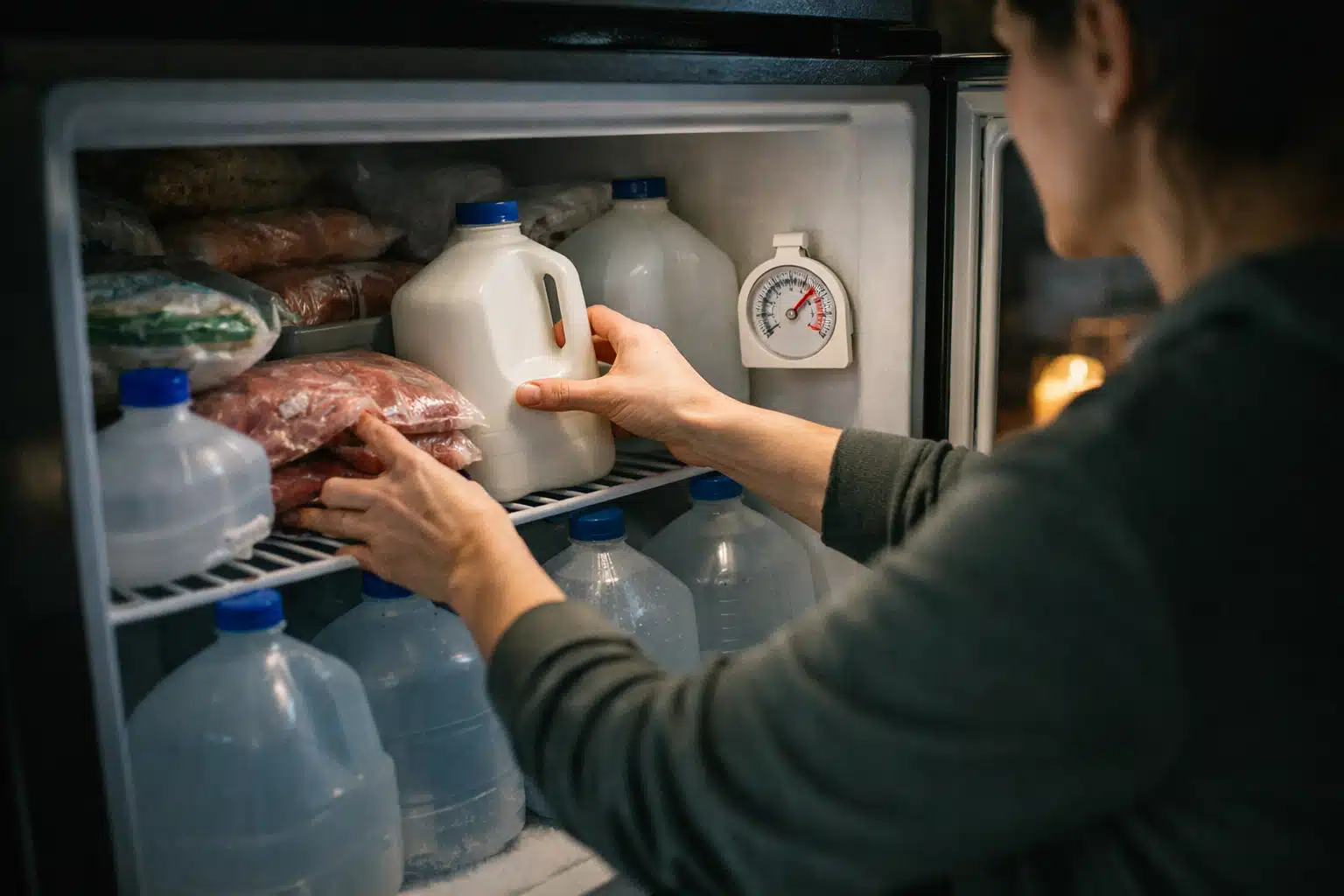
If your freezer runs half-empty, fill the gaps with jugs of water before storm season. Frozen water bottles double as drinking water once they thaw.
Step-by-Step: What to Do the Moment Power Fails
- Note the time. Write down when the outage started. Your 4-hour and 48-hour windows begin now.
- Keep doors closed. Resist checking. A closed fridge buys hours; an open one burns them.
- Group freezer items together. Packing food tight slows thawing.
- Move milk and meat to the coldest zone. Push high-risk foods to the back where cold lingers longest.
- Prep a cooler. If the outage looks long, ready a cooler with ice for the most perishable items.
A refrigerator thermometer removes the guesswork. Place one in both the fridge and freezer before an outage ever hits.
The 40°F Rule and Your Appliance Thermometer
The 40°F rule states that cold food held above 40°F for more than two hours is unsafe to eat. An appliance thermometer tells you the real temperature, not a guess based on how things feel.
When power returns, check the thermometer first. If the fridge reads 40°F or below, the food inside is fine.
For the freezer, look at the food itself. If items still hold ice crystals or sit at 40°F or below, you can refreeze them safely.
Never Taste to Test
Spoiled food does not always smell or look wrong. Tasting a questionable item to check it is a fast route to food poisoning. When in doubt, throw it out.
Discard Checklist: What to Keep and What to Toss
After a refrigerator sits above 40°F for more than four hours, certain foods become unsafe. Here is the split:
Throw These Out After 4 Hours Above 40°F
- Raw or cooked meat, poultry, and seafood
- Milk, cream, soft cheeses, and yogurt
- Eggs and egg-based dishes
- Leftovers, casseroles, and cooked pasta
- Cut fruits and cut vegetables
- Opened cream-based dressings and salsa
These Stay Safe at Room Temperature
- Hard cheeses like cheddar and parmesan
- Butter and margarine
- Whole, uncut fruits and vegetables
- Peanut butter, jam, and jelly
- Opened condiments like ketchup, mustard, and relish
- Bread, rolls, and bakery items
This discard list is the backbone of emergency food safety during any extended outage.
Handling a Multi-Day Outage
Outages lasting more than a day call for a different plan. After 48 hours, even a full freezer starts losing its battle.
Dry ice extends your window. 50 pounds of dry ice keeps an 18-cubic-foot freezer cold for about two days.
Handle dry ice with gloves and keep the room ventilated. It releases carbon dioxide as it sublimates.
Using Coolers and Block Ice
Block ice outlasts cube ice in a cooler. Pack perishables tight, add a thermometer, and keep the cooler out of direct sun.
Refill ice as it melts. A cooler holding below 40°F keeps meat and dairy safe for the duration of the ice supply.
When Flooding Follows a Power Outage
Hurricanes and storms knock out power and flood homes at the same time. Floodwater carries sewage, chemicals, and bacteria into your kitchen.
Discard any food touched by floodwater, including sealed jars and bottles. Screw caps, snap lids, and crimped tops do not keep contaminated water out.
Canned goods can be salvaged if the seal stays intact. Remove labels, wash cans in a bleach solution, then relabel with a marker.
After the Water Recedes
Water damage from a flood needs more than a mop. Standing water breeds mold within 24 to 48 hours and ruins drywall, flooring, and cabinets.
Restoration companies handle water extraction, drying, and sanitizing of affected kitchens. On https://restorationlocator.com, you can filter listings by water damage specialty and sort by location to find nearby help fast.
Prepping Before the Next Outage
Smart preparation shrinks your risk before the power ever drops. Build these habits ahead of storm season:
- Freeze water jugs to fill empty freezer space and create backup ice.
- Keep two appliance thermometers — one for the fridge, one for the freezer.
- Stock a cooler and ice packs within easy reach.
- Store shelf-stable meals that need no refrigeration.
- Know a dry ice supplier near you before you need one.
A little setup turns a stressful outage into a managed one. You will not scramble when the lights go out.
How Restoration Locator Helps After Storm Damage
Power outages rarely arrive alone. They come with flooding, roof damage, and mold that follow a major storm.
Restoration Locator connects you with cleanup and restoration providers in your area. You can read reviews on each listing and compare providers by their specialty.
Filter by water damage, mold remediation, or storm cleanup to match your exact situation. Sorting by location puts the closest help at the top of your results.
Conclusion
Safe food storage during a power outage rests on three things: keep doors shut, watch the 40°F threshold, and discard high-risk foods after four hours. A thermometer and a stocked cooler make the difference between a minor inconvenience and a health hazard.
When an outage comes with flooding or storm damage, fast cleanup protects your home from mold and rot. Browse Disaster Cleanup & Restoration listings now at https://restorationlocator.com to find a provider near you.