
An ice dam can push water under your shingles and into your ceilings in a single cold snap. Most homeowners never see it coming until a brown stain appears above the living room. Good winter roof preparation stops that water before it starts.
This post walks you step by step through protecting your roof from snow and ice. You will learn which attic fixes matter most, how to spot weak points early, and when to call a pro.
Why Winter Roof Preparation Matters More Than You Think
Snow ice roof damage happens from the inside out. Warm air leaking into your attic melts the snow on your roof. That meltwater runs down to the cold eaves and refreezes, forming an ice dam.
The dam blocks the next round of meltwater. That trapped water backs up under your shingles and drips into the house. A single season of this can rot decking and soak insulation.
The fix is proactive, not reactive. Stop the heat loss and the clogged drainage, and ice dams lose their fuel.
Step-by-Step Winter Roof Preparation Checklist
Work the list below in order. The attic items prevent ice dams. The exterior items catch damage before it spreads.
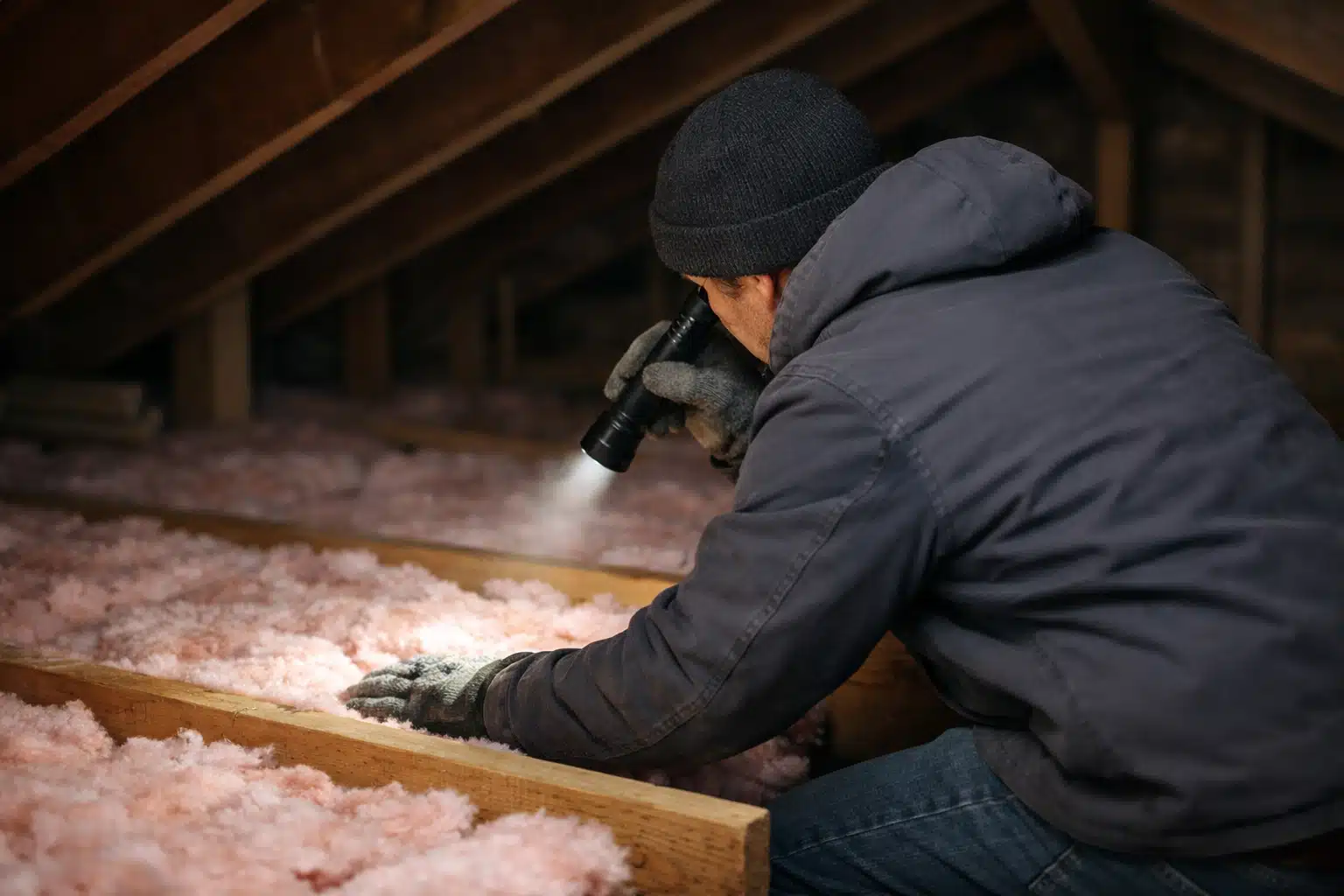
- Inspect your attic insulation depth. Aim for R-49 to R-60 in cold climates. If you can see the ceiling joists poking through, you are short.
- Seal attic air leaks. Foam-seal around recessed lights, bathroom fans, the attic hatch, and plumbing stacks. Warm air escaping here melts snow unevenly.
- Check attic ventilation. Soffit and ridge vents keep the roof deck cold. A cold deck means snow melts slowly and evenly, not in dam-forming patches.
- Clean the gutters and downspouts. Clogged gutters freeze solid and anchor ice dams at the eaves.
- Inspect and replace damaged shingles. Curled, cracked, or missing shingles let meltwater reach the deck.
- Reseal flashing. Check chimneys, skylights, and valleys. Cracked caulk at flashing is a common winter leak point.
- Trim overhanging branches. Ice-loaded limbs snap and puncture roofs during storms.
The Attic Is Your First Line of Defense
Most ice dam prevention happens where you never look. Grab a thermometer and check your attic on a cold day. If it feels much warmer than outside, heat is leaking up.
One concrete test: on a frosty morning, look at your roof from the street. Uneven snowmelt or bare stripes over heated rooms mean warm air is escaping. Clean snow cover across the whole roof is what you want.
Gutters and Eaves Deserve Real Attention
Clogged gutters are the quiet cause of winter leaks. Leaves and debris trap water that freezes into a solid block at the roof edge.
After cleaning, run a hose to confirm water flows all the way out the downspouts. A downspout that dumps against the foundation can refreeze and climb back up.
Products That Actually Reduce Snow Ice Roof Damage
A few targeted upgrades pay for themselves after one bad winter. Match the fix to your roof’s weak spot.
- Ice and water shield membrane: A self-sealing underlayment installed along the eaves. It blocks backed-up water even when an ice dam forms. Many building codes require it in cold regions.
- Heated cables (de-icing cables): Zigzag cables along the eaves melt channels for water to drain. Useful on problem roofs with chronic dams.
- Roof rake: A long-handled rake that pulls snow off the lower roof from the ground. Clearing the first three to four feet of snow after a storm starves ice dams.
- Gutter guards: Keep debris out so gutters drain freely into winter.
A roof rake is the cheapest tool on this list. Used after each heavy snowfall, it prevents the eave buildup that drives most dams.
What to Inspect Before the First Freeze
Do this walk-around in early fall, before temperatures drop. Catching a small problem now beats a flooded ceiling in January.
From the Ground
- Look for shingles that are lifted, curled, or missing.
- Check for sagging gutters or sections pulling from the fascia.
- Scan the roofline for dips that could pool meltwater.
From the Attic
- Look for daylight around vents and the chimney.
- Check for dark water stains on the underside of the decking.
- Press insulation for damp or matted spots that signal past leaks.
If you find staining or soft wood, the damage predates winter. Address it now, because snow load will worsen any existing weakness.
When Snow Load Becomes a Structural Risk
Wet snow weighs roughly 20 pounds per cubic foot. A foot of it across an average roof adds tons of weight. Most roofs handle this, but older or flat roofs can struggle.
Warning signs of overload include:
- New cracks in interior drywall or around door frames.
- Doors that suddenly stick or will not latch.
- Creaking or popping sounds during a storm.
- A visible sag in the roofline.
If you notice these, leave the house and call a pro. Do not climb onto a loaded roof yourself.
When to Hire a Restoration or Roofing Pro
Some winter roof work is safe for a homeowner. Raking snow and cleaning gutters in fall both qualify. Anything involving height, ice, or structural damage does not.
Call a pro when you face any of the following:
- Active water leaking into living space during a storm.
- An ice dam already formed and dripping inside.
- Soaked insulation or drywall that needs drying and replacement.
- Flashing or decking repair on a steep or icy roof.
Water that reaches insulation grows mold within 48 hours. A restoration crew can dry the structure and prevent that secondary damage.
How to Find the Right Contractor Fast
Restoration Locator helps you match the problem to the right crew. Use the directory filters to move quickly when water is already inside.
- Sort by location to find crews that can reach you during a storm.
- Filter listings by service type such as water damage or storm restoration.
- Check reviews for comments on winter response times and cleanup results.
- Compare several providers before committing to repairs.
Key Takeaways for Winter Roof Preparation
Ice dams start with heat loss and clogged drainage, so seal your attic and clean your gutters first. Add ice and water shield at the eaves and keep a roof rake handy for fast snow removal. Inspect before the first freeze, and bring in a pro the moment water reaches your ceiling.
Ready to protect your home this winter? Browse Disaster Cleanup & Restoration listings at https://restorationlocator.com and find a crew in your area today.