When water floods your basement at 2 AM, the difference between professional restoration equipment and basic shop tools determines whether you save your home or lose it to mold and structural damage. Advanced restoration technology can extract moisture, prevent secondary damage, and restore your property in days rather than weeks.
The equipment restoration professionals use directly impacts both the speed and quality of your recovery. Understanding this technology helps you evaluate providers and set realistic expectations for your restoration project.
How Professional Restoration Equipment Enhances Recovery Speed
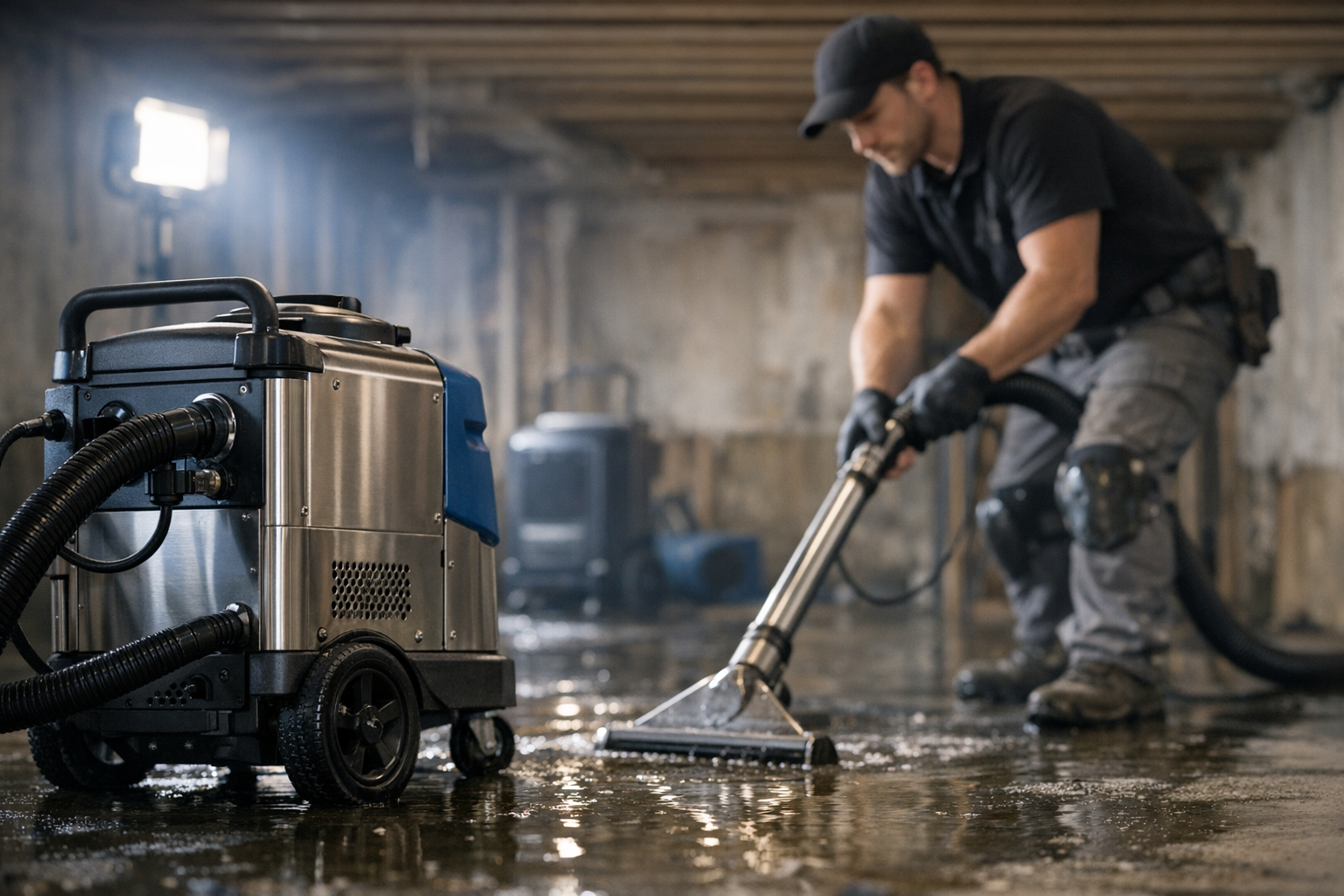
Professional restoration equipment operates at industrial capacity levels that consumer tools cannot match. A commercial-grade extractor removes 10-15 gallons of water per minute, while a standard wet vacuum handles maybe 2-3 gallons in the same timeframe.
Speed matters because water damage compounds exponentially. Within 24-48 hours, moisture creates ideal conditions for mold growth and wood warping.
High-powered equipment stops this progression by removing moisture faster than it can penetrate deeper into materials. Professional truck-mounted extractors generate 500+ CFM (cubic feet per minute) of airflow compared to 150 CFM from portable units.
Moisture Detection Technology
Thermal imaging cameras reveal moisture patterns invisible to the naked eye. These devices detect temperature variations as small as 0.1 degrees Celsius, showing exactly where water has traveled behind walls and under flooring.
Moisture meters provide precise readings rather than guesswork. Pin-type meters measure moisture content in wood and drywall, while pinless meters scan large surface areas without creating holes.
This technology prevents the common mistake of stopping extraction too early, which leads to hidden moisture problems weeks later.
Specialized Equipment for Different Damage Types
Water damage restoration requires different tools depending on the contamination level and affected materials. Clean water from a burst pipe needs different handling than sewage backup or storm flooding.
Category 1 Water Damage Equipment
Clean water situations use standard extraction and drying equipment. Portable extractors handle smaller areas, while truck-mounted units tackle whole-house flooding.
Air movers create controlled airflow patterns that accelerate evaporation. Professional units move 1,000-4,000 CFM compared to 200-300 CFM from hardware store fans.
Category 2 and 3 Contaminated Water Tools
Contaminated water requires specialized pumps and disposal systems. Submersible pumps remove standing water containing debris, while waste pumps handle sewage and chemicals.
Air scrubbers with HEPA filtration remove airborne contaminants during the restoration process. These units cycle room air 6-8 times per hour through multiple filtration stages.
Negative air machines create controlled pressure zones that prevent contaminated air from spreading to clean areas of your home.
Advanced Drying Systems for Effective Restoration
Effective restoration depends on complete moisture removal from all affected materials. Professional drying systems target specific areas with precision rather than using general-purpose fans.
Structural Dehumidifiers
Low-grain refrigerant (LGR) dehumidifiers extract moisture from air more efficiently than conventional units. These machines maintain humidity levels below 40% even in saturated conditions.
Desiccant dehumidifiers work in extreme conditions where refrigerant units fail. They operate effectively in temperatures below 65°F and remove moisture without generating heat.
Professional units process 150-200 pints of moisture daily compared to 30-50 pints from consumer dehumidifiers.
Injection Drying Systems
Mat systems dry hardwood floors without removal by forcing heated air between the wood and subfloor. This specialized equipment can save floors that would otherwise require complete replacement.
Wall cavity drying systems inject heated air into wall cavities through small access holes. This technique dries insulation and framing lumber without removing drywall.
Injecti-dry systems target specific wet areas rather than drying entire rooms, reducing energy costs and restoration time.
Safety Equipment That Protects Your Property
Professional restoration involves more than just removing water. Safety equipment protects both workers and your remaining belongings during the restoration process.
Containment Systems
Plastic sheeting and tape create physical barriers between damaged and clean areas. This prevents cross-contamination and allows you to continue living in unaffected parts of your home.
Zippered access doors maintain containment while allowing worker movement. Professional containment systems can isolate single rooms or entire floors depending on damage extent.
Personal Protective Equipment
Respirators protect workers from mold spores, chemical vapors, and airborne debris. Full-face respirators provide eye protection in addition to respiratory safety.
Protective suits prevent contamination transfer between work areas and clean spaces. Disposable suits eliminate the risk of carrying contaminants from job to job.
This equipment level indicates a company’s commitment to safety protocols and professional standards.
Monitoring Technology for Quality Control
Professional restoration companies use continuous monitoring systems to track progress and verify complete drying. This technology provides documentation for insurance claims and guarantees work quality.
Wireless Monitoring Systems
Remote sensors track temperature, humidity, and moisture levels throughout the drying process. These systems alert technicians to equipment malfunctions or changing conditions.
Data logging creates detailed records of drying progress, showing exactly when each area reached acceptable moisture levels. This documentation supports insurance claims and warranty coverage.
Psychrometric Calculations
Professional software calculates optimal equipment placement and drying times based on scientific principles. These calculations consider room volume, material types, and environmental conditions.
Psychrometric monitoring ensures maximum drying efficiency while preventing over-drying that can damage wood and other materials.
Equipment That Determines Restoration Success
The difference between successful and failed restoration often comes down to equipment capabilities. Professional-grade tools complete jobs that consumer equipment cannot handle.
When evaluating restoration providers, ask about their equipment inventory and monitoring systems. Companies with advanced technology consistently deliver better outcomes.
Use RestorationLocator.com filters to compare equipment capabilities and read reviews about restoration quality. Start your search for qualified restoration professionals today.
Sources
- EPA – Mold Cleanup in Your Home
- IICRC – Water Damage Standards and Procedures
- FEMA – Flood Damage Cleanup and Rebuild Basics