
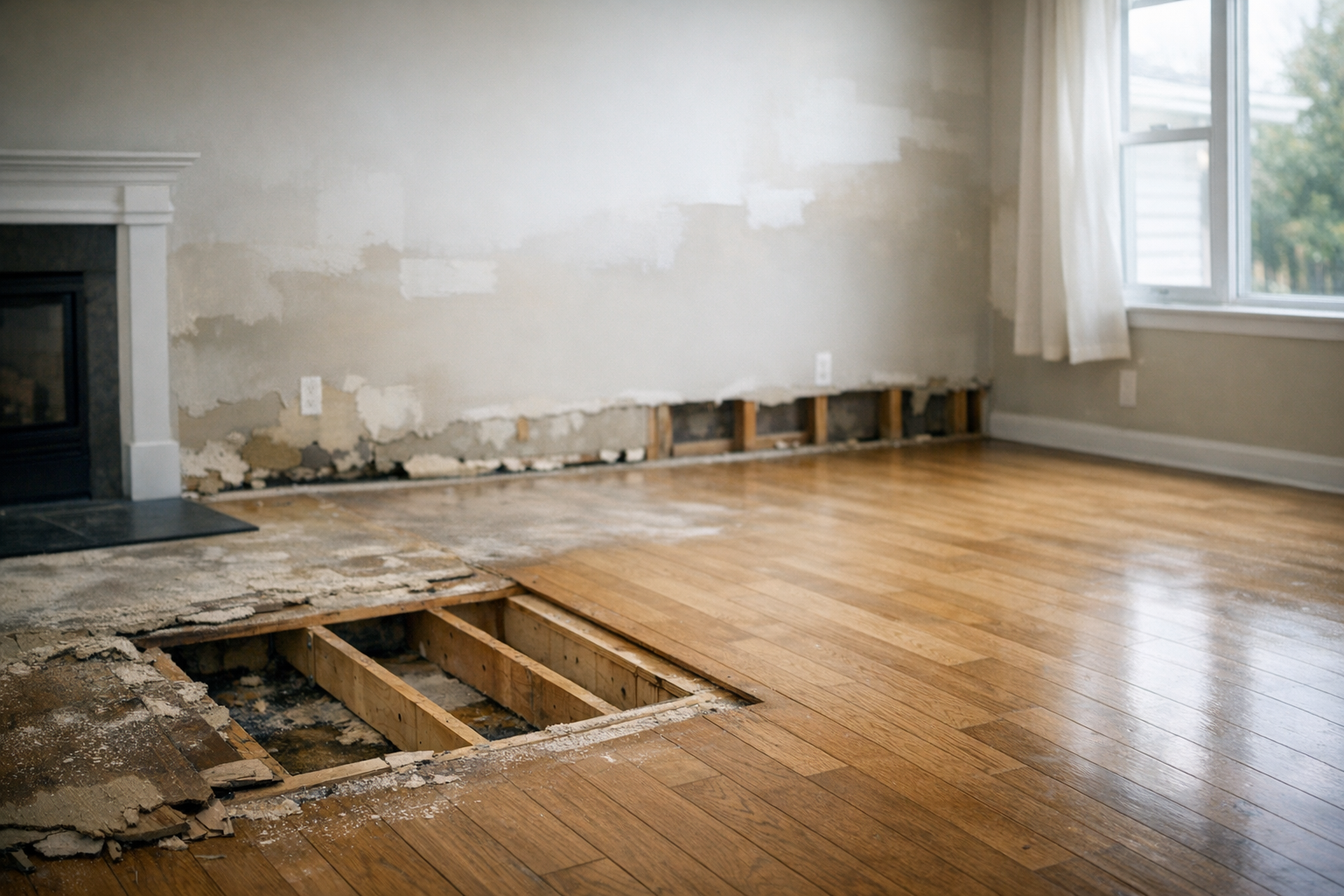
The Real Cost of Water Damage to Your Property Investment
Water damage property value impacts can persist for years, even after visible repairs are complete. The difference between a minor setback and permanent value loss often comes down to how quickly and thoroughly the damage gets addressed.
Property owners face two distinct challenges: immediate restoration needs and long-term market perception. Understanding both helps you make informed decisions about repair investments and future sale strategies.
Immediate vs. Long-Term Water Damage Property Value Effects
Immediate impacts show up in obvious ways. Warped flooring, stained walls, and musty odors signal recent water intrusion to potential buyers.
Hidden damage creates the bigger long-term problem. Moisture trapped in wall cavities, subfloor deterioration, and compromised structural elements can surface months or years later.
Insurance claims history also follows your property. Future buyers’ insurance companies often review previous claims, potentially affecting coverage options and premiums.
Category-Specific Value Impact Ranges
Category 1 water damage (clean water from supply lines) typically reduces value by 5-10% when properly remediated within 48 hours.
Category 2 damage (gray water from appliances or fixtures) can decrease value by 10-15% due to contamination concerns and more extensive remediation requirements.
Category 3 damage (black water from sewage or flooding) often results in 15-25% value reduction, even with professional restoration, due to health concerns and disclosure requirements.
Documentation That Protects Future Property Value
Professional restoration creates a paper trail that reassures future buyers. Detailed photos, moisture readings, and remediation reports demonstrate proper handling.
Certified restoration companies provide documentation packages that include:
- Pre-loss condition photos showing affected areas before work begins
- Daily moisture readings tracking the drying process to industry standards
- Scope of work details listing every material removed, cleaned, or replaced
- Final clearance testing confirming safe moisture levels and air quality
- Warranty information covering workmanship and materials used
This documentation package becomes part of your property’s permanent record. Quality restoration companies understand this and structure their reporting accordingly.
Material Replacement vs. Restoration: Value Implications
Replacement often preserves more value than restoration attempts on porous materials. Drywall, insulation, and subflooring that absorbed contaminated water should be removed entirely.
Hardwood flooring presents a judgment call. Solid wood can often be saved through professional drying and refinishing. Engineered products with composite cores typically require replacement once moisture penetrates.
HVAC systems need special attention. Ductwork exposed to Category 2 or 3 water should be cleaned professionally or replaced. Contaminated systems continue circulating problems throughout the property.
High-Value Areas Requiring Extra Care
Kitchens and bathrooms suffer disproportionate value impacts from water damage. These spaces command premium pricing when pristine but become major detractors when compromised.
Finished basements need complete moisture elimination before reconstruction. Any remaining dampness will return as mold growth, forcing costly re-remediation later.
Timing Factors in Long-Term Impact Assessment
The 48-hour rule isn’t just about preventing mold growth. It’s about preserving property value through rapid response.
Damage left untreated for 72+ hours typically requires more aggressive remediation. This extended timeline appears in insurance reports and remediation documentation.
Seasonal timing also matters for market perception. Water damage occurring during known flood seasons may raise questions about recurring risk. Winter pipe burst damage seems more isolated and manageable to buyers.
Disclosure Requirements and Market Transparency
Most states require disclosure of known water damage history during property sales. The key word is “known” – proper documentation helps define exactly what occurred and how it was resolved.
Professional remediation reports support your disclosure narrative. They show responsible handling rather than attempted concealment.
Some buyers actually prefer properties with documented water damage that’s been professionally addressed. They know exactly what happened and can verify proper resolution.
Insurance Considerations for Future Owners
Claims history affects insurability more than properly disclosed and remediated damage. Insurance companies focus on frequency and cause patterns.
A single water damage incident with professional restoration typically doesn’t impact future coverage. Multiple claims or DIY repairs raise more concerns.
Preventive Measures That Protect Long-Term Value
Post-restoration improvements can actually increase property value above pre-loss levels. Upgraded waterproofing, improved drainage, and modern materials demonstrate proactive management.
Smart home monitoring systems appeal to buyers concerned about water risk. Leak detection sensors and automatic shutoff valves provide ongoing protection.
Annual inspections by qualified professionals help catch developing issues before they become major problems. This proactive approach builds buyer confidence.
Choosing Restoration Services That Preserve Property Value
Certification levels matter for long-term value protection. Look for IICRC (Institute of Inspection, Cleaning and Restoration Certification) certified technicians and supervisors.
Local licensing and insurance requirements vary by area. Restoration companies familiar with regional disclosure laws and insurance practices provide better documentation.
Response time capabilities directly impact final outcomes. Companies offering 24/7 emergency response prevent damage escalation that could affect property value.
When evaluating restoration providers on https://restorationlocator.com, filter by certification level and check customer reviews for documentation quality mentions. Sort by location to find companies familiar with your area’s specific requirements.
Market Recovery Strategies Post-Restoration
Staging water-damaged areas with new materials highlights the restoration quality. Fresh paint, updated fixtures, and modern finishes shift focus toward improvements rather than past problems.
Professional inspections before listing provide third-party validation of restoration quality. Home inspectors can confirm proper moisture levels and structural integrity.
Warranty transfers add value for buyers. Restoration companies that offer transferable warranties on their work provide additional peace of mind.
Regional Factors Affecting Long-Term Impact
High-risk flood zones see different market reactions to water damage history. Buyers in these areas expect comprehensive flood mitigation measures.
Dry climates may view water damage as more unusual, potentially creating greater buyer concern. Detailed documentation becomes even more critical.
Areas with frequent natural disasters often have more experienced restoration infrastructure. This can result in better long-term outcomes and faster market acceptance.
Protecting Your Investment Through Professional Restoration
Water damage property value impacts depend heavily on restoration quality and documentation completeness. Professional handling preserves more value than DIY attempts.
Quick response, thorough remediation, and proper documentation create the foundation for long-term value recovery. Most properties can return to pre-loss value within 12-18 months when properly restored.
Find certified water damage restoration professionals in your area at https://restorationlocator.com. Browse listings by location and compare qualifications to protect your property investment.