
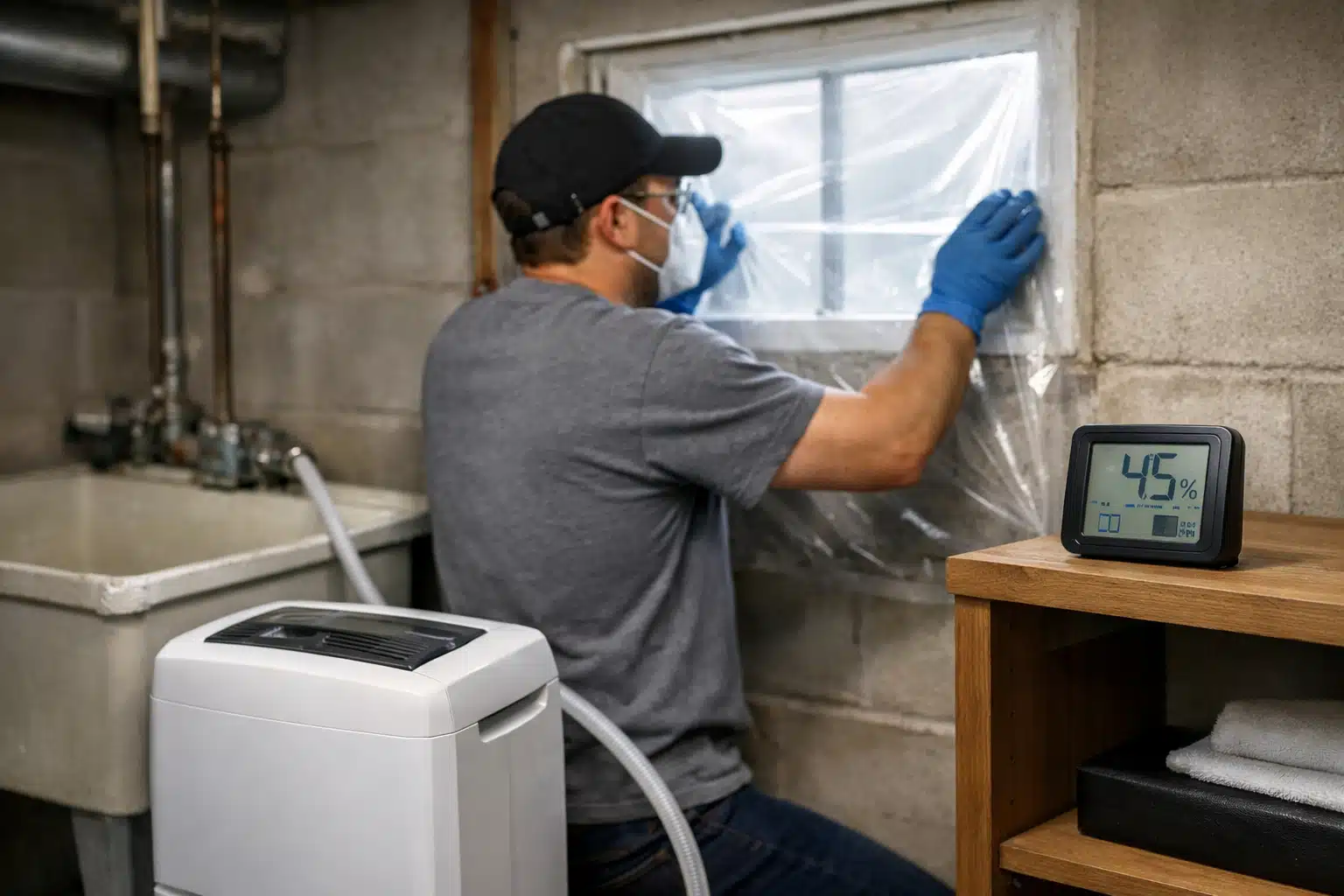
Late August basements grow mold faster than any other time of year. Warm outdoor air meets cool foundation walls, and condensation forms on concrete, joists, and stored boxes. Basement mold removal during this window demands attention to humidity first, cleaning second.
This post covers why late summer conditions feed mold, how to remove it safely, and when to call a specialist. You will learn the exact humidity numbers to target and how to find qualified local help.
Why Late Summer Humidity Triggers Basement Mold
Late summer mold thrives because dew points climb into the 60s and 70s across much of the country. That moist air sinks into basements, the coolest part of your house. When 74-degree air with a 68-degree dew point hits a 62-degree wall, water beads on the surface.
Mold spores need three things: moisture, a food source, and time. In August, they get all three within 48 hours.
The Condensation Problem Most Homeowners Miss
Opening basement windows on a humid day makes mold worse, not better. You pull warm, wet air onto cold surfaces. A finished basement with drywall and carpet holds that moisture longer than bare concrete.
Check your cold-water pipes. If they sweat, your basement air is above the dew point of every surface down there.
How to Handle Basement Mold Removal in Humid Weather
Basement mold removal in late summer works only if you control humidity before scrubbing. Cleaning a wet surface lets spores return within days. Follow these steps in order.
- Measure the humidity. Buy a hygrometer for under $15. Aim to keep relative humidity below 50%.
- Run a dehumidifier sized for the space. A 4,500-square-foot capacity unit handles most damp basements. Empty it daily or connect a drain hose.
- Seal the windows. Keep them shut during humid daylight hours. Vent only on cool, dry mornings if the dew point outside drops below 55 degrees.
- Contain the moldy area. Tape plastic sheeting around spots larger than a few square feet to stop spore spread.
- Clean hard surfaces. Scrub concrete, tile, and sealed wood with detergent and water. Skip bleach on porous materials—it leaves the roots behind.
- Dry within 24 hours. Point a fan at cleaned surfaces. Damp spots that stay wet regrow mold fast.
What to Throw Out
Some materials cannot be saved once mold sets in. Porous items hold spores deep inside their fibers.
- Carpet and padding with visible growth
- Cardboard boxes and stored paper
- Ceiling tiles and water-damaged drywall
- Upholstered furniture left damp for days
Bag these items in plastic before carrying them upstairs. This keeps spores from spreading to living areas.
When Late Summer Mold Needs a Specialist
Call a mold remediation company when growth covers more than 10 square feet. The EPA sets that threshold for a reason: larger areas require containment, negative air pressure, and HEPA filtration.
You should also bring in help when mold returns after cleaning. Recurrence points to a hidden moisture source, like a foundation crack or failed sump pump.
Signs You Cannot Fix It Alone
- Mold behind finished walls. A musty smell with no visible growth means it lives inside the cavity.
- Standing water history. Basements flooded during summer storms need moisture testing.
- Black mold in HVAC. Growth near ductwork spreads spores to every room.
- Health symptoms. Coughing or headaches that ease when you leave the house signal an air-quality problem.
How to Find Mold Removal Help on Restoration Locator
Restoration Locator lists mold remediation companies by location and specialty. You can compare providers before anyone visits your home. This saves time during the peak late-summer demand period.
Use these filters to narrow your choices:
- Filter listings by location to find crews that respond quickly in your ZIP code.
- Sort by specialty to match companies that handle basement and foundation moisture.
- Check reviews from homeowners who dealt with the same humid-season problems.
- Compare response times since mold spreads fast in August heat.
Questions to Ask Before Hiring
A good remediation crew explains their moisture plan, not just their cleaning method. Ask how they will find the water source feeding your mold.
- Do you test humidity and moisture levels before and after?
- Will you set up containment to protect the rest of the house?
- What equipment do you use for drying—and how long will it run?
- Are you licensed and insured for mold work in my state?
Preventing Basement Mold Next Late Summer
Stopping mold beats removing it every time. The same humidity control that clears growth keeps it from coming back.
Keep a dehumidifier running from June through September. Route the drain to a floor sink so it works while you travel. This one habit prevents most late-summer regrowth.
Small Fixes That Cut Moisture
- Extend downspouts at least four feet from the foundation.
- Insulate cold-water pipes to stop dripping condensation.
- Grade soil away from the house so rain drains outward.
- Add a vapor barrier over exposed dirt in crawl spaces.
Key Takeaways
Basement mold removal in late summer works only when you drop humidity below 50% first, then clean and dry within 24 hours. Discard porous items and call a specialist for growth over 10 square feet or hidden moisture sources. Prevention comes down to a dehumidifier and better drainage.
Ready to find local mold help before the humidity spikes again? Browse Disaster Cleanup & Restoration listings now at https://restorationlocator.com and compare crews in your area.