
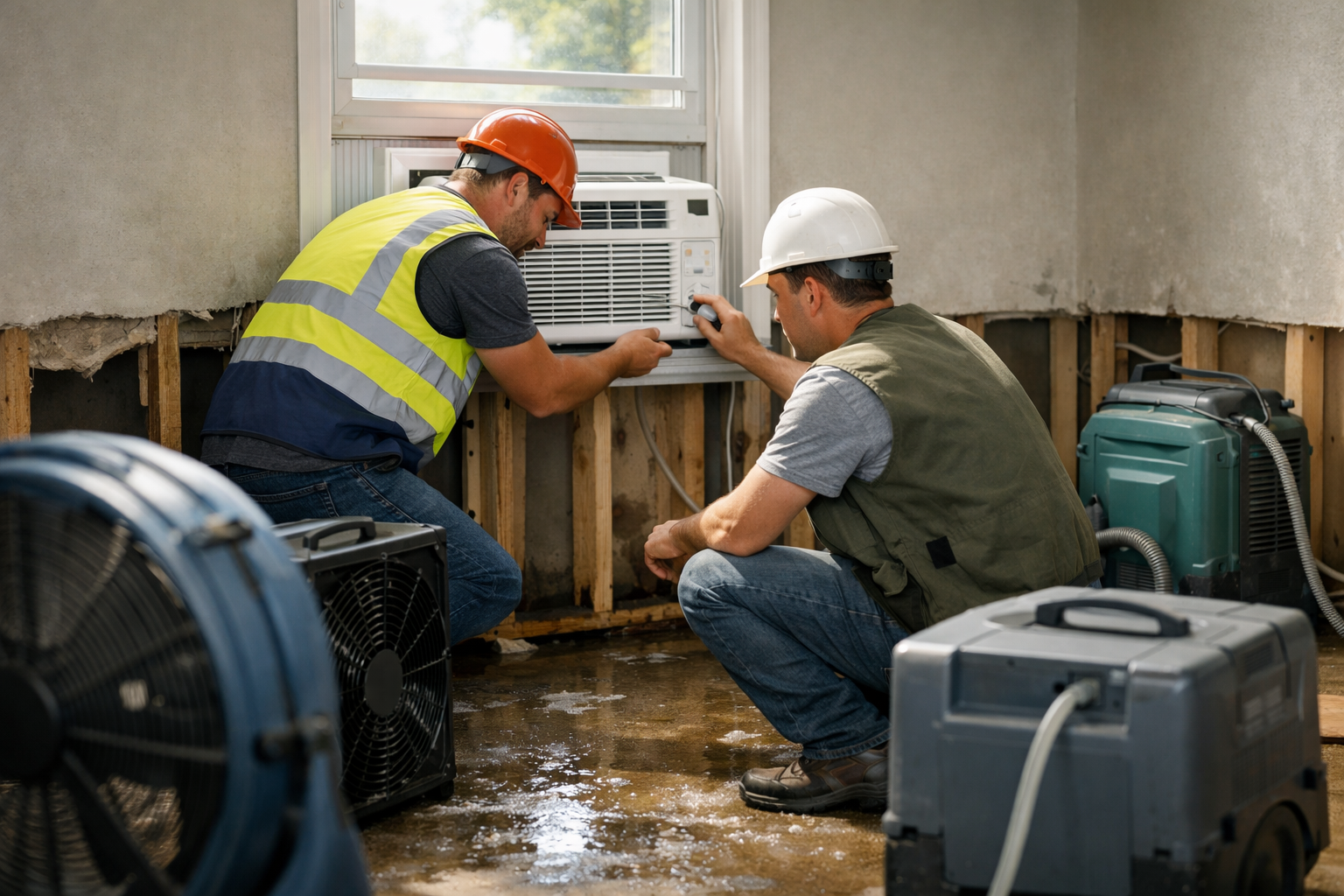
After a hurricane strips power from a Gulf Coast neighborhood, indoor temperatures can climb past 90°F within hours. That heat does more than make people uncomfortable. It accelerates mold growth, warps building materials, and puts vulnerable residents at real medical risk. Air conditioning recovery addresses all three problems at once.
This article explains why cooling systems belong in every disaster recovery plan. You will learn how AC protects health, speeds structural drying, and improves post-disaster comfort for displaced families. You will also find out how to locate providers who handle both cleanup and climate control.
Why Air Conditioning Recovery Matters After a Disaster
Air conditioning recovery is the work of restoring cooling and dehumidification to a damaged building. It covers repairing or replacing HVAC equipment, cleaning contaminated ductwork, and managing indoor humidity during cleanup.
Most people think of AC as a comfort item. After a flood or storm, it becomes a health and structural safeguard. A working cooling system pulls moisture from the air, which slows the conditions that let mold spread.
Heat and Humidity Are the Real Threats
Mold colonies can appear on wet drywall within 24 to 48 hours. Warm, humid air feeds that growth. Cooling and dehumidifying a space early narrows the window mold has to take hold.
Standing floodwater in a closed, hot house creates a second danger: airborne spores and bacteria. Restoring airflow and temperature control makes the building safer to enter and work in.
Health Benefits of Cooling Systems in Recovery
Extreme indoor heat harms people faster than most homeowners expect. Older adults, infants, and those with heart or lung conditions face the highest danger during power outages.
The Centers for Disease Control and Prevention links prolonged heat exposure to heat exhaustion, heat stroke, and worsened chronic illness. A restored cooling system lowers that risk for anyone sheltering in place during repairs.
- Reduces heat-related illness for elderly residents and young children.
- Filters airborne particles stirred up during demolition and debris removal.
- Controls humidity that triggers asthma and allergy flare-ups.
- Lowers mold exposure by keeping surfaces dry.
Cleanup crews benefit too. Workers gutting wet drywall in a 95°F house tire quickly and make mistakes. A cooled workspace keeps them safer and more productive.
Air Conditioning and Post-Disaster Comfort
Post-disaster comfort is more than a convenience. A family that can sleep, eat, and rest in a cooled home recovers faster, both physically and mentally.
Displacement wears people down. Returning to a home with functioning air conditioning gives residents a stable base while repairs continue around them. That stability matters during the long weeks a full restoration can take.
Temperature Control Protects Belongings
Heat and humidity damage more than structures. Wood furniture cracks, electronics corrode, and paper documents curl. Restoring climate control shields salvageable belongings during cleanup.
How AC Fits Into the Restoration Timeline
Cooling and dehumidification are not the last step in recovery. They run alongside water extraction and structural drying from the start.
- Assess the HVAC system. A technician checks whether floodwater reached the air handler, ductwork, or outdoor condenser.
- Decide repair or replacement. Submerged furnaces and electrical components usually require full replacement, not repair.
- Clean or replace ducts. Ductwork that held floodwater or sewage often needs removal, since contaminants settle inside.
- Run temporary cooling. Portable units and dehumidifiers manage the space until the permanent system returns.
- Verify air quality. Crews test humidity and moisture levels before closing walls.
Skipping the duct inspection is a common mistake. A restored AC unit pushing spores from dirty ducts spreads contamination room to room.
Flood-Damaged HVAC: What Usually Needs Replacing
Floodwater ruins most electrical and mechanical HVAC parts. Insulation inside ducts and furnaces traps water and contaminants that cleaning cannot fully remove.
The U.S. Environmental Protection Agency recommends replacing ductwork and furnace components that were submerged. Attempting to salvage them risks recurring mold and poor air quality.
- Replace: furnace, air handler, blower motor, submerged ductwork, and insulation.
- Inspect and possibly replace: outdoor condenser and refrigerant lines.
- Clean and test: metal ducts that stayed above the waterline.
How to Find a Provider for Air Conditioning Recovery
Many restoration companies handle water damage but subcontract HVAC work. Choosing a firm that coordinates both keeps your timeline tight and avoids finger-pointing between crews.
Restoration Locator lets you compare providers by capability and location. Use the directory to match your specific storm damage with the right team.
Filters and Steps to Narrow Your Search
- Sort by location to find crews who reach your area quickly after a regional storm.
- Filter listings by service type to spot providers that cover both water damage and HVAC.
- Check reviews from past clients who dealt with flood-damaged cooling systems.
- Compare response times since mold risk grows within the first two days.
Ask each candidate whether they handle duct cleaning in-house. A single accountable crew reduces delays and coordination gaps.
Questions to Ask Before Hiring
The right questions separate crews who understand cooling recovery from those who treat it as an afterthought.
- Do you inspect ductwork for contamination before restarting the system?
- Will you provide temporary cooling during the repair window?
- How do you test indoor humidity before closing walls?
- Do you replace submerged furnace and blower components rather than clean them?
A provider who answers these clearly has done flood HVAC work before. Vague answers signal a crew that may cut corners on air quality.
Common Mistakes That Slow Recovery
Homeowners sometimes restart a flooded AC unit to cool the house fast. That decision can push contaminated air and spores across the building.
Another error is drying walls without managing humidity. Sealed drywall over damp framing traps moisture and grows mold behind the surface. Cooling and dehumidification prevent both failures.
Key Takeaways
Air conditioning recovery protects health, speeds structural drying, and restores post-disaster comfort for families rebuilding after a storm. Cooling and dehumidification belong early in the recovery timeline, not at the end. Choosing a provider who coordinates water damage and HVAC work keeps your project on schedule.
Browse Disaster Cleanup & Restoration listings at https://restorationlocator.com and start your search today.
Sources
- U.S. Environmental Protection Agency – Mold Cleanup in Your Home
- Centers for Disease Control and Prevention – About Extreme Heat
- U.S. Environmental Protection Agency – Flood Cleanup and Indoor Air Quality