
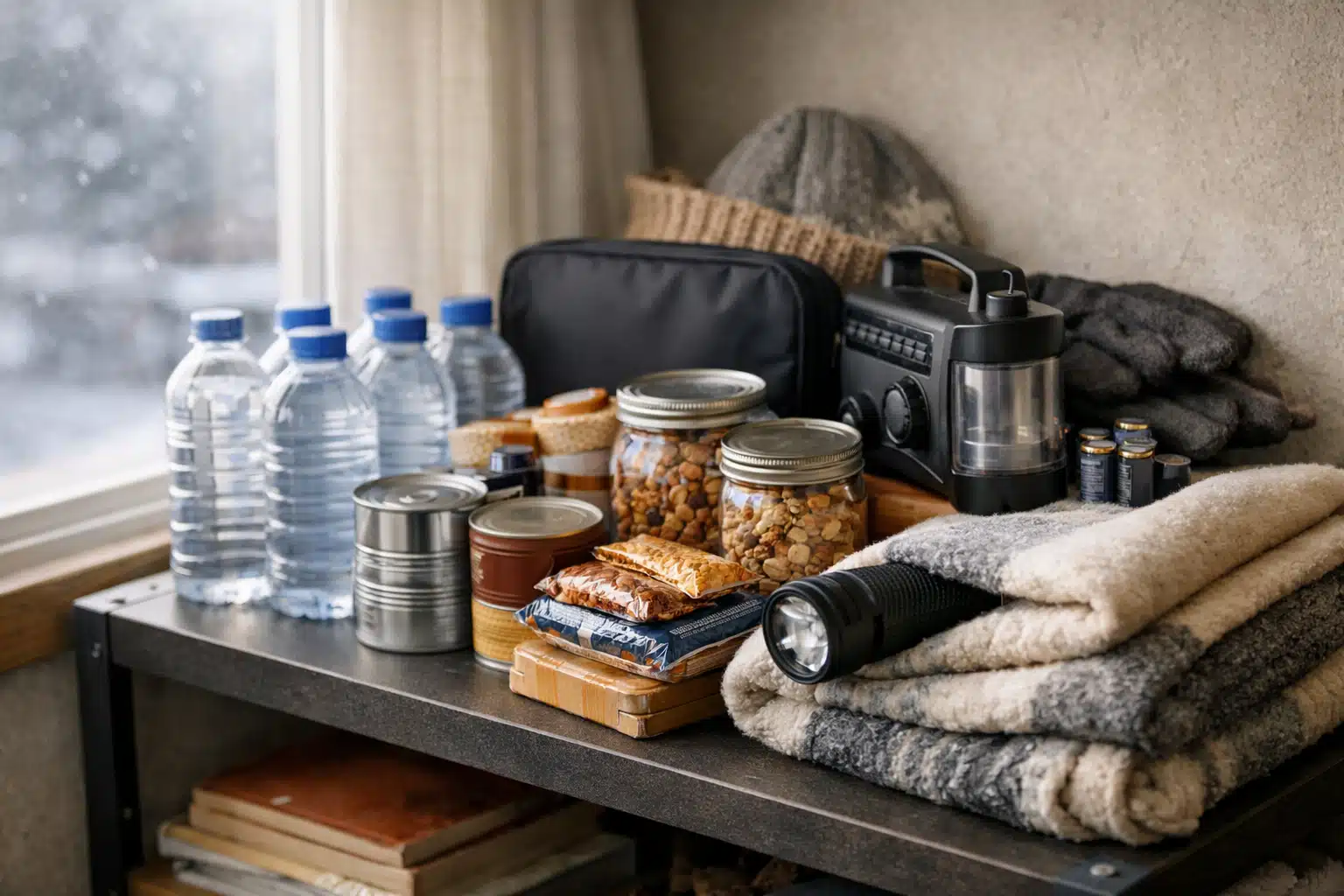
A burst pipe at 2 a.m. during a 10-degree freeze does not wait for daylight. When the power drops and the furnace dies, the items you packed weeks earlier decide how your household makes it to morning.
A winter storm emergency kit is a stocked set of supplies that keeps a household warm, fed, and connected when ice, snow, or extreme cold knocks out power and heat. This post walks you through exactly what to pack, how much, and where to store it.
You will learn the winter-specific items most checklists skip, how long your supplies should last, and what to do if a storm causes water or structural damage.
Why a Winter Storm Emergency Kit Differs From a Standard Kit
Summer outages rarely threaten your life. A February ice storm can.
Winter emergencies combine three risks at once: no heat, frozen pipes, and blocked roads. Your kit has to address all three, not just general power loss.
The 2021 Texas freeze left millions without power for days in sub-freezing temperatures. Pipes burst statewide, and families who had packed only a flashlight and canned food found themselves unprepared for the cold itself.
Plan your home emergency preparation around a minimum of 72 hours without outside help. Rural homes and areas with downed power lines should plan for a full week.
Water and Food for a Multi-Day Cold Snap
Store one gallon of water per person per day, plus extra for pets. A family of four needs 12 gallons for a three-day minimum.
Winter adds a twist: your outdoor spigot and pipes may freeze, cutting your refill source. Keep bottled water indoors where it will not turn to ice.
Food That Needs No Cooking
If the stove runs on electricity, it fails with the grid. Pack food that requires no heat:
- Canned beans, soup, and chili — eat straight from the can if needed
- Peanut butter, crackers, and nut mixes for dense calories
- Dried fruit and granola bars
- Pet food for three days minimum
- A manual can opener — the one item people forget most
Cold weather burns calories faster. Pack 20 percent more food than you would for a summer kit.
Heat and Warmth: The Winter-Specific Priority
Staying warm without central heat is the hardest part of a winter outage. This section gets the least attention in generic checklists and matters most.
Non-Electric Heat Sources
Pack these items to hold body heat and warm a single room:
- Wool or fleece blankets — two per person, stored in sealed bags
- Sleeping bags rated for 0°F or lower
- Hand and foot warmers (chemical packs, 20-pack minimum)
- Hats, gloves, and thermal socks for every household member
- A battery-powered or propane indoor-safe heater
Never run a gas generator, grill, or outdoor heater inside. Carbon monoxide poisoning spikes during winter outages when people bring unsafe heat sources indoors.
Close Off One Room
Pick the smallest interior room with the fewest windows. Pack rolled towels or a draft blocker to seal the door gap and trap heat from body warmth and safe heaters.
Power, Light, and Communication
Darkness arrives by 5 p.m. in deep winter. Reliable light and a way to get storm updates keep your household safe and calm.
- Battery or hand-crank radio — tune to NOAA Weather Radio for alerts
- LED flashlights, one per person, plus a lantern for shared space
- Spare batteries in every size your devices use
- Two power banks, fully charged, for phones
- A car phone charger — your vehicle becomes a charging station
Avoid candles if you have children or pets. Knocked-over flames cause house fires during the exact hours when fire trucks struggle to reach you on icy roads.
First Aid and Medications for Winter
A standard first aid kit covers cuts and burns. Winter adds frostbite and slips on ice.
- A seven-day supply of prescription medications
- Instant cold packs and elastic bandages for falls
- Petroleum jelly for exposed skin and chapped lips
- Thermometer to check for hypothermia signs
- Any infant formula or specialty items your family needs
Rotate medications every few months so nothing expires inside your kit.
Protecting Your Pipes and Home During the Storm
Frozen pipes cause the most expensive winter storm damage. A single burst pipe can release hundreds of gallons into your walls and floors.
Keep these in your kit to slow the damage:
- Pipe insulation sleeves for exposed basement and crawlspace pipes
- A wrench to shut off your main water valve fast
- Tarps and duct tape for broken windows or roof leaks
- A headlamp for checking pipes in the dark
Know where your main shutoff valve is before a storm hits. Shutting water off within minutes of a burst limits flooding and mold growth.
Documents, Cash, and Vehicle Supplies
ATMs and card readers fail with the power. Keep $100 to $200 in small bills in a waterproof pouch.
Store copies of insurance policies, IDs, and your home inventory in the same pouch. If a pipe bursts or a tree falls, your insurer will ask for proof.
Build a second mini-kit for your car in case you get stranded:
- Blanket, extra gloves, and warm hat
- Jumper cables and an ice scraper
- Kitty litter or sand for tire traction
- Protein bars and a water bottle
How to Store and Maintain Your Kit
Keep your main kit in a waterproof bin near an interior exit, not in the garage where contents can freeze.
Check it twice a year. Set reminders for the first weekend of November and April to rotate food, test batteries, and refill water.
Tape a printed checklist to the lid so any family member can confirm nothing is missing before a storm arrives.
What to Do After a Winter Storm Causes Damage
Even a stocked kit cannot stop a pipe that bursts inside a wall. When water or ice damages your home, speed matters.
Mold can begin forming within 24 to 48 hours of water exposure. Acting fast limits repair costs and health risks.
Restoration Locator helps you find Disaster Cleanup & Restoration companies near you. Use the directory to:
- Sort by location to find companies that reach your area in winter conditions
- Filter listings for water damage and burst pipe specialists
- Check reviews from homeowners who faced similar storm damage
Key Takeaways
A winter storm emergency kit focuses on heat, water, and power for at least 72 hours, with pipe protection and no-cook food built in. Store it indoors, maintain it twice a year, and pack a separate kit for your car.
If a storm damages your home, fast cleanup prevents mold and structural loss. Browse Disaster Cleanup & Restoration listings at https://restorationlocator.com and find a company near you before the next freeze.