
A single 50 mph gust can turn a patio chair into a projectile that shatters a sliding glass door. Winter storms bring that force plus freezing rain, heavy snow loads, and ice that cracks furniture frames from the inside out. Winter outdoor furniture security means protecting both your furniture and everything it could damage when the wind picks up.
This post walks you step by step through securing patio sets, grills, and decor before the first hard freeze. You will learn which materials fail first, how to anchor what stays outside, and what to do when a storm causes damage anyway.
Why Winter Storms Wreck Outdoor Furniture
Winter damage happens in three ways: wind lift, water intrusion, and freeze expansion. Each one targets different furniture materials.
Lightweight aluminum chairs and folding tables move first in high wind. Cushioned pieces absorb rain, then the trapped moisture freezes and tears the foam and fabric apart.
Water that seeps into hollow metal legs freezes and expands. That expansion splits welds and cracks powder-coated frames by spring.
Which Materials Fail First
- Resin and plastic: Grows brittle below 20°F and cracks under snow weight.
- Hollow aluminum: Lightest, so it becomes airborne fastest in gusts.
- Untreated wood: Absorbs water, then warps and splits during freeze-thaw cycles.
- Glass tabletops: Shatter under ice load or when struck by flying debris.
- Cushions and fabric: Hold water, grow mold, and freeze into rigid blocks.
Winter Outdoor Furniture Security: A Step-by-Step Plan
Securing your furniture follows a clear order. Start with what moves, then protect what stays.
- Inventory everything outside. Walk your yard and list chairs, tables, planters, grills, umbrellas, and decor. Photograph each item for insurance records.
- Bring portable pieces indoors. Move lightweight chairs, side tables, and cushions into a garage, shed, or basement.
- Remove all cushions and textiles. Store them dry in sealed bins to stop mold and freeze damage.
- Take down umbrellas completely. Collapse them, then remove the canopy and base. An open umbrella acts like a sail.
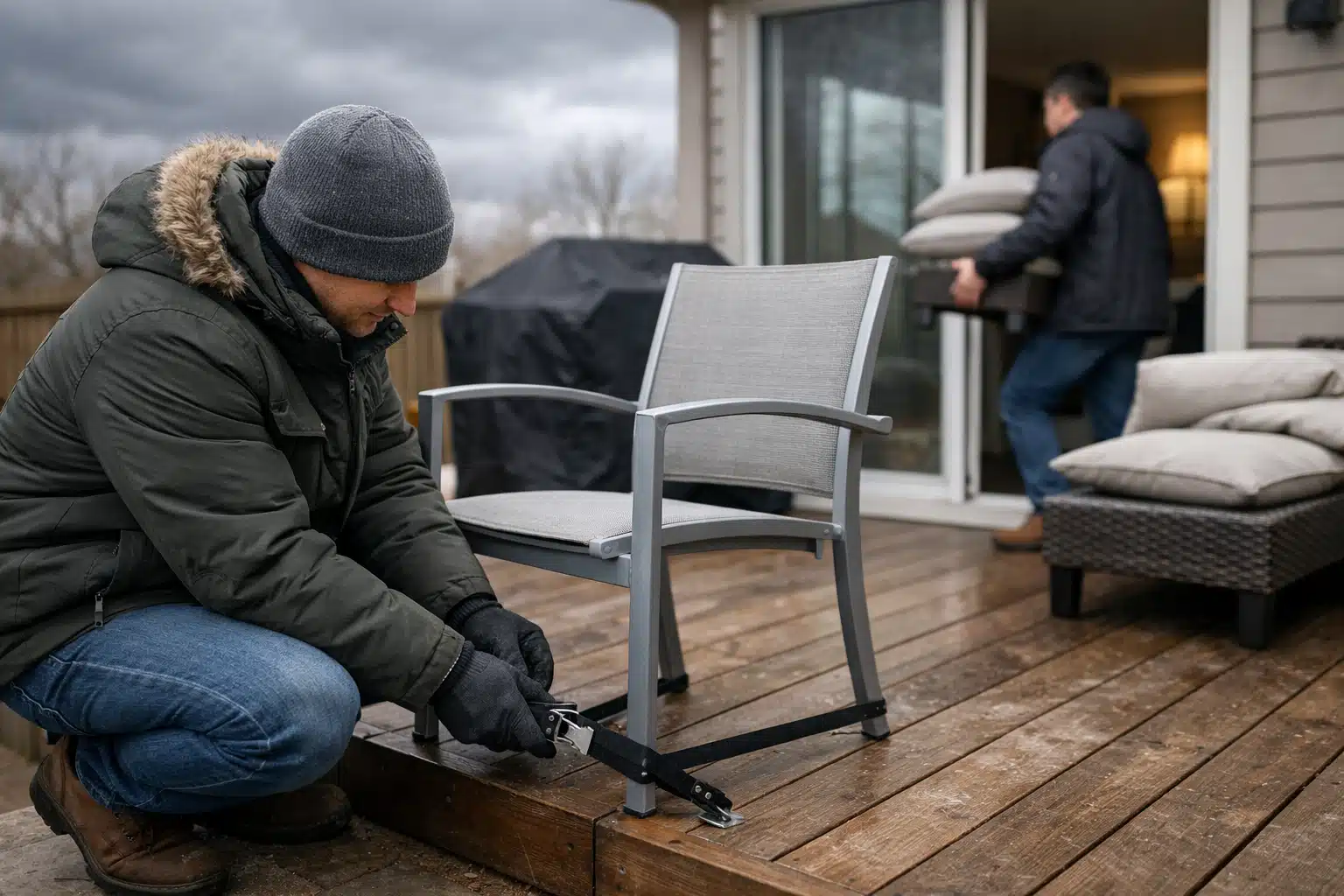
- Anchor what must stay outside. Use ground anchors, bungee systems, or furniture straps for heavy sectionals.
- Cover remaining pieces. Use fitted, breathable covers rated for winter, not thin tarps.
- Clear the deck of loose objects. Plant pots, lanterns, and toys become projectiles in storm wind.
How to Anchor Furniture You Cannot Move
Heavy sectionals and dining sets stay put when wind-rated anchoring holds them down. The method depends on your surface.
- On wood decks: Use eye bolts screwed into joists, then ratchet straps across furniture legs.
- On concrete patios: Install concrete anchor points and loop steel cable through frames.
- On grass or pavers: Drive auger-style ground anchors and strap down with 1,200-pound rated webbing.
Group furniture against a solid wall when you can. A corner formed by two walls cuts wind exposure on two sides.
Protecting Specific Items from Storm Damage
Different pieces need different handling. These are the ones that cause the most trouble.
Grills and Fire Features
A gas grill on casters rolls across a patio in 40 mph wind. Lock the wheels, disconnect the propane tank, and store the tank upright outdoors away from the house.
Cover the grill with a fitted, vented cover. Trapped moisture under a sealed tarp rusts burners faster than open exposure.
Glass-Top Tables
Glass tabletops shatter under ice or flying debris. Remove the glass, wrap it in moving blankets, and store it flat indoors.
If the glass must stay, lay the table on its side against a wall. A horizontal surface collects less ice load.
Planters and Ceramic Decor
Water inside ceramic pots freezes and cracks them from within. Empty soil from drainage-free pots and move glazed ceramics indoors before the first freeze.
Storm Preparation Tips for the Whole Patio
Furniture is one part of a wider setup. A few extra storm preparation tips protect the space around it.
- Trim overhanging branches that could fall under ice weight and crush furniture below.
- Clear gutters and drains so melting snow does not pool around deck posts.
- Check deck railings and fasteners before anchoring anything to them.
- Mark buried anchor points with flags so you can find them under snow.
Do a final walk 24 hours before a forecasted storm. Wind warnings give you time to stow last-minute items.
When Winter Storms Still Cause Damage
Even secured patios take hits during severe storms. Fallen trees, ice dams, and wind-driven debris cause water intrusion and structural harm.
Flying furniture that breaks a window lets freezing rain into your home. That leads to water damage, warped flooring, and mold within days.
When storm damage reaches your house, fast cleanup limits the spread. Standing water and trapped moisture need extraction and drying within 24 to 48 hours.
Finding Help After a Storm
Restoration Locator lists Disaster Cleanup & Restoration providers by area. Use the directory to act quickly when damage occurs.
- Filter listings by location to find providers near your property.
- Check reviews to compare past storm-response work.
- Sort by specialty for water extraction, structural drying, or mold remediation.
Key Takeaways
Winter outdoor furniture security comes down to moving what you can, anchoring what you cannot, and removing cushions, glass, and umbrellas before the first storm. Material matters: resin cracks, hollow metal flies, and trapped water freezes and splits frames. Pair furniture steps with wider storm preparation tips like trimming branches and clearing drains.
When a storm causes damage anyway, speed limits the cost. Browse Disaster Cleanup & Restoration listings at https://restorationlocator.com to find help in your area and start your search today.
Sources
- Ready.gov – Winter Weather Preparedness
- National Weather Service – Winter Weather Safety
- FEMA – Protect Your Property from Wind Damage