When a flood or wildfire hits, the fastest help rarely comes from a distant agency. It comes from the street corner, the church basement, and the neighbor with a truck. Community disaster recovery describes how local people and organizations coordinate to rebuild faster than any single household could alone.
This post breaks down what that coordination looks like on the ground. You will learn who does what, how volunteer networks connect with professional restoration crews, and where to find vetted help when you need it.
What Community Disaster Recovery Actually Means
Community disaster recovery is the coordinated effort of residents, local groups, and businesses to restore homes and infrastructure after a disaster. It fills the gap between the moment danger passes and the day insurance checks arrive.
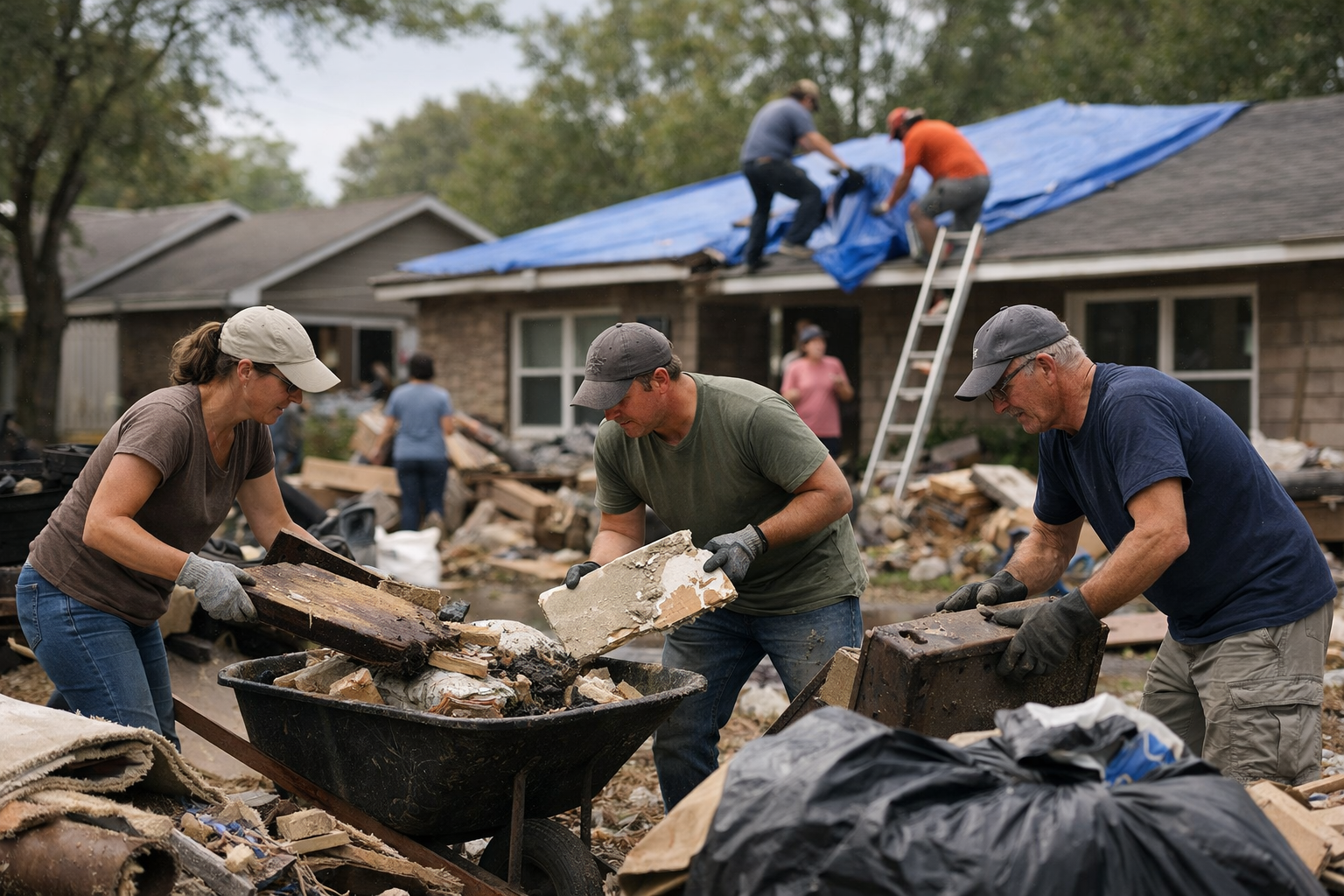
That gap can last weeks. During it, neighbors muck out basements, tarp roofs, and haul debris to the curb. Their speed matters because standing water breeds mold within 24 to 48 hours.
Why Local Response Beats Waiting
Federal aid follows a slow paperwork trail. A FEMA declaration can take days, and reimbursement takes far longer. Local groups move before any of that clears.
After the 2021 Tennessee floods in Waverly, church volunteer teams reached damaged homes the same afternoon. They pulled soaked drywall before mold set in. That head start cut restoration costs for many families.
The Groups That Drive Neighborhood Support
Effective recovery rarely relies on one hero. It runs on overlapping networks, each covering a task the others cannot. Strong neighborhood support stitches those networks together.
- Faith-based teams — Groups like the Southern Baptist Disaster Relief field trained volunteers for chainsaw and mud-out work.
- Mutual aid collectives — Informal resident networks match people with tools, trucks, and spare bedrooms.
- Long-Term Recovery Groups (LTRGs) — County-level coalitions that manage cases for months after the news trucks leave.
- Local businesses — Hardware stores, contractors, and restaurants that donate supplies and meals.
Each group handles a different phase. Volunteers clear debris fast. LTRGs handle the slow rebuild that stretches past a year.
How Volunteers and Professionals Divide the Work
Volunteers and licensed restoration crews are not competitors. They handle separate jobs, and confusing the two costs money.
Here is a plain split of responsibilities:
- Volunteers handle: debris removal, tarping, moving furniture, distributing water and food.
- Restoration pros handle: structural drying, mold remediation, electrical safety, and mold clearance testing.
A neighbor can carry out wet carpet. Only a certified crew should confirm a wall is dry enough to close up. Skipping that step invites hidden mold and failed insurance claims.
How Community Networks Connect You to Vetted Help
Local groups often keep informal lists of reliable contractors. That word-of-mouth matters, but it has limits. Verbal referrals fade, and out-of-town storm chasers flood disaster zones.
A directory closes that gap with verifiable records. On https://restorationlocator.com, you can cross-check a neighbor’s recommendation against license and review data.
Filters That Protect You From Fraud
Disaster fraud spikes after every major storm. Fake contractors demand cash upfront, then vanish. Use directory tools to screen before you sign anything.
- Sort by location to prioritize crews already working in your county.
- Check reviews from prior clients, focusing on flood or fire jobs like yours.
- Filter listings by specialty — water, fire, or mold — to match your damage type.
- Compare response times noted in listings to find crews available now.
Pair that data with your neighborhood’s referrals. A contractor both your LTRG and the directory rate highly is a safe bet.
Building a Recovery Network Before Disaster Strikes
The strongest recovery starts before the storm. Blocks that plan ahead recover in half the time of those that scramble afterward.
You can build that groundwork with small steps:
- Map your block’s skills. Note who owns a generator, a chainsaw, or a truck.
- Set a meeting point. Pick a spot to check on each other once roads clear.
- Save a vetted contractor list. Research restoration crews now, not during a crisis.
- Identify vulnerable neighbors. Know who needs help evacuating or rebuilding first.
A shared spreadsheet costs nothing. After the 2017 Houston floods, blocks with prewritten contact lists secured restoration crews days faster than unprepared streets.
The Role of Small Businesses in Recovery
Local shops anchor a recovering block. A reopened grocery store signals that normal life is returning. Restoration firms that live in your county also return calls faster than distant franchises.
Supporting local restoration crews keeps recovery money circulating at home. That local spending funds the next round of neighborhood repairs.
Common Mistakes That Slow Community Recovery
Good intentions can backfire without coordination. Watch for these errors that stall progress:
- Uncoordinated volunteers — Crowds without task leaders duplicate work and waste hours.
- Discarding documentation — Tossing damaged items before photos void insurance claims.
- Hiring unlicensed help — Cash-only crews leave mold and code violations behind.
- Ignoring the slow phase — Attention fades after week two, but rebuilds take months.
Fix the first mistake by naming a block captain. Fix the third by verifying every contractor against directory records.
Key Takeaways
Community disaster recovery moves faster than any lone household because neighbors and local groups act before agencies arrive. Volunteers clear the mess, and licensed crews handle drying, mold, and structural repair. Verify both your referrals and your contractors before work begins.
Start building your recovery plan now. Browse Disaster Cleanup & Restoration listings and vet local crews at https://restorationlocator.com.
Sources
- FEMA – National Disaster Recovery Framework
- CDC – About Mold
- National Voluntary Organizations Active in Disaster (National VOAD)
- CDC – Mold Cleanup Guidance After a Flood