
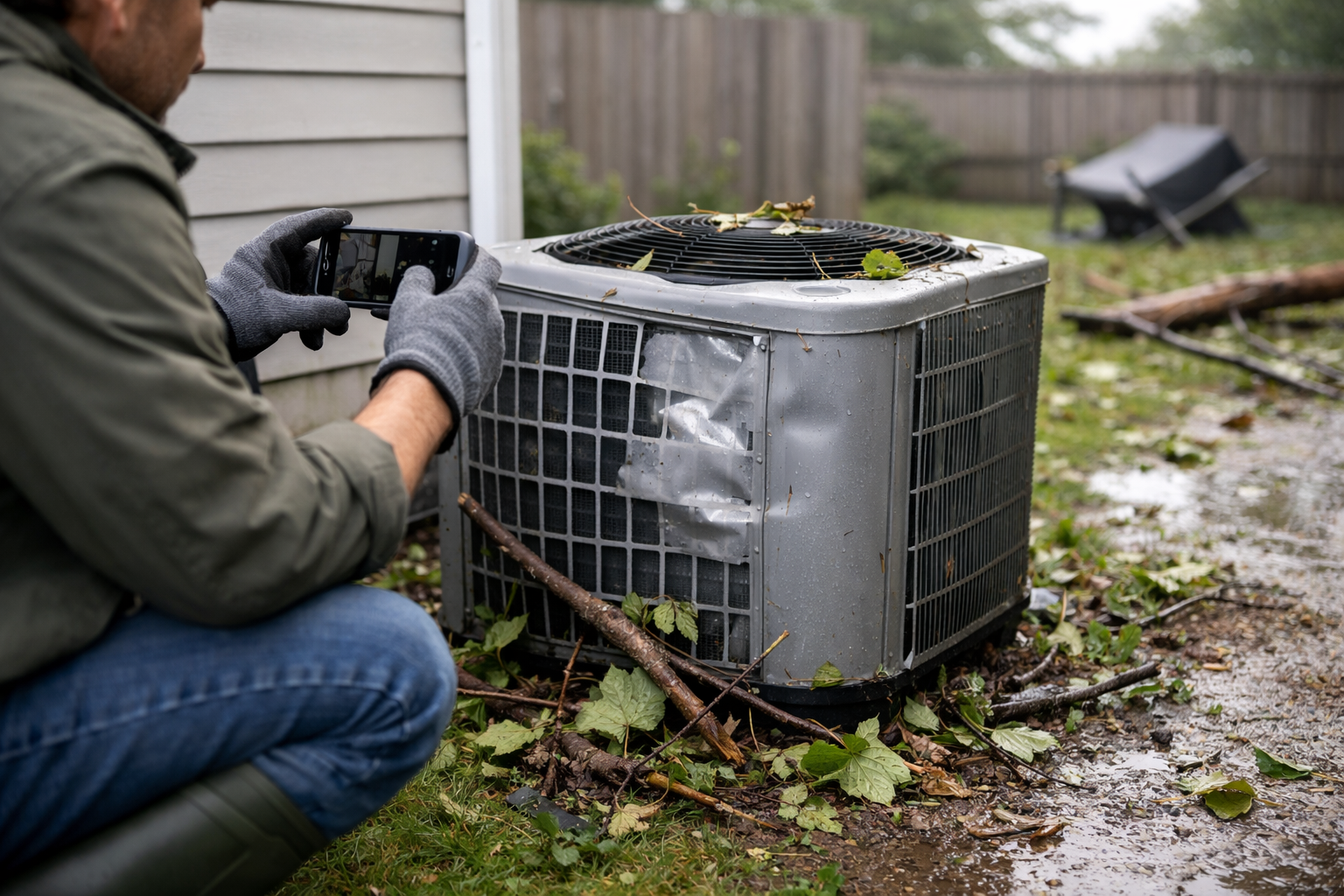
A lightning strike can fry your air conditioner’s circuit board in a fraction of a second. Yet after a summer storm, most homeowners rush to check the roof, the windows, and the basement, leaving the AC unit as an afterthought. That oversight can cost thousands and leave your family in a hot house for weeks.
This post covers the exact steps for AC damage restoration after severe weather. You will learn how to spot hidden damage, protect your warranty and insurance claim, and find qualified help.
The air conditioner is the appliance storm victims forget. Treating it early keeps a small repair from becoming a full replacement.
Why AC Damage Restoration Gets Overlooked After a Storm
Air conditioners sit outside, exposed to hail, flying debris, and power surges. Damage is easy to miss because the unit may still turn on and hum for a day or two before failing.
Common storm-related AC damage includes:
- Power surge damage to the capacitor, contactor, or control board from lightning
- Physical impact from hail or debris bending the condenser fins
- Flood submersion that ruins the compressor motor and electrical components
- Refrigerant line leaks caused by shifted or struck outdoor units
- Debris clogging the fan and coils, forcing the system to overheat
A submerged condenser unit almost never runs safely again. Water in the compressor windings causes shorts that a technician cannot repair.
Immediate Steps to Take After Storm Damage
Act within the first 24 hours to limit further damage and support any insurance claim. Follow these steps in order.
- Cut the power at the breaker. Do not use the thermostat. Shut off the dedicated AC breaker in your electrical panel to stop electrical shorts and fire risk.
- Stay away from a flooded unit. Standing water near an energized condenser is a shock hazard. Wait for the power to be off before approaching.
- Document everything. Photograph the outdoor unit, any visible dents, water lines, and surrounding debris before cleanup.
- Clear loose debris. Remove branches or leaves resting on the unit, but do not open panels or touch wiring.
- Do not restart the system. Running a damaged compressor or wet electrical parts can turn a repair into a replacement.
Never spray a damaged unit with a hose to clean it. Water forced into electrical components multiplies the damage.
How to Tell if the Damage Is Serious
Some warning signs point to major internal damage. Watch for these after you restore power under a technician’s direction:
- Burning or acrid smell near the unit or vents
- Tripped breaker that flips again immediately
- Grinding, buzzing, or clicking from the outdoor unit
- Warm air blowing from vents set to cool
- Visible oil stains near refrigerant lines, a sign of a leak
An oil stain around the copper lines means refrigerant is escaping. That job requires an EPA-certified technician by law.
Protecting Your Insurance Claim and Warranty
Storm damage to an AC unit is covered under most homeowners policies. The wind, hail, and lightning categories usually apply, though flood damage needs separate flood coverage.
To keep your claim clean:
- File before any repair work begins. Adjusters need to see the damage in its original state.
- Save the model and serial number. These are printed on a label on the condenser cabinet.
- Keep all receipts for temporary cooling, hotel stays, or emergency work.
- Ask about surge-specific coverage. Some policies treat lightning surge damage differently than physical impact.
Do not let anyone open the sealed refrigerant system before the adjuster reviews it. Unauthorized work can void a manufacturer warranty on parts like the compressor.
What Insurance May Not Cover
Age matters. Insurers apply depreciation to units over ten years old, and a full payout is rare for older systems.
Flood water damage stays excluded unless you carry a flood policy. Homeowners in low-lying areas should confirm this coverage before hurricane season.
When to Repair Versus Replace Your AC
Repair makes sense for surface damage. Replacement makes sense when the sealed system or compressor is compromised.
Use this side-by-side breakdown:
- Repair likely: bent fins, blown capacitor, damaged contactor, clogged coils, cracked fan blade
- Replace likely: flooded compressor, seized motor, refrigerant leak in a unit over 10 years old, warped cabinet exposing internals
A capacitor replacement runs a fraction of a new system cost. A flooded compressor on an aging unit rarely justifies the repair bill.
Finding Qualified AC Damage Restoration Help
Summer storm repair for an air conditioner needs both HVAC and restoration skills. A flooded unit sitting in a water-damaged home requires a provider who handles moisture, mold, and electrical safety together.
On Restoration Locator, you can match with providers who cover storm and water damage. Use these filters to narrow your search:
- Sort by location to reach crews already working in your storm zone
- Filter by service type for water damage and storm restoration
- Check reviews from homeowners who dealt with the same storm event
- Compare response times since AC downtime during a heat wave is urgent
Ask any provider two questions up front. Do they hold EPA Section 608 certification for refrigerant work? Can they coordinate directly with your insurance adjuster?
Red Flags to Avoid
Storm-chasing contractors flood damaged areas after severe weather. Protect yourself from the ones cutting corners.
- They demand full payment before starting work
- They cannot provide a license or EPA certification
- They pressure you to sign an insurance assignment on the spot
- They quote a replacement without inspecting the compressor
A legitimate provider inspects first, documents the damage, and gives a written estimate. Reviews on the directory help you separate them from the rest.
Preventing Future Storm Damage to Your AC
A few low-cost steps reduce the odds of a repeat. Install a whole-home surge protector at the electrical panel to shield the AC from lightning spikes.
Other protective moves:
- Anchor the outdoor unit with hurricane straps in high-wind regions
- Trim branches that could fall on the condenser
- Cover the unit only when it is off and a storm is imminent
- Raise the condenser on a pad above your area’s flood line
Homeowners in hail-prone states can add a hail guard cage over the condenser. It deflects impact without blocking airflow.
Key Takeaways
Cut the power, document the damage, and avoid restarting a storm-hit air conditioner. File your insurance claim before any repair, and hire a provider with both HVAC and restoration credentials for real AC damage restoration.
The forgotten appliance after a storm deserves fast attention. Browse Disaster Cleanup & Restoration listings on Restoration Locator and start your search today.