A water-damaged home hides risks that most people cannot see: black mold behind drywall, contaminated Category 3 water, and airborne particles from fire soot. Restoration certifications exist because these hazards demand training that goes far beyond mopping up water. When you hire a certified company, you are hiring documented proof that its technicians know how to protect your family and their own crew.
This article breaks down which certifications matter, what each one covers, and how they translate into real safety for you. You will learn how to verify credentials before signing a contract and where to check them fast.
What Restoration Certifications Actually Prove
Restoration certifications are credentials that verify a company’s technicians have completed accredited training in specific hazard categories. They cover skills like structural drying, mold remediation, and biohazard cleanup. Each certification maps to a body of standards that dictates how work gets done.
The difference shows up in the details. A certified water damage technician knows the three water categories. Category 1 is clean water. Category 2 carries contaminants. Category 3 includes sewage and floodwater that requires respirators and containment.
An uncertified crew may treat all three the same way. That mistake spreads bacteria and leaves moisture that grows mold within 48 hours.
The Certifications That Matter Most
A handful of credentials carry weight across the restoration field. Knowing what each one covers helps you match a company to your specific damage.
IICRC Certifications
The Institute of Inspection, Cleaning and Restoration Certification (IICRC) sets the most widely recognized standards. Its designations attach to individual technicians and firms. Common ones include:
- WRT (Water Damage Restoration Technician) — covers water extraction and structural drying.
- ASD (Applied Structural Drying) — teaches drying of walls, subfloors, and framing.
- AMRT (Applied Microbial Remediation Technician) — covers mold and sewage contamination.
- FSRT (Fire and Smoke Restoration Technician) — covers soot removal and odor control.
A firm holding IICRC certification agrees to follow published standards like the S500 for water damage. That document runs hundreds of pages and dictates drying targets and safety protocols.
OSHA Training
OSHA training verifies that workers know how to protect themselves on hazardous job sites. The OSHA 10 and OSHA 30 courses cover fall protection, respiratory protection, and hazard communication.
This matters to you for two reasons. Injured workers create liability. Crews trained in respiratory protection also handle your contaminated air more carefully.
RRP Certification for Lead
Homes built before 1978 may contain lead paint. The EPA Renovation, Repair, and Painting (RRP) rule requires certified firms for work that disturbs painted surfaces. A restoration crew tearing out old drywall without RRP training can spread lead dust across your home.
How Certifications Translate Into Customer Assurance
Credentials are not paperwork for its own sake. They connect directly to the safety of your home and health.
Fewer Health Risks After the Job
A certified mold remediator uses negative air pressure and HEPA filtration to contain spores. Without containment, a crew can spread mold from a bathroom to your entire HVAC system. That turns a $2,000 job into a $20,000 one.
Proper Moisture Verification
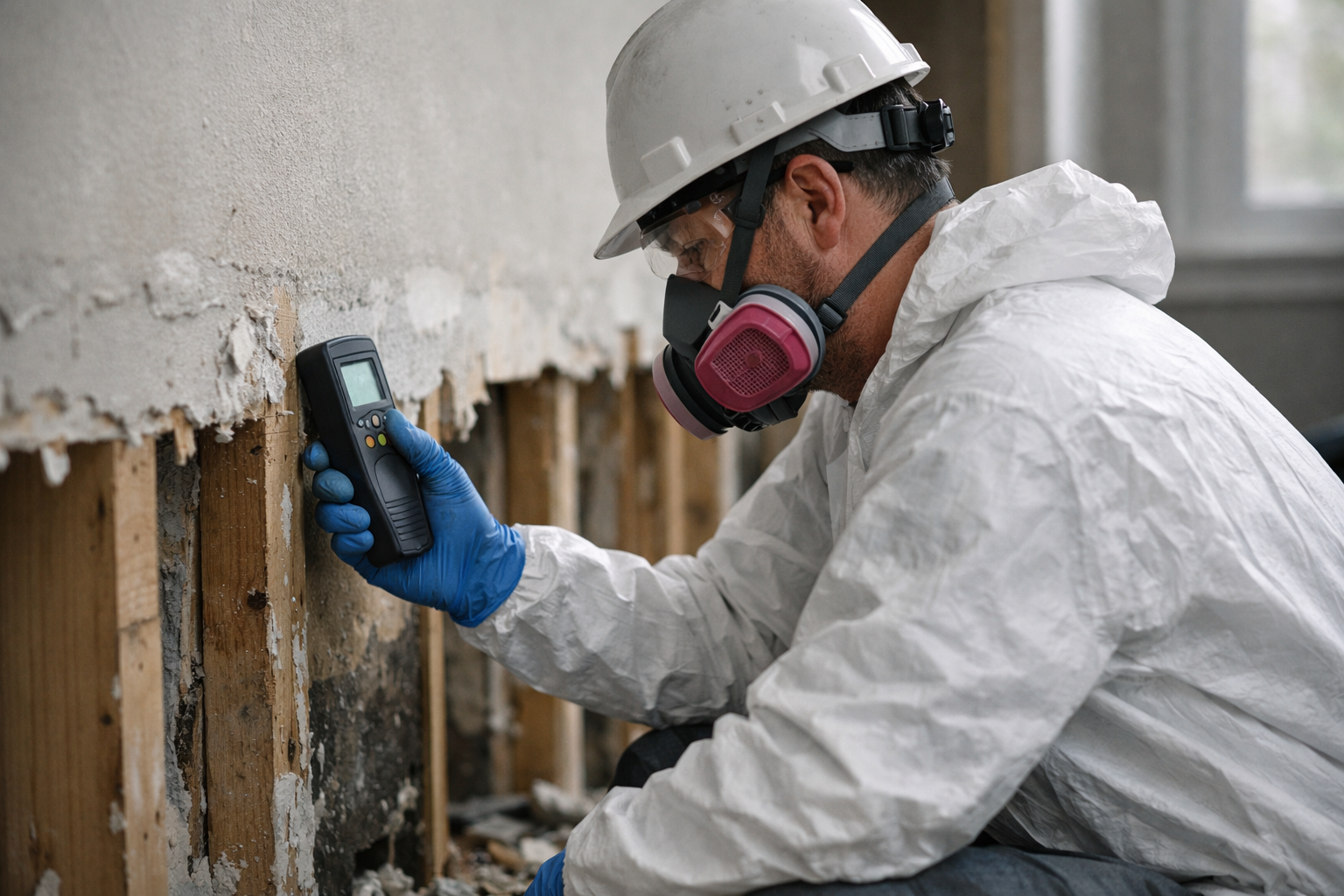
Certified technicians use moisture meters and thermal cameras to confirm a structure is dry. They document readings before closing the walls. This paper trail protects you if hidden moisture surfaces later.
Insurance Claims That Hold Up
Insurers respect documented standards. When a certified firm follows the IICRC S500, its reports carry weight during a claim dispute. An uncertified contractor’s word may not.
How to Verify Restoration Certifications Before You Hire
Checking credentials takes minutes and saves you from costly mistakes. Follow these steps before signing anything.
- Ask for certification numbers. Request IICRC firm and technician numbers in writing.
- Confirm them at the source. The IICRC website lets you verify a firm’s active status by name or number.
- Match the credential to your damage. A fire job needs FSRT. A flooded basement with sewage needs AMRT.
- Check expiration dates. Many certifications require renewal. Lapsed credentials signal a lapsed commitment.
- Ask about crew training, not just the owner. The technicians in your home should hold credentials, not only the company founder.
Using Restoration Locator to Compare Certified Providers
The directory at https://restorationlocator.com groups Disaster Cleanup & Restoration providers by location and specialty. That structure lets you shortlist certified firms without cold-calling a dozen companies.
Here is how to put the directory to work:
- Filter listings by location to find crews that can reach you within hours, which matters for water damage.
- Sort by specialty to match mold, fire, or biohazard work to the right certified provider.
- Check reviews for mentions of documentation, moisture readings, and clean job sites.
- Compare listings side by side to weigh credentials against response time and coverage area.
A provider that lists its IICRC or OSHA credentials openly signals confidence. One that hides them warrants a second look.
Red Flags That Signal Missing Credentials
Some warning signs point to a crew without proper training. Watch for them during your first call.
- Vague answers when you ask which water category you are dealing with.
- No containment plan for a mold job.
- Reluctance to provide certification numbers in writing.
- No moisture documentation before or after drying.
- A price far below every other quote, which points to skipped safety steps.
Any one of these does not condemn a company. Two or more together should send you back to the directory for other candidates.
Why Health and Safety Standards Protect Everyone
Health and safety standards in restoration protect the occupants, the workers, and the building itself. A sewage backup releases bacteria and viruses that require full protective equipment. A crew that skips this step risks illness and cross-contamination.
Certifications turn abstract safety rules into repeatable practice. When a technician has trained in respiratory protection and containment, those habits show up on your job. That is the direct value you pay for.
Key Takeaways
Restoration certifications verify that a crew can handle water, mold, fire, and biohazard damage without putting your health at risk. Verify credentials at the source, match them to your damage type, and watch for red flags like missing documentation. Certified providers give you cleaner air, sound structures, and insurance reports that hold up.
Start your search on Restoration Locator and compare certified Disaster Cleanup & Restoration providers in your area now.