
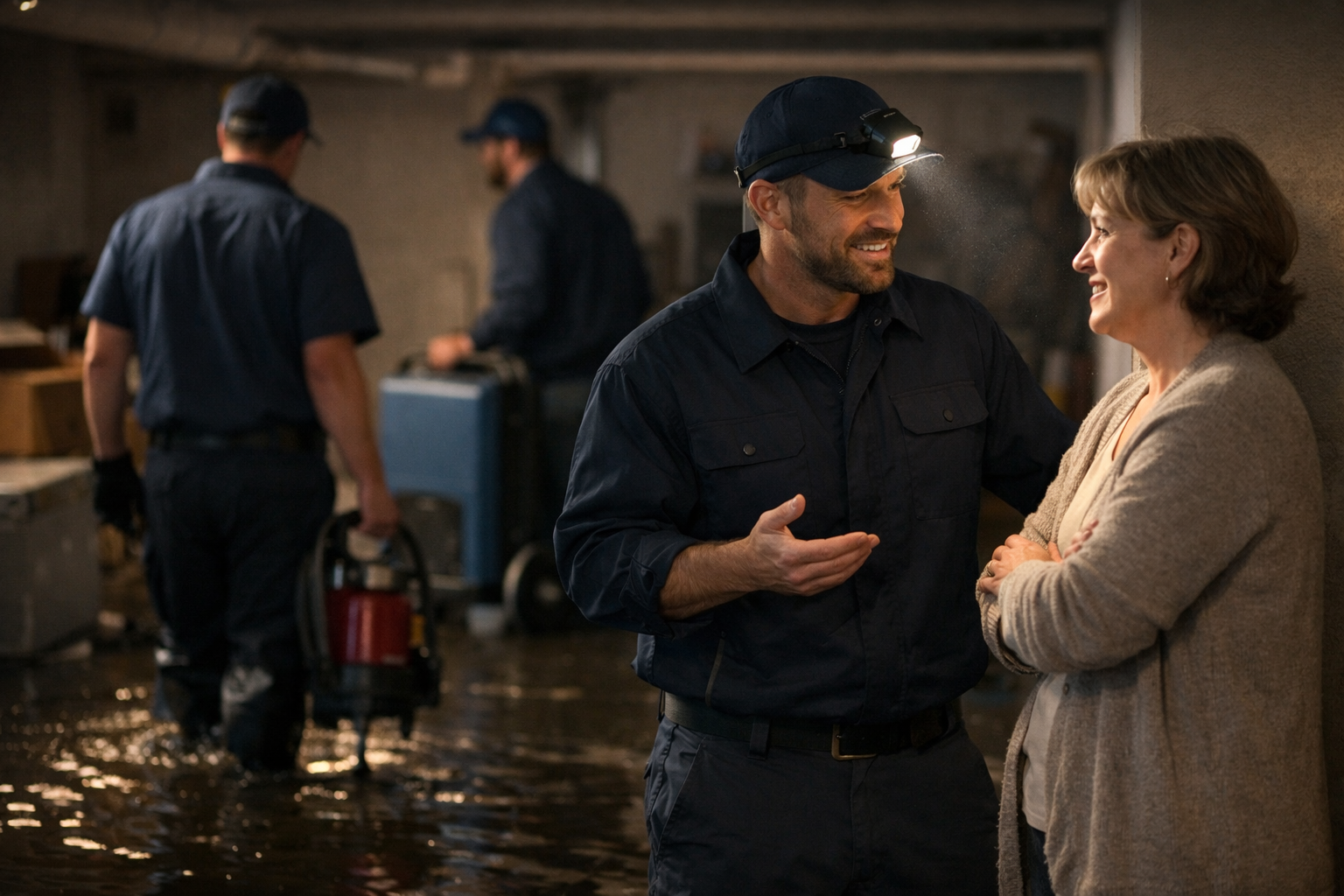
Your basement floods at 2 a.m., and the first call you make will shape the next three weeks of your life. In that moment, restoration customer service matters more than any marketing claim on a company’s homepage. A crew that answers, explains, and shows up on time can be the difference between a quick recovery and a drawn-out fight.
This post shows you how to judge a company’s service before you sign anything. You will learn what to ask, which red flags to catch early, and how to use directory tools to compare providers fast.
Why Restoration Customer Service Matters More Under Stress
Disaster restoration is one of the few purchases people make in a panic. You are wet, tired, and often frightened about mold, insurance, or displacement. Good service reduces that fear; poor service multiplies it.
Water damage spreads fast. According to the EPA, mold can begin growing within 24 to 48 hours of water exposure. A company that returns your call in ten minutes protects your home in a way a slow one never can.
So the customer service you notice on day one predicts the whole project. Watch how a company treats you before you have paid a dime.
The Traits That Define Good Restoration Customer Service
Good restoration customer service is fast, clear, and accountable. It answers your questions before you ask them and keeps promises about timing and cost. Below are the traits that separate strong providers from weak ones.
1. Real Response Time, Not a Promise of One
Many companies advertise “24/7 emergency response.” Test it. Call late at night and see who answers.
- A live person answering after hours signals real staffing.
- A voicemail with no callback within 30 minutes is a warning.
- An answering service that cannot dispatch a crew wastes your time.
2. Plain-Language Explanations
A strong technician explains drying equipment, moisture readings, and timelines in words you understand. If someone rushes you into signing a work authorization without explaining scope, walk away. Clear communication now prevents billing disputes later.
3. Insurance Fluency
Most restoration claims run through homeowners insurance. A company that documents damage with photos and moisture logs helps your claim move faster.
Ask whether they bill your insurer directly and whether they work with adjusters daily. A team fluent in claim language saves you hours on the phone.
4. One Point of Contact
The best projects assign a project manager who knows your name and your job number. Bouncing between strangers each call is a service failure. Ask directly: “Who will I talk to every day?”
Questions That Reveal Service Quality Fast
Use this short list on your first call. The answers tell you more than any review.
- Who answers when I call at midnight? Listen for a real dispatch process, not a promise.
- How soon can a crew arrive? Two hours is strong for a metro area; four is acceptable rurally.
- Will you send daily updates? Photos and moisture readings show accountability.
- Do you bill my insurer directly? This reduces your out-of-pocket stress.
- Who is my single point of contact? A named person beats a call center.
A company that answers these clearly on the first call treats communication as part of the work. That is exactly what you want when your floors are soaked.
Red Flags That Signal Poor Service Ahead
Poor restoration customer service shows early, if you watch for it. Catch these signs before you sign a contract.
- Vague pricing. A refusal to explain how charges are calculated predicts a surprise bill.
- Pressure to sign fast. Legitimate crews stabilize the damage, then explain paperwork.
- No written scope. Verbal promises vanish when disputes start.
- Unlicensed or uninsured. Verify credentials before work begins.
- No local address. Storm-chasing crews often disappear after payment.
The IICRC, the certifying body for the restoration field, sets standards for water damage work. A company holding IICRC certification has trained staff and clear methods. Ask to see it.
How to Compare Providers on Restoration Locator
Reading reviews one by one wastes time during an emergency. A directory lets you compare several companies side by side in minutes. Here is how to use the tools on https://restorationlocator.com to judge service quality.
Filter by Location First
Local crews arrive faster and answer to their community reputation. Sort listings by your city or ZIP code to find providers who can reach you within the mold window. Distance affects response time more than any single feature.
Check Reviews for Service Patterns, Not Star Counts
One angry review means little. A pattern tells the story. When you read reviews on a listing, look for repeated mentions of:
- Callbacks and communication speed
- Whether the crew showed up on the promised day
- How billing disputes were handled
- Comments from insurance adjusters or claim experiences
Reviews that mention specific project managers by name usually reflect real accountability.
Sort by Specialty
Water, fire, mold, and storm damage each need different equipment and training. Filter listings by the damage type you face. A fire-focused crew brings different tools than a mold remediation team.
A Real Scenario: Two Companies, Same Flood
Imagine a burst pipe soaks a kitchen and finished basement on a Sunday night. Two homeowners on the same street call different companies.
The first company answers live, dispatches a crew in 90 minutes, and sends photos to the insurer by Monday morning. The homeowner gets daily moisture readings and a named contact.
The second company sends a voicemail, calls back at noon, and arrives Tuesday. By then mold has started, and the insurance claim now includes remediation. Same flood, two very different weeks.
The difference was never equipment. It was service, speed, and communication. That is why you should choose a restoration company by how it treats you at the first phone call.
Verify Credentials Before Signing
Good service means nothing without proper licensing and insurance. Before work starts, confirm three things.
- State licensing where your state requires it for restoration or contracting work.
- Liability insurance that protects your property if the crew damages it.
- Written estimate and scope signed before major work begins.
A company confident in its service will hand you this paperwork without hesitation. Reluctance here is a service failure in disguise.
Key Takeaways
The strongest predictor of a smooth restoration is how a company communicates before you pay. Fast response, plain explanations, insurance fluency, and one accountable contact define good service. Watch for vague pricing and high-pressure signing as early warnings.
Use location filters, read reviews for service patterns, and verify credentials before you commit. Start your search on https://restorationlocator.com and compare Disaster Cleanup & Restoration providers by the service that matters when the water is still rising.