
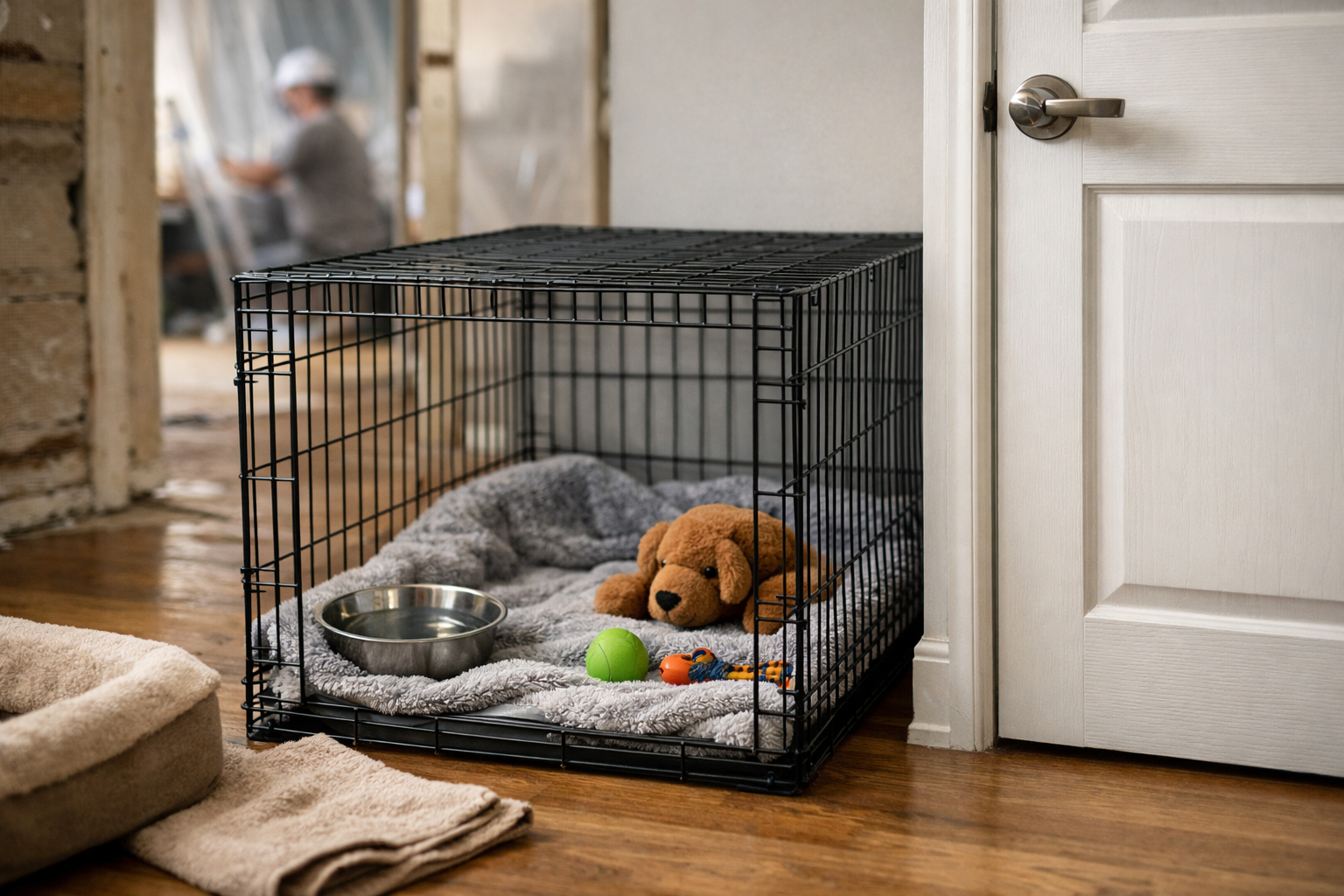
Water damage crews arrive with industrial fans, ripping out drywall while your cat hides under a bed six feet from wet insulation. That scenario plays out in thousands of homes each year. Pet safety restoration means planning for your animals before the first fan turns on, not after.
This post covers the airborne hazards that hit pets first, how to build a safe zone, and what to ask contractors who work in homes with animals. Each section gives you concrete steps you can act on before your project starts.
Why Pet Safety Restoration Needs Its Own Plan
Pets face restoration hazards humans shrug off. A dog weighs 30 pounds and breathes faster than you do. Airborne particles reach a smaller body at a higher dose.
Cats groom constantly. Anything that lands on their fur ends up in their stomach within hours. A dust film from demolition becomes an ingestion problem, not just an inhalation one.
Restoration work introduces four hazards pets meet before you notice them:
- Airborne mold spores stirred up during water damage cleanup
- Antimicrobial and disinfectant chemicals sprayed on surfaces
- Sharp debris from torn-out flooring, nails, and glass
- Open access points where crews prop doors and windows
A cat can slip out a propped basement door in seconds. Escape ranks among the top reasons pets go missing during home restoration projects.
Air Quality Risks That Hit Pets First
Birds are the canary in your own home. Their respiratory systems collapse faster than any mammal’s when exposed to fumes.
Chemicals used in restoration and their pet effects
Restoration crews spray products your animals have never encountered. Knowing the category helps you decide where to keep pets.
- Chlorine-based disinfectants irritate eyes and airways in dogs and cats
- Botrycides and antimicrobials for mold can cause vomiting if licked off paws
- Solvent-based adhesives for flooring release fumes toxic to birds and small mammals
Ask your crew for the product names in advance. Cross-check them against the ASPCA toxin database before you decide your pet can stay in the house.
Timing your pet’s return after chemical work
Surfaces feel dry long before fumes clear. A sealed floor coating may off-gas for 48 to 72 hours after it looks finished.
Keep pets out until air scrubbers have run a full cycle and windows have aired the space. For birds and reptiles, extend that window by a full day.
How to Build a Pet Safe Zone During Restoration
A pet safe zone is a sealed room or off-site location where your animal stays away from all active work areas. Set it up before crews arrive, not on day one of chaos.
Follow these steps in order:
- Pick the room farthest from the work. A bedroom on the opposite end of a flood-damaged basement works best.
- Seal the door gap. Use a rolled towel to block dust and fumes from creeping under.
- Run an air purifier inside. A HEPA unit cuts the spores and dust that migrate room to room.
- Post a sign on the door. Write “PETS INSIDE — DO NOT OPEN” so no crew member opens it.
- Stock water, food, litter, and bedding. Keep the animal fed without opening the door repeatedly.
For large projects lasting more than three days, board your pet off-site. A flooded home with running fans and open walls is no place for a stressed animal.
Reptiles, birds, and fish need extra steps
Cold-blooded pets react to temperature swings that open walls create. A gecko tank cools fast when heat leaves a room.
Fish tanks pull airborne chemicals into the water surface. Move aquariums and terrariums off-site entirely if solvents or foggers are in play.
Pet-Specific Hazards by Restoration Type
Different disasters bring different risks to your animals. Match your precautions to the job.
Water damage and mold
Standing water breeds bacteria that upset a dog’s stomach within a day of contact. Mold remediation stirs spores into the air at levels dogs inhale before humans smell anything.
Keep pets clear of any room with visible mold or a running dehumidifier. Wipe paws if an animal crosses a damp threshold.
Fire and smoke cleanup
Soot coats surfaces at a cat’s height along baseboards and low shelves. Grooming spreads that soot straight into the digestive tract.
Do not let cats or dogs into fire-damaged rooms until surface cleaning finishes. Thermal fogging used to kill smoke odor is toxic to birds during application.
Sewage backup
Category 3 water carries pathogens that sicken pets faster than people. A dog that drinks from a contaminated puddle can develop a serious infection.
Block off the affected zone completely. This job leaves no room for supervised access.
How to Vet Restoration Contractors for a Pet Household
The right contractor adjusts their methods when animals live in the home. You can screen for this before you sign anything.
Ask every candidate these questions:
- Do you use low-toxicity antimicrobials, and can you share the product list?
- How do you contain dust and fumes to the work area?
- What is your door and window protocol for keeping pets from escaping?
- Can you schedule chemical application when my pet is boarded off-site?
A crew that answers these clearly has worked in pet homes before. A vague answer tells you to keep looking.
Using Restoration Locator to find pet-aware crews
On https://restorationlocator.com, you can filter listings by location and read reviews from other homeowners. Sort by proximity to find crews who can reach you fast during an active flood or fire.
Check the reviews for mentions of pets, containment, and cleanup detail. Homeowners who had animals during their project frequently note how a crew handled it.
A Pet Safety Restoration Checklist
Run this list the day before work begins:
- Confirm the safe zone is sealed and stocked
- Move birds, fish, and reptiles off-site
- Get the chemical product list from your crew
- Post door signs on every occupied pet room
- Update your pet’s microchip and ID tag in case of escape
- Set a return timeline based on air-clearing, not appearance
The microchip step matters more than people think. An open front door during demolition is the moment a spooked pet bolts.
Conclusion
Pet safety restoration comes down to three moves: build a sealed safe zone, match precautions to the disaster type, and hire crews who contain hazards for animal households. Small pets like birds and fish need off-site relocation, not just a closed door. Vet your contractor with direct questions before the first fan runs.
Browse Disaster Cleanup & Restoration listings on https://restorationlocator.com and start your search for a pet-aware crew today.