
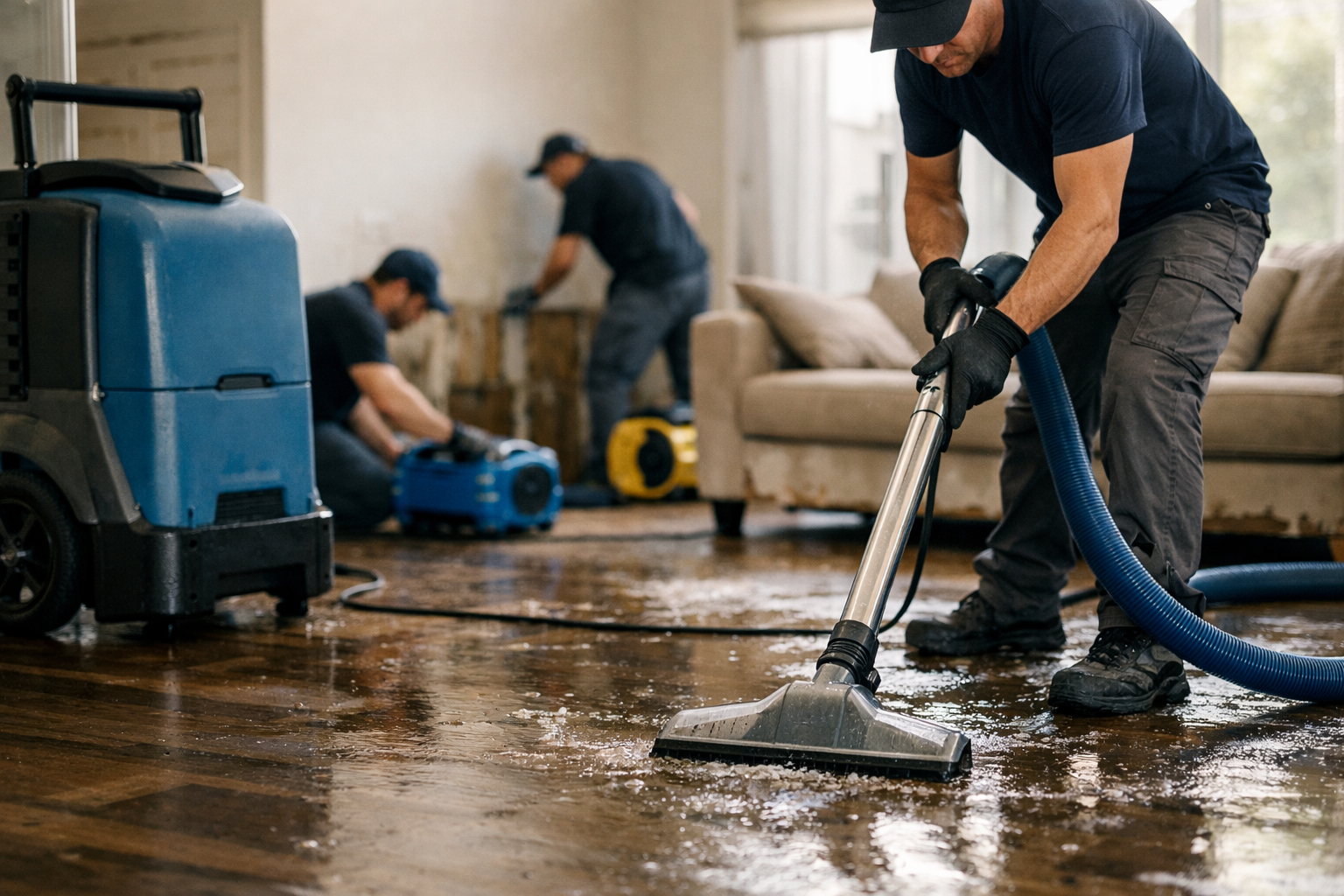
Water from a burst pipe reaches your drywall and subfloor within the first hour. Mold can begin growing in as little as 24 to 48 hours. Choosing fast restoration services is the difference between a $3,000 repair and a $30,000 rebuild.
Response time decides how much of your property survives. This post shows you how to judge a restoration company by speed, what questions to ask, and which directory filters point you to crews that show up fast.
Why Response Time Matters More Than Any Other Selection Criteria
Restoration damage compounds by the hour. A company with a great reputation that arrives eight hours late costs you more than an average crew that arrives in 45 minutes.
Here is what happens on a typical water loss timeline:
- 0–1 hour: Water spreads across flooring, wicks up drywall, saturates baseboards.
- 1–24 hours: Furniture finishes bleed, metal starts to rust, drywall swells.
- 24–48 hours: Mold spores activate, odors set in, wood warps.
- 72+ hours: Structural materials may need replacement instead of drying.
A crew that arrives inside two hours can extract standing water before it reaches the 24-hour mold window. That single detail shapes your entire claim.
What “Fast Response” Actually Means for Restoration Companies
Fast response is the measured time between your call and a crew arriving on-site with extraction equipment. It is not a callback. It is boots and truck-mounted units at your door.
Reputable water damage firms target a 60-minute arrival within their primary service area. Fire and smoke jobs may run longer because of safety clearance.
Separate the Marketing Claim From the Real Number
Many companies advertise “24/7 availability.” That phrase only means someone answers the phone at 3 a.m. It says nothing about arrival speed.
Ask two questions to cut past the slogan:
- “What is your average on-site arrival time in my ZIP code?”
- “Is there a crew on call tonight, or do you page someone after I call?”
A company that dispatches from a staffed depot beats one that calls a subcontractor out of bed.
How to Verify Fast Restoration Services Before You Hire
Speed claims are easy to make and hard to prove. Use concrete checks instead of taking the sales pitch at face value.
1. Confirm Local Crew Location
A company based 40 miles away cannot beat a mid-flood traffic delay. Distance sets a floor on response time no equipment can overcome.
Ask where the nearest staffed crew and equipment are stored. If the answer is a city over, keep searching.
2. Ask About Equipment Readiness
Trucks pre-loaded with extractors, air movers, and dehumidifiers roll out in minutes. Crews that load gear after your call lose 30 to 60 minutes before they leave.
3. Check Reviews for Timing Details
Skip the star rating and read the text. The reviews that matter mention numbers.
- “They arrived within an hour of my midnight call.”
- “Took three days to show up after the storm.”
- “Extraction started the same afternoon I reported the flood.”
On Restoration Locator, sort listings by review recency to catch how a company handled its most recent emergency response calls.
4. Confirm Insurance Coordination Speed
A crew that starts drying before the adjuster arrives protects your property and documents the loss with moisture readings. Ask if they begin mitigation immediately or wait on approval.
Directory Filters That Point You to Fast Crews
The right filters shorten your search from hours to minutes during a crisis. Use these on Restoration Locator to find crews positioned to arrive quickly.
- Filter by location: Narrow to companies with a depot inside your city, not a metro-wide radius.
- Filter by disaster type: Water, fire, mold, and storm crews carry different equipment. Match the listing to your loss.
- Sort by review count and recency: Recent, timing-specific reviews reveal real arrival patterns.
- Check listed hours: Confirm true round-the-clock dispatch, not office hours with a voicemail.
Start your filter with disaster type, then tighten to your ZIP code. That order surfaces crews built for your exact loss and close enough to reach you fast.
Red Flags That Signal Slow Response
Certain signs predict a crew that will leave you waiting. Watch for these before you commit.
- No local address listed — a PO box or metro-only coverage means distance delays.
- Vague arrival answers — “as soon as we can” instead of a time range.
- Answering service with no dispatch authority — the person cannot confirm a crew is coming.
- Reviews mentioning multi-day waits — a documented pattern, not a one-off.
- Upfront deposit demands before assessment — legitimate crews assess first.
Questions to Ask During Your First Call
Your first call sets the pace of the whole job. Keep it short and ask what predicts speed.
- “How soon can a crew be on-site right now?”
- “Where is the crew driving from?”
- “Is your equipment loaded and ready?”
- “Will you start water extraction before the adjuster visits?”
- “Are you certified by the IICRC?”
A firm that answers all five with confidence and a time window earns your job. Hesitation on arrival time is your cue to call the next listing.
Match the Company to the Disaster Type
Different disasters demand different first-hour actions. A crew fast at water may be slow to mobilize for fire cleanup.
- Water damage: Extraction must start inside 24 hours. Prioritize the closest crew with truck-mounted extractors.
- Fire and smoke: Board-up and soot removal come first. Confirm the crew handles structural cleaning, not just deodorizing.
- Storm and flood: Demand surges after regional events. Book a crew with reserve capacity, not one already stretched thin.
- Mold: Containment before removal stops spore spread. Verify the crew sets up barriers on day one.
Key Takeaways
Response time outranks reputation when property is soaking or smoldering. Verify a local crew, ready equipment, and timing-specific reviews before you hire fast restoration services. Ask direct questions about arrival, and match the company to your exact disaster type.
Browse Disaster Cleanup & Restoration listings on https://restorationlocator.com and filter by location to find a crew that reaches you first. Start your search now.