
A single lightning bolt carries up to one billion volts and can heat the air around it to five times hotter than the sun’s surface. When that energy finds your house, it looks for the fastest path to ground — and it will use your wiring, plumbing, or wooden framing to get there. Lightning protection means giving that energy a safe route so it bypasses everything you care about.
This post covers two things most articles separate: how to prevent lightning damage before a storm, and what to do in the minutes during and after a strike. You will get concrete storm safety tips, real cost ranges, and clear signs that mean you need help fast.
What Lightning Protection Actually Does
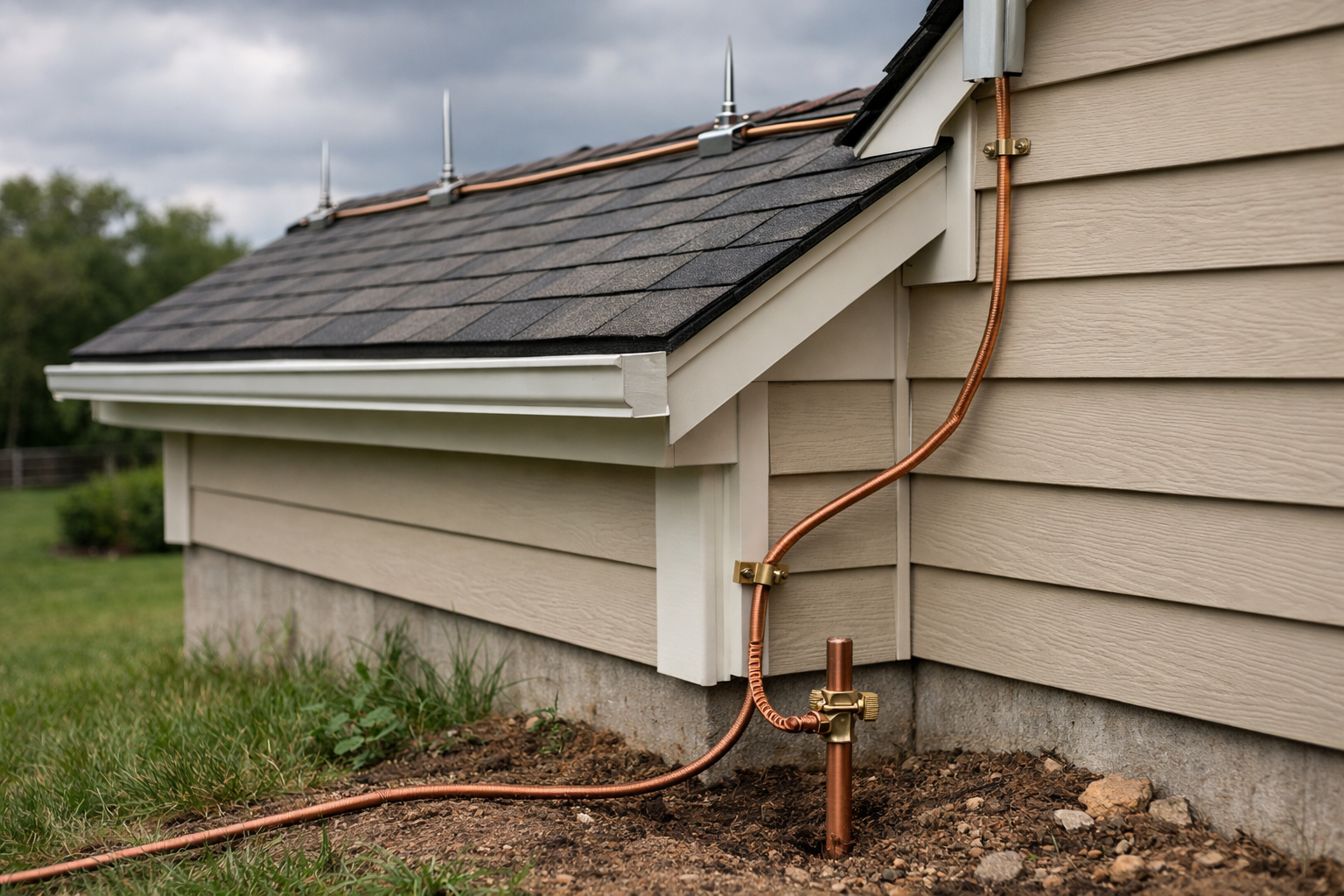
Lightning protection is a system that intercepts a strike and channels the current safely into the ground. It does not stop lightning from hitting your home. It controls where the energy goes once it arrives.
A house fire from lightning usually starts one of two ways. Either the bolt ignites wood framing directly, or it overloads your electrical panel and sparks inside a wall. Both are preventable with the right setup.
The Three Parts of a Rod System
- Air terminals (rods) — small metal points mounted on the roof ridge and high corners. They give the strike a preferred landing spot.
- Conductors — heavy copper or aluminum cables that carry the current down the outside of the structure.
- Ground rods — buried metal rods, usually eight feet deep, that dissipate the charge into the earth.
A code-compliant installation follows NFPA 780, the standard used by inspectors and insurers. Ask any installer to confirm they build to it.
Preventive Measures Before a Storm
Most homes never get a rod system, and that is a reasonable choice depending on risk. Location matters more than anything. A hilltop home in central Florida faces very different odds than a townhouse in a dense Seattle neighborhood.
Step-by-Step Prevention Plan
- Install a whole-home surge protector. This mounts at your electrical panel and blocks voltage spikes from entering circuits. Cost runs roughly $300 to $700 installed.
- Add point-of-use surge strips for expensive electronics like TVs, computers, and HVAC controls. A panel protector alone does not stop every surge.
- Evaluate a full rod system if your home sits on high ground, near tall isolated trees, or in a high-strike region. Expect $2,000 to $4,000 for an average two-story house.
- Trim overhanging branches near the roofline. A struck tree can throw current or fall onto the structure.
- Verify your grounding. Older homes with two-prong outlets often lack proper grounding, which makes surge damage worse.
Check your homeowner’s policy too. Many insurers reduce premiums when a certified system is installed and inspected.
Which Homes Face the Highest Risk
Florida records more lightning deaths and strikes than any other U.S. state. Homes there, plus those across the Gulf Coast and mountain states, benefit most from full systems. If you live where afternoon thunderstorms are a summer routine, prevention pays off faster.
Immediate Action Steps During a Strike
When a storm is directly overhead, your job shifts from prevention to damage control. These moves protect both your family and your equipment.
- Unplug sensitive electronics if you have time before the storm arrives. Once thunder is overhead, do not touch wired devices.
- Stay off corded phones and wired internet gear. Current travels along these lines.
- Avoid plumbing. No showers, dishwashing, or hand-washing. Metal pipes conduct a strike.
- Keep away from windows and exterior walls where conductors and wiring run.
- Move to an interior room on a lower floor if the storm is severe.
The rule from the National Weather Service is direct: When thunder roars, go indoors. If you can hear thunder, you are close enough to be struck.
What to Do After a Suspected Strike
A lightning hit is not always obvious. Sometimes you hear a sharp crack and the power flickers. Other times a strike hundreds of feet away sends a surge into your panel.
Check These Signs Right Away
- Smell for smoke or burning plastic. This means fire inside a wall or at the panel. Leave and call the fire department.
- Look for scorch marks on outlets, the roof, or exterior walls.
- Test your electronics and appliances once you confirm no fire risk. Dead or erratic devices point to a surge.
- Inspect the attic and roof for splintered wood or entry points. Hidden smoldering is a real hazard.
- Check for water intrusion. A strike can crack roofing or shatter a chimney, letting rain in.
Fire that starts in framing can smolder for hours before flames appear. If you smelled anything burning, have the structure inspected even after the smell fades.
When to Call a Restoration Provider
Lightning damage frequently combines fire, smoke, and water in one event. That mix needs specialists who handle multiple damage types at once. A roofer alone will not address soot inside your ductwork or moisture trapped in insulation.
Signs you need restoration help include:
- Charred or blackened framing in the attic
- Smoke odor lingering in walls or HVAC
- Water staining that spreads after the storm
- A tripped panel that will not reset safely
Finding the Right Help on Restoration Locator
When lightning causes fire or water damage, speed matters. Smoke residue becomes acidic within hours and etches metal and paint. Trapped moisture grows mold in 24 to 48 hours.
Use the directory to move fast and match your exact situation:
- Sort by location to find providers closest to your address for faster arrival.
- Filter listings by damage type — fire, smoke, water, or storm — since lightning often triggers all four.
- Check reviews from homeowners who dealt with similar strike damage.
- Look for providers listing 24/7 emergency response if you found damage overnight.
Matching a provider to the specific damage saves you from hiring three separate companies for one event.
Quick Reference: Prevention vs. Response
- Before a storm: Install surge protection, evaluate a rod system, trim trees, verify grounding.
- During a strike: Stay off plumbing and wired devices, avoid windows, move to an interior room.
- After a strike: Check for smoke and scorch marks, test electronics, inspect the roof and attic, call a restoration provider for combined fire and water damage.
Conclusion
Lightning protection works best as two layers: preventing damage with surge protectors and grounding, and reacting fast when a strike hits. Know the warning signs of hidden fire and act within hours, not days, to limit smoke and water damage. The homes that recover cleanest are the ones where owners caught the damage early and called the right help.
If a strike has hit your home, browse Disaster Cleanup & Restoration listings now at https://restorationlocator.com and match a provider to your damage.