
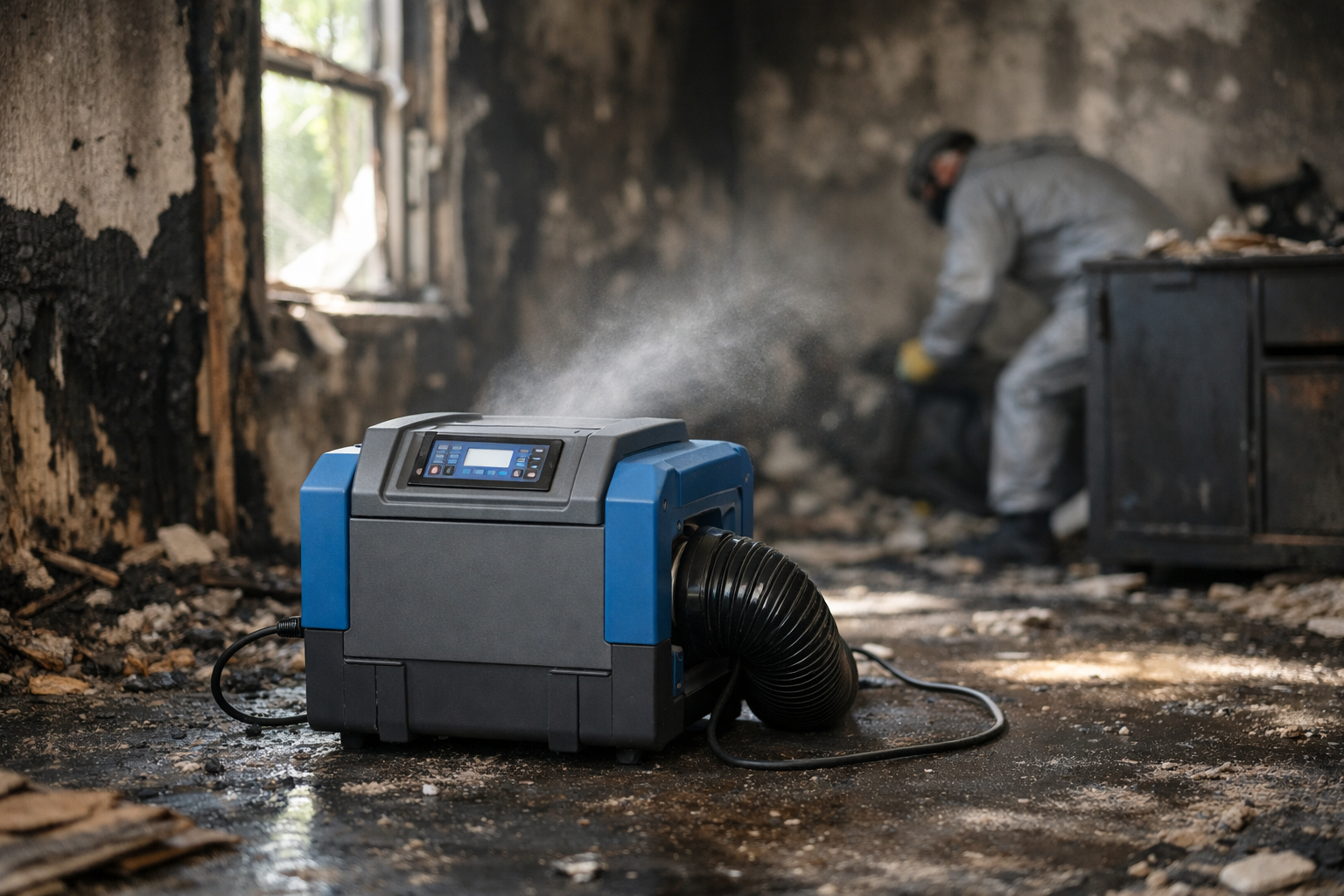
After a house fire or a burst pipe, the air inside your home carries more than a bad smell. It holds microscopic mold spores, soot particles, and chemical vapors that standard fans push around instead of removing. Air scrubbers pull those contaminants out of the air, which is why restoration crews wheel them in before they touch anything else.
This post covers how air scrubbers work in post-disaster settings, when to run them, and how to find a provider that rents or sells the right unit. You will learn the specific scenarios where they matter most.
What Air Scrubbers Do After a Disaster
An air scrubber is a portable filtration machine that draws contaminated air through a series of filters and returns cleaner air to the room. Most units use a three-stage setup: a pre-filter, a secondary filter, and a HEPA filter rated to capture 99.97% of particles at 0.3 microns.
The HEPA stage matters because the hazards left behind by disasters are tiny. Mold spores run 1 to 20 microns. Soot from a structure fire can drop below 2.5 microns and lodge deep in your lungs.
Standard box fans and shop vacs cannot catch particles that small. They stir the air and spread the problem. An air scrubber traps the particle and holds it inside the filter.
Negative Air Machines vs. Standard Air Scrubbers
Some units double as negative air machines. Crews attach ducting to vent filtered air outside, which creates negative pressure inside a sealed work zone. That negative pressure keeps mold spores from drifting into clean parts of the house during demolition.
- Air scrubber mode: Filters air and recirculates it into the same room. Good for general cleanup and lingering odors.
- Negative air mode: Ducts air outside to contain airborne contaminants during active tear-out. Required for many mold and asbestos jobs.
Post-Disaster Scenarios Where Air Scrubbers Earn Their Keep
The reason to run an air scrubber depends on what damaged your home. Each disaster leaves a different airborne threat.
Water Damage and Mold
Mold begins growing on wet drywall within 24 to 48 hours. Once colonies release spores, those spores travel through your HVAC system to dry rooms. Running an air scrubber with HEPA filtration during drying and demolition captures the spores before they spread.
A carbon-loaded filter added to the unit pulls the musty MVOC odor that mold gives off. That smell is a gas, not a particle, which is why carbon matters here.
Fire and Smoke Damage
Smoke residue is the hardest post-disaster air problem to clear. Soot particles are acidic and coat every surface, and the smell reactivates when humidity rises. An air scrubber paired with activated carbon removes both the particles and the odor gases.
Kitchen grease fires and electrical fires produce different residues. Protein-based grease smoke leaves an oily film that clogs pre-filters fast, so crews swap them more frequently on these jobs.
Sewage Backups and Category 3 Water
Sewage backups release bacteria and endotoxins into the air as contaminated water evaporates. Negative air machines keep that bioaerosol inside the affected zone. Workers stay safer, and the rest of the home stays cleaner.
How to Run an Air Scrubber Correctly
Placement and runtime decide whether the machine does its job. Follow these steps for a water or fire cleanup.
- Seal the room. Close doors and cover HVAC vents with plastic so you filter one space at a time.
- Size the unit to the room. Aim for at least four air changes per hour. A 2,000 CFM machine handles a large open floor; smaller rooms need less.
- Position for circulation. Place the intake near the contaminated area and point the exhaust across the room to create a loop.
- Run it continuously. Keep the unit on for the full drying and demolition window, not just during work hours.
- Change filters on schedule. Replace pre-filters when airflow drops. A loaded pre-filter chokes the whole machine.
How Long Should You Run One?
Run an air scrubber for the entire duration of active restoration, then several days after. For a typical water loss, that means 3 to 5 days of drying plus continued filtration during rebuild. Fire jobs run longer because odor gases keep releasing as surfaces are cleaned.
Renting vs. Buying an Air Scrubber
Most homeowners rent, because one cleanup rarely justifies buying. Restoration firms and landlords with multiple properties lean toward purchase. Here is how the two compare.
- Rent when: You face a one-time event, need the unit for under two weeks, or want a HEPA machine without storing it afterward.
- Buy when: You manage rental units, run a cleanup operation, or live in a flood-prone area with repeat exposure.
Rental units usually come with fresh filters and clear runtime instructions. Ask whether replacement filters are included, since a fire job can burn through several sets.
Finding an Air Scrubber Provider on Restoration Locator
Renting or buying starts with a provider that stocks HEPA-rated equipment and knows how to size it. The directory at Restoration Locator lets you match a local company to your specific damage type.
Use these filters to narrow your search:
- Filter by location to find crews that can drop off equipment same-day.
- Sort by service type such as water damage, fire restoration, or mold remediation.
- Check reviews for mentions of air quality results and filter maintenance.
- Compare listings that state whether they rent, sell, or install air scrubbers.
A provider that improves indoor air quality should explain their filtration stages and air-change targets. If a listing describes HEPA ratings and negative air setups, that signals hands-on knowledge.
Questions to Ask Before You Book
Confirm the details before equipment arrives. Clear answers separate skilled crews from equipment renters who lack cleanup training.
- What CFM rating fits my square footage?
- Is a carbon filter included for odor?
- How often should I change filters during this job?
- Can the unit run in negative air mode if we tear out drywall?
The Payoff for Your Indoor Air Quality
Post-disaster air holds spores, soot, and bacteria long after the visible mess is gone. An air scrubber removes those particles instead of circulating them, which protects your lungs during cleanup and lowers the odds of lingering mold. Restored indoor air quality is the difference between a home that feels clean and one that just looks clean.
Air scrubbers pull hidden contaminants out of the air, prevent mold spread, and clear smoke odor when paired with carbon filters. Match the unit to your damage type, run it continuously, and change filters on schedule. Browse Disaster Cleanup & Restoration listings on Restoration Locator to find a provider that rents or sells the right equipment near you.
Sources
- EPA – What is a HEPA filter?
- EPA – Mold Cleanup in Your Home
- CDC – Cleaning Up After a Flood