Smoke damage does not stop when the flames go out. Fine ash particles and gases settle into walls, ducts, and soft furnishings long after a summer fire passes. Air quality testing reveals what the eye cannot see and tells you whether a space is safe to breathe.
Summer fires carry added risk. Dry heat pushes soot deeper into materials and keeps windows shut against high temperatures. That combination traps contaminants indoors for weeks.
This post covers what testing measures, why the dry season raises the stakes, and how to find qualified testers on Restoration Locator.
Why Air Quality Testing Matters More During Dry Summer Months
Summer wildfire smoke behaves differently than winter smoke. Low humidity keeps particulate matter airborne longer and prevents ash from clumping and settling fast.
Homes running air conditioning pull outdoor smoke inside through intake vents. That smoke recirculates and coats the interior of ductwork.
The health effects concentrate during heat waves. People stay indoors to escape triple-digit temperatures, breathing recirculated air for hours at a stretch.
The Specific Health Threats After a Fire
Post-fire air contains more than the smell of smoke. Testing looks for measurable contaminants tied to respiratory and neurological harm.
- Fine particulate matter (PM2.5) — particles small enough to reach deep lung tissue and enter the bloodstream.
- Volatile organic compounds (VOCs) — gases released from burned plastics, paint, and synthetic fabrics.
- Polycyclic aromatic hydrocarbons (PAHs) — carcinogenic compounds that cling to soot.
- Asbestos and lead — released when older homes burn or partially combust.
- Char and ash residue — alkaline dust that irritates eyes, skin, and airways.
Children, older adults, and people with asthma face the sharpest risk. A structure that smells “mostly fine” can still hold PM2.5 levels above safe thresholds.
What Air Quality Testing Actually Measures
Air quality testing is the sampling and lab analysis of indoor air to identify contaminants and their concentrations. A tester compares your results against health-based reference limits.
Good testing separates surface contamination from airborne contamination. Both matter after a fire, and each requires a different cleanup method.
Common Testing Methods
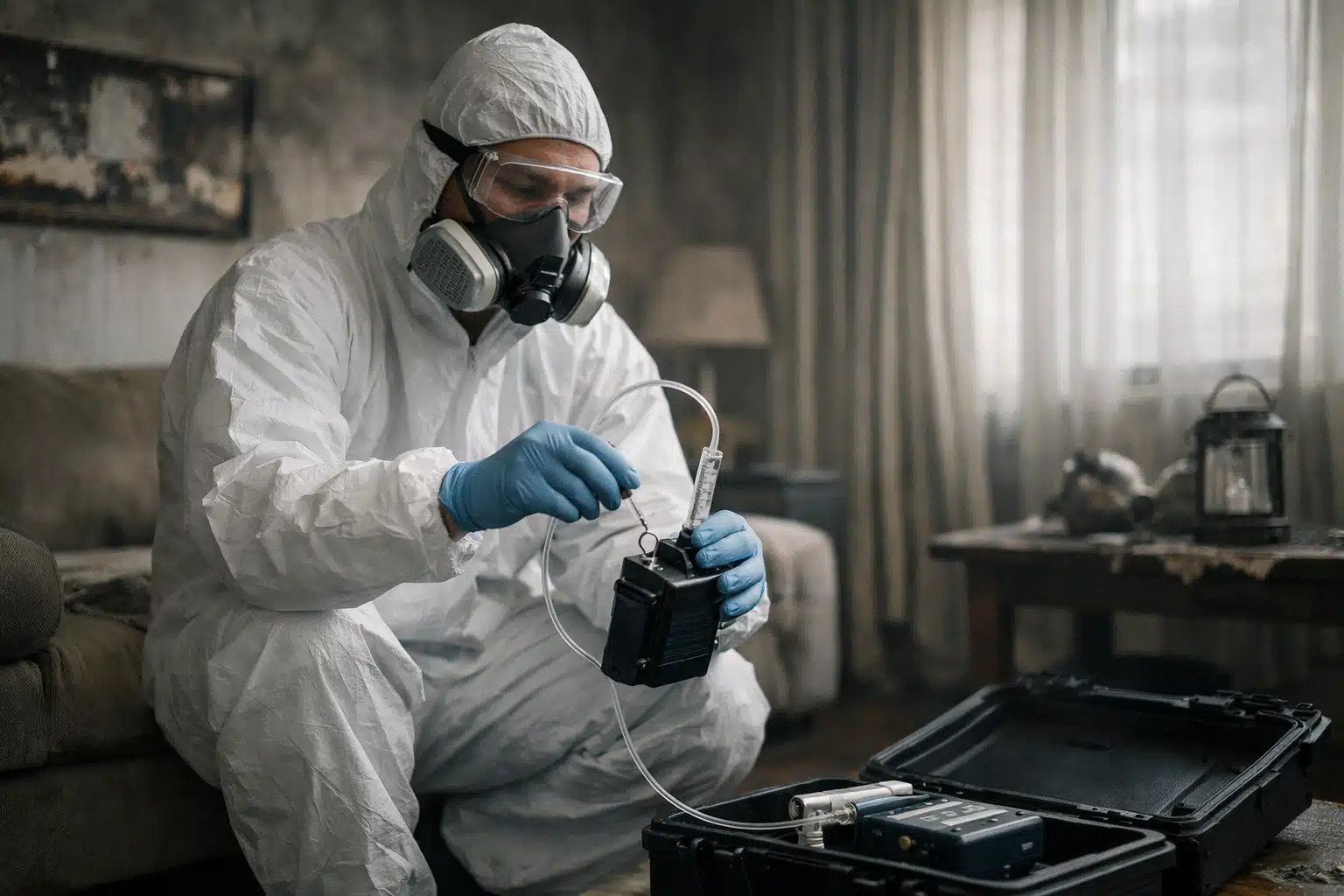
- Air sampling pumps draw a measured volume of air across a collection filter for lab analysis.
- Surface wipe and tape lift samples capture settled soot and char from walls and vents.
- Real-time particle counters give instant PM2.5 and PM10 readings during the visit.
- VOC canister sampling traps gases for gas chromatography analysis.
A single method rarely tells the full story. A tester might record clean air readings in the living room yet find heavy soot inside the return duct.
What a Real Testing Report Includes
A usable report lists each contaminant, its measured level, and the applicable safety threshold. It should mark which rooms failed and why.
Ask for sampling locations plotted on a floor plan. Vague reports that say “elevated particulates present” without numbers are hard to act on.
When to Schedule Testing During Post-Fire Recovery
Test before any reoccupation and again after cleanup. Two rounds confirm that remediation worked instead of moving contaminants around.
Order testing early in post-fire recovery, even if damage looks minor. A kitchen fire in July can push soot into every upstairs bedroom by nightfall.
A Practical Testing Timeline
- Within 48 hours: baseline test to document contamination before you touch anything.
- During remediation: spot checks to verify progress in high-soot zones.
- After cleanup: clearance test proving levels fall within safe ranges.
Insurance carriers may require the baseline test to validate a claim. Keep every report and photo timestamped.
How to Find and Vet Testing Providers on Restoration Locator
Restoration Locator lists Disaster Cleanup & Restoration providers by location. You can sort listings by proximity to speed up scheduling during peak fire season.
Use these filters and checks to narrow your choices:
- Sort by location to find testers who can respond within your 48-hour window.
- Check reviews for mentions of clear reports and follow-up clearance testing.
- Filter listings for firms that handle both testing and remediation, or keep them separate for independent results.
- Read provider profiles for certifications in smoke and fire damage assessment.
Questions to Ask Before You Hire
Independence matters. A company that only cleans has an incentive to report a clean bill of health.
- Do you provide lab-analyzed results or only on-site readings?
- Which contaminants do you sample for after a fire?
- Will you plot sampling points and give me raw numbers?
- Do you offer a clearance test separate from cleanup crews?
A tester who welcomes hard questions tends to give honest answers. Vague responses about “general safety” are a warning sign.
Steps to Take Right Now If You Suspect Smoke Contamination
- Keep windows closed and stop running the central HVAC to limit spread.
- Photograph visible ash and soot before disturbing surfaces.
- Avoid dry sweeping, which sends fine particles back into the air.
- Book an air quality testing baseline before cleanup begins.
- Search Restoration Locator for testers near you and compare reviews.
Do not rely on a home smoke smell fading as proof of safety. PM2.5 and VOCs have no reliable odor cue at harmful levels.
Key Takeaways
Summer fires trap smoke toxins indoors, and dry heat keeps particles airborne and dangerous. Air quality testing gives you numbers, not guesses, about whether a space is safe to breathe.
Book a baseline test early and a clearance test after cleanup during post-fire recovery. Browse Disaster Cleanup & Restoration listings on https://restorationlocator.com and start your search now.