The first 48 hours after a flood or fire decide how bad your indoor air quality gets. Mold spores germinate on wet drywall within 24 to 48 hours. Smoke residue settles into HVAC ductwork and keeps releasing particles for weeks.
This post covers the exact steps homeowners take to clean the air after water, fire, or sewage damage. You will learn what to do yourself, what demands a crew with negative air machines, and how to vet that crew before you sign anything.
Why Air Quality Crashes After a Disaster
Disasters release particles and gases that healthy lungs cannot filter alone. The source depends on the event.
- Flood and water damage: mold spores, bacteria from gray or black water, and musty VOCs from soaked organic material.
- House fire: fine soot (PM2.5), formaldehyde, and acrolein from burned synthetics like couch foam and carpet backing.
- Sewage backup: hydrogen sulfide gas, ammonia, and airborne pathogens.
- Wildfire smoke intrusion: ash that coats surfaces and re-aerosolizes every time you walk across a room.
Soot from a kitchen grease fire behaves differently than soot from a protein fire in an oven. Grease soot smears and clings. That distinction changes which cleaning method works, which is why generic advice falls short here.
Your First 24 Hours: What Homeowners Can Do Safely
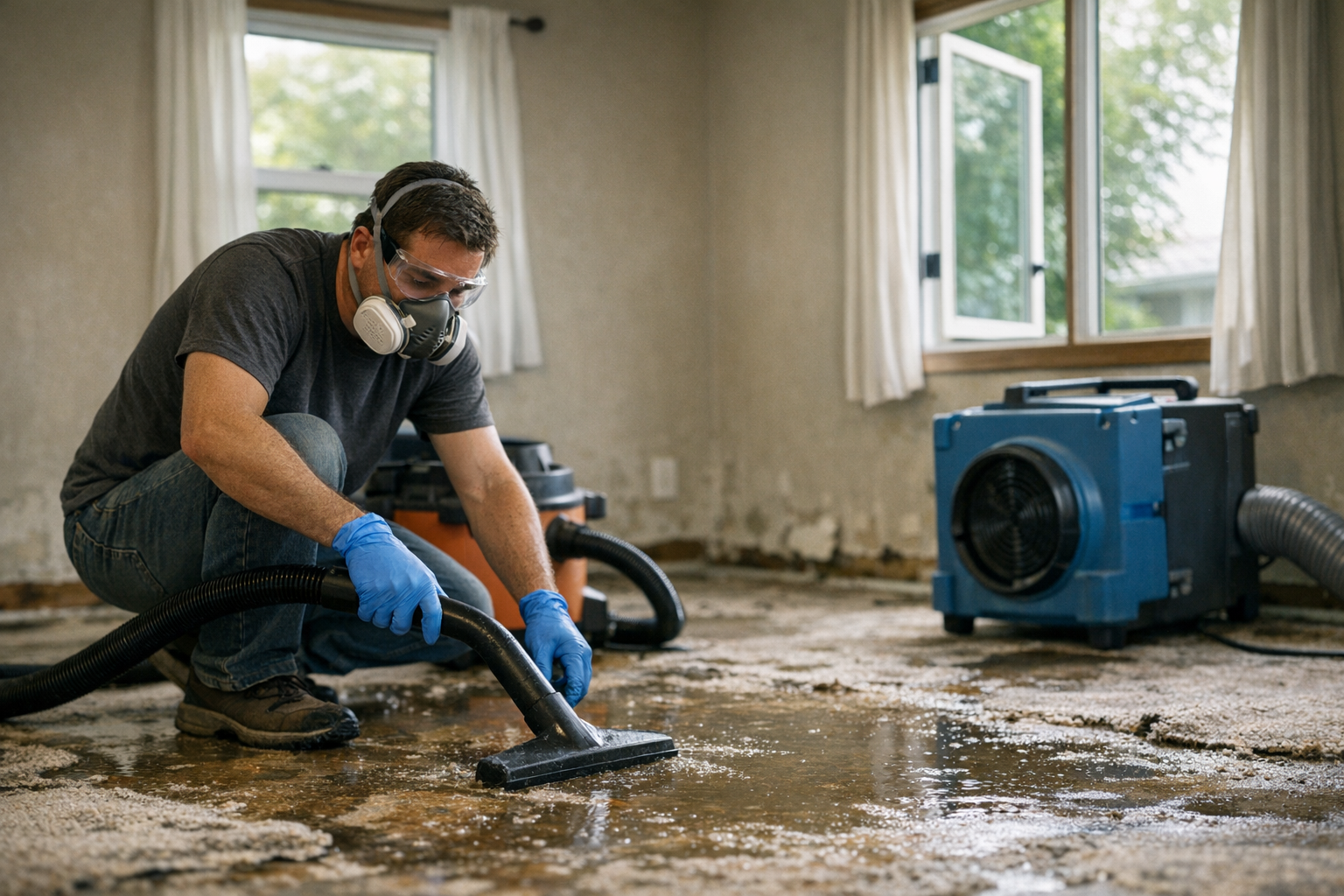
Act fast, but protect yourself first. Wear an N95 or P100 respirator, nitrile gloves, and eye protection before entering a damaged room.
- Cut HVAC power. A running furnace pulls soot and spores into every duct in the house. Switch it off at the thermostat and breaker.
- Open windows on two sides. Cross-ventilation moves contaminated air out. Skip this step during active wildfire smoke outside.
- Remove standing water within hours. Wet-vac small amounts. Standing water past two inches needs a pump.
- Pull out soaked porous items. Carpet padding, mattresses, and upholstered furniture trap moisture and feed mold.
- Run a true HEPA air scrubber. A box-store HEPA purifier captures PM2.5 but not gases. It buys time, not a fix.
Do not paint over smoke stains or spray air freshener. Both seal contaminants in and mask the smell without removing the source.
What You Should Never Attempt Yourself
Some jobs require containment and training. Skip the DIY route for these:
- Mold covering more than 10 square feet, the EPA threshold for calling a remediation crew.
- Any sewage or black water contact with porous materials.
- Smoke damage that reached the HVAC ductwork or wall cavities.
- Fire-damaged homes with potential asbestos in old insulation or floor tile.
How Restoration Crews Restore Indoor Air Quality
Restoration teams use equipment that pulls contaminants out of the structure, not just the air. Knowing their methods helps you judge whether a bid matches the damage.
Negative Air Machines and Containment
Negative air pressure keeps contaminated air from spreading to clean rooms. Crews seal the work zone with plastic sheeting and vent a HEPA scrubber outdoors. You can hear it working as a faint inward pull of air at the doorway.
Thermal Fogging for Smoke Odor
Thermal fogging recreates the heat conditions of the fire. The fog penetrates the same pores that smoke entered, neutralizing odor at the source. A crew that offers only ozone treatment for heavy smoke is undertreating the job.
Ductwork Cleaning and Coil Treatment
Soot and spores hide in your HVAC system long after surfaces look clean. A qualified crew cleans supply and return ducts, replaces filters, and treats the evaporator coil. Ask for before-and-after photos inside the trunk line.
Moisture Verification Before Closing Walls
Drying is not done when surfaces feel dry. Crews log moisture readings with pin and pinless meters until materials hit dry standard. Mold returns when walls close at 18 percent moisture content or higher.
How to Vet a Restoration Provider for Air Quality Work
Not every water damage crew handles air quality and smoke remediation at the same level. Use these questions to separate qualified teams from generalists.
- Do you hold IICRC certification? Look for AMRT (mold) and FSRT (fire and smoke) designations.
- Will you provide post-remediation air clearance testing? A third-party hygienist verifies the work passed.
- What drying equipment will stay on site? Expect air movers and dehumidifiers, not just fans.
- Do you document moisture readings daily? A real crew shares a moisture log with you.
- Is the air clearance test independent of your company? Self-graded clearance is a conflict of interest.
A vague answer on clearance testing is a warning sign. Reputable crews welcome independent verification because it protects them too.
Use Restoration Locator to Compare Crews
Restoration Locator lets homeowners find local crews built for this kind of work. Filter listings by your damage type, sort by location to find crews that can arrive same-day, and check reviews from past customers before you call.
Reading reviews that mention smoke odor or mold clearance tells you who handles air quality work, not just demolition. That detail matters when your disaster recovery depends on the air being safe to breathe.
Protecting Air Quality Through the Repair Phase
Air quality can worsen during reconstruction if no one manages dust. Sanding drywall mud and cutting new lumber release fine particulate into a home you just cleaned.
- Keep a HEPA air scrubber running during demolition and rebuild.
- Seal HVAC vents in the work zone until reconstruction finishes.
- Replace HVAC filters once more after the final cleaning.
- Request a final air clearance test before you move belongings back in.
Vulnerable household members feel the difference first. People with asthma, infants, and older adults should stay elsewhere until clearance testing passes.
Key Takeaways
Move fast in the first 24 hours, shut down the HVAC, and remove wet porous materials before mold takes hold. Hand off mold over 10 square feet, sewage, and ducted smoke damage to a certified crew with negative air containment. Verify the air with independent clearance testing before anyone moves back in.
Your disaster recovery depends on air you can trust, not just walls that look clean. Browse Disaster Cleanup & Restoration listings now at https://restorationlocator.com and find a crew near you today.