
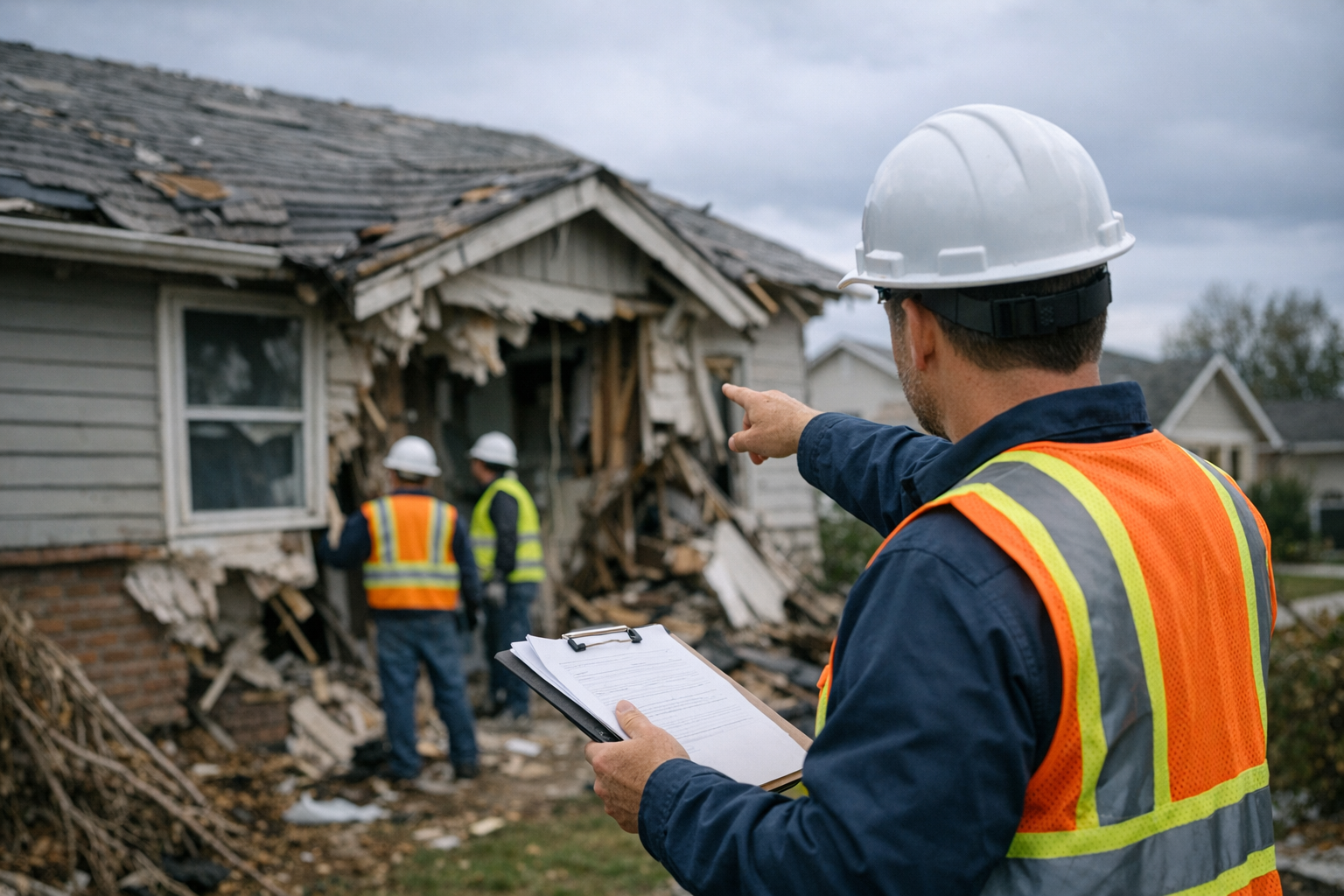
After a flood, fire, or storm, the damage in front of you rarely matches the damage that matters most. A cracked wall feels urgent, but a compromised gas line will hurt you first. Knowing how to sequence your home repairs keeps your family safe and stops a bad situation from turning into a total loss.
This post walks you through a safety-ranked repair order built from how restoration crews actually triage a damaged home. You will learn which hazards demand action within hours, which structural threats come next, and how to vet contractors before signing anything.
Why Repair Order Matters More Than Repair Speed
Rushing into visible damage wastes money and risks injury. A homeowner who repaints a smoke-stained ceiling before testing for structural char ends up tearing out the same drywall twice.
Post-disaster repairs follow a hazard hierarchy, not a wish list. The goal in the first 72 hours is containment and safety, not restoration of comfort or appearance.
Restoration teams sort damage into three buckets: life-safety threats, active damage that spreads, and cosmetic loss. Work the buckets in that order and you protect both people and property value.
Step 1: Eliminate Life-Safety Hazards First
Life-safety hazards are conditions that can injure or kill before any repair begins. Handle these before you set foot inside for a longer cleanup.
- Gas leaks. Smell rotten eggs or hear hissing? Leave immediately and call the utility from outside.
- Live electrical hazards. Standing water near outlets or a sparking panel means power stays off until an electrician clears it.
- Structural collapse risk. Sagging ceilings, bowed walls, and shifted foundations bar entry until an engineer inspects.
- Carbon monoxide. Damaged furnaces or generators run too close to the house create an invisible killer.
- Contaminated water. Floodwater carrying sewage or chemicals requires protective equipment, not bare hands.
A house in Cedar Rapids after the 2020 derecho looked intact from the curb. Inside, a snapped roof truss had dropped onto the second-floor framing. The family avoided injury only because they waited for an inspection before salvaging belongings.
What to Do Before Re-entry
Shut off gas, electricity, and water at the main if you can reach them safely. Photograph everything from the doorway for your insurer. Wear an N95 mask, boots, and gloves once cleared to enter.
Step 2: Stop Active Damage From Spreading
Active damage is any condition that worsens every hour you ignore it. Water and exposure cause the most expensive secondary losses.
Mold colonizes wet drywall within 24 to 48 hours. A delayed water extraction turns a ,000 dry-out into a ,000 gut-and-rebuild. Speed here saves real money.
- Tarp the roof. A missing section of shingles lets every rainstorm flood your interior again.
- Board broken windows and doors. Open gaps invite weather, animals, and theft.
- Extract standing water. Pumps and commercial dryers stop wood rot and mold growth.
- Remove soaked insulation and carpet pad. These hold moisture against framing and feed mold.
- Cap damaged plumbing. A cracked supply line keeps soaking subfloor until it is shut and sealed.
Most insurers expect you to take reasonable steps to prevent further damage. Skipping this can reduce your claim payout for losses they consider preventable.
Step 3: Restore Structural Integrity
Structural repairs come after the bleeding stops. These fixes hold the house up and keep the envelope sealed against weather.
Address load-bearing elements before anything decorative. A buckled floor joist or fire-charred header carries weight whether or not the room looks finished.
Priority Structural Repairs
- Foundation cracks and shifts that affect how the home bears load
- Roof decking and trusses damaged by wind, water, or fire
- Load-bearing walls and headers weakened by impact or rot
- Subfloor and floor framing softened by prolonged moisture
- Damaged electrical and plumbing systems inside walls before they close up
Order matters inside walls. Rough-in plumbing, wiring, and HVAC get inspected before insulation and drywall go back. Closing a wall too early forces a costly re-opening.
Step 4: Rebuild Living Systems and Surfaces
Cosmetic and comfort repairs come last, once the home is safe and dry. This phase returns the house to a livable state.
- Insulation and vapor barriers
- Drywall, taping, and paint
- Flooring and trim
- Cabinets, fixtures, and appliances
- Final HVAC balancing and cleaning
Resist starting here even when it tempts you. Fresh paint over a damp wall traps moisture and grows mold behind a clean surface.
How to Vet a Restoration Contractor Fast
Disasters draw out-of-town crews who chase storms and vanish after cashing your check. Vetting protects you when you have little time to spare.
Ask any contractor these questions before you sign:
- Are you licensed and insured in this state? Request the certificate, not a verbal yes.
- Do you carry IICRC certification? This credential covers water, fire, and mold restoration standards.
- Will you provide a written scope and estimate? Avoid anyone demanding full cash upfront.
- Can you share local references from the last six months? Recent, nearby work signals a fixed presence.
- Who handles the insurance documentation? Good crews photograph and itemize as they work.
Use the Directory to Narrow Your Choices
On RestorationLocator.com you can sort listings by location to find crews already working near you. Filter by service type to match water, fire, or storm damage. Check reviews to confirm a contractor finishes jobs and documents claims well.
A Quick Post-Disaster Priority Checklist
Keep this order taped inside a cabinet for the next event:
- Hour 0–6: Clear life-safety hazards, shut utilities, document damage.
- Hour 6–48: Tarp, board, and extract water to stop spreading damage.
- Day 2–14: Inspect and repair structure, framing, and hidden systems.
- Week 2 onward: Rebuild surfaces, install fixtures, finish cosmetics.
Key Takeaways
Sequence your home repairs by danger first, spreading damage second, structure third, and appearance last. This order keeps your family safe and protects your insurance claim from preventable losses. Vet every contractor for licensing, certification, and recent local work before signing.
Ready to find a vetted crew near you? Browse Disaster Cleanup & Restoration listings now at RestorationLocator.com and start your recovery with the right team.