
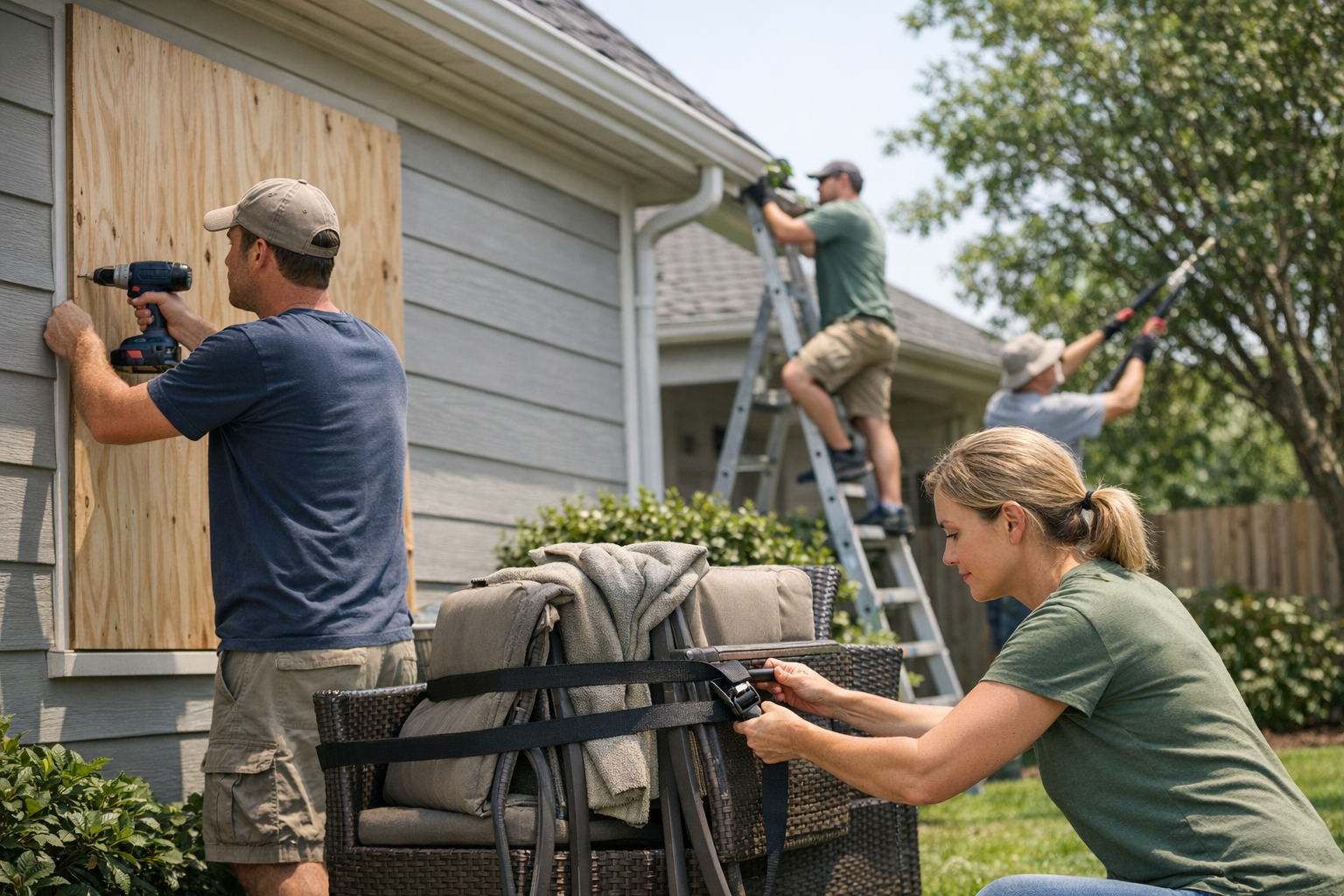
Hurricane season brings winds exceeding 74 mph and storm surges that can reach 20 feet above normal sea levels. Proper hurricane preparation starts weeks before the first tropical depression forms in your region.
This breakdown covers the specific steps that protect your home from hurricane-force winds, flooding, and debris damage. Each action targets the most common failure points that cause expensive restoration work after storms pass.
Exterior Hurricane Preparation Steps
Your home’s exterior faces the brunt of hurricane conditions. Wind damage starts when sustained speeds reach 39 mph, while structural damage becomes likely at 74 mph and above.
Secure Windows and Glass Surfaces
Install hurricane shutters or cut plywood boards to fit each window opening. Measure each window during calm weather and mark the boards for quick installation.
Remove or secure any outdoor furniture, decorations, and equipment that could become projectiles. A standard patio chair becomes a 2,000-pound force missile at 100 mph wind speeds.
Roof and Gutter Maintenance
Clean gutters and downspouts to handle heavy rainfall rates. Hurricanes typically dump 6-12 inches of rain in 24 hours, with some storms exceeding 20 inches.
Check roof shingles, flashing, and secure any loose materials. Replace missing or damaged shingles before storm season begins, as emergency roof repairs cost 3-5 times more than regular maintenance.
Tree and Landscaping Management
Trim tree branches within 10 feet of your roof, windows, and power lines. Dead or weakened branches fall first during high winds.
Secure outdoor equipment including grills, lawn mowers, and garden tools inside garages or storage areas. Chain larger items like generators to permanent structures if indoor storage isn’t available.
Interior Storm Readiness Planning
Interior preparation focuses on maintaining power, water, and communication during extended outages. Most hurricane-affected areas lose electricity for 3-7 days after major storms.
Emergency Supply Kit Assembly
Stock one gallon of water per person per day for seven days minimum. Include water purification tablets as backup if municipal supplies become contaminated.
Store non-perishable food requiring no cooking or refrigeration:
- Canned goods with pop-top lids
- Protein bars and nuts
- Dried fruits and crackers
- Baby formula and pet food if needed
Power and Communication Backup
Charge all electronic devices 24 hours before predicted landfall. Keep portable phone chargers and battery-powered radios accessible.
Test backup generators monthly and store fuel in approved containers away from living areas. Run generators outside only, maintaining 20 feet distance from windows and doors.
Important Document Protection
Place insurance policies, identification, and property deeds in waterproof containers. Take photos of your home’s contents and store digital copies in cloud storage before storms arrive.
Keep contact information for your insurance agent and restoration companies in multiple formats. Cell towers may fail, but landline service often remains operational longer.
Water Damage Prevention
Flooding causes 80% of hurricane-related property damage. Storm surge and heavy rainfall combine to overwhelm drainage systems and breach flood defenses.
Basement and Ground Floor Protection
Move valuable items from basements to upper floors when hurricane watches are issued. Sandbag exterior doors and low windows if your area expects storm surge.
Install sump pump battery backups before hurricane season begins. Test backup systems monthly and replace batteries that show reduced capacity.
Plumbing and Drainage Preparation
Clear storm drains and ditches around your property of leaves and debris. Blocked drainage causes water to pool against foundations and seep through basement walls.
Know the location of your main water shutoff valve. Turn off electricity to areas prone to flooding before evacuating to prevent electrical fires from flooded outlets.
Hurricane Preparation Timeline
Follow this schedule when hurricane warnings are issued for your area. Storm readiness requires different actions based on proximity to landfall.
72 Hours Before Landfall
Fill vehicles with fuel and withdraw cash from ATMs. Gas stations and banks may remain closed for days after storms pass.
Confirm evacuation routes and destination arrangements. Download offline maps to your phone in case cellular data becomes unavailable.
48 Hours Before Landfall
Install window protection and secure outdoor items. Complete all exterior work before winds reach 39 mph sustained speeds.
Charge electronic devices and fill bathtubs with water for emergency use. Municipal water pressure often fails when power grids go down.
24 Hours Before Landfall
Move to your safe room on the lowest floor away from windows. Avoid upper floors during the storm as wind speeds increase significantly with height.
Monitor weather updates on battery-powered radios. Stay informed about storm track changes and local evacuation orders.
Post-Storm Safety and Recovery
Hurricane damage assessment requires careful attention to hidden hazards. Wait for official all-clear announcements before leaving secure areas.
Immediate Safety Checks
Check for gas leaks, electrical damage, and structural issues before using utilities. Turn off main gas and electric supplies if you detect any problems.
Document all damage with photos before cleanup begins. Insurance claims require evidence of hurricane-related damage versus pre-existing conditions.
Professional Restoration Needs
Contact restoration specialists within 24-48 hours for water damage assessment. Mold growth begins within 72 hours in humid conditions typical after hurricanes.
Choose restoration companies with proper licensing and insurance coverage. Verify credentials before allowing work to begin, as unlicensed contractors often target disaster areas.
Effective hurricane preparation reduces property damage by up to 70% compared to unprepared homes. Following these specific steps protects your family and minimizes costly restoration work.
When professional cleanup becomes necessary after storm damage, browse verified disaster restoration specialists on RestorationLocator.com. Filter listings by location and services to find qualified professionals in your area.