
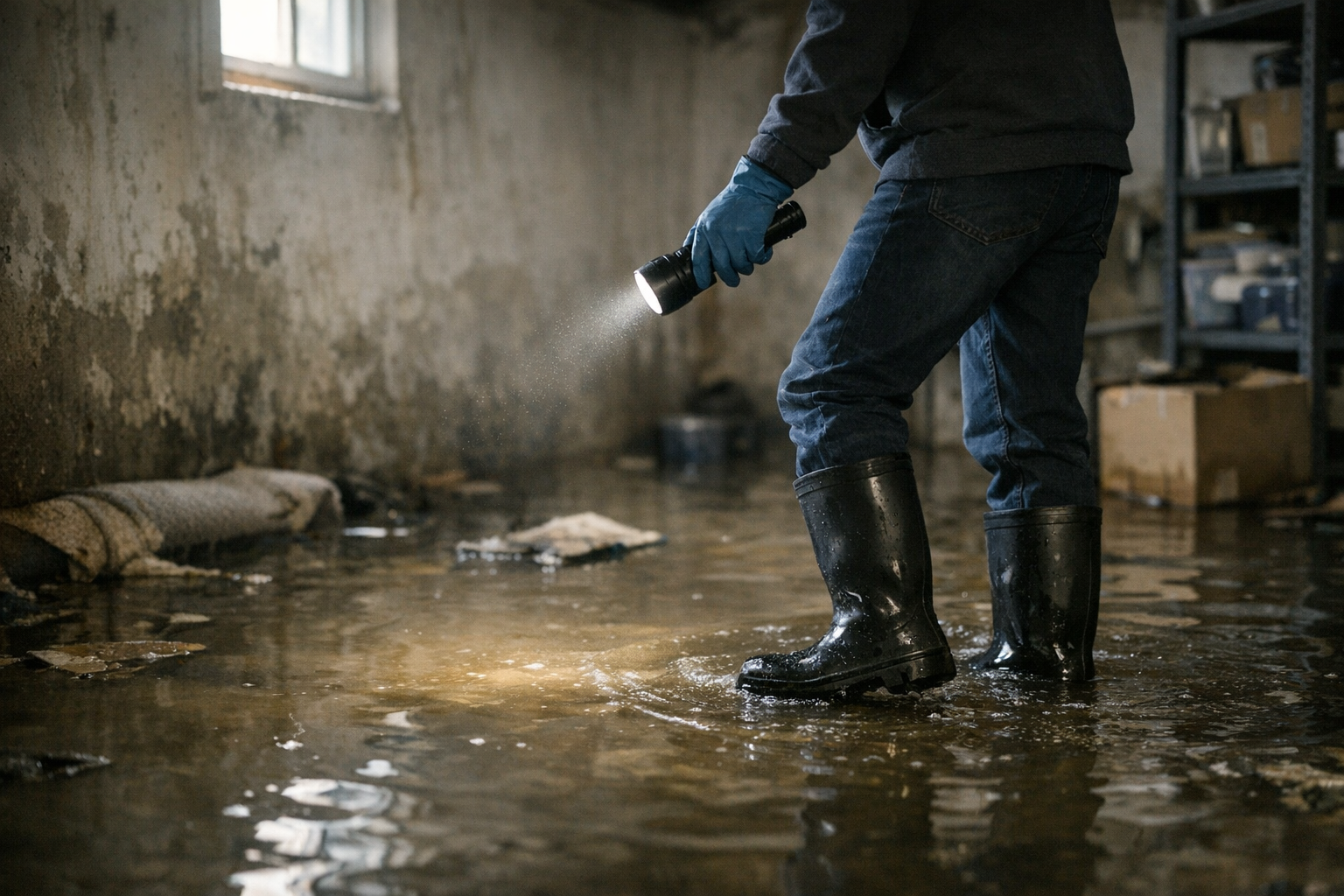
Storm-driven basement floods can destroy your home’s foundation, belongings, and air quality within hours. The first 24 to 48 hours determine whether you face a manageable cleanup or months of expensive structural repairs and mold remediation.
This step-by-step action plan covers immediate response tactics that protect your property and health. You’ll learn when DIY cleanup works and when professional intervention becomes necessary.
Immediate Safety Assessment Before Entering Your Flooded Basement
Never enter a flooded basement before checking for electrical hazards. Standing water conducts electricity from outlets, appliances, and electrical panels.
Turn off electricity to the basement at your main breaker panel. If the panel is located in the flooded area, call your utility company to disconnect power at the meter.
Check for these dangerous conditions:
- Visible electrical sparks or burning smells
- Gas odors indicating broken utility lines
- Structural damage like sagging ceiling joists or cracked foundation walls
- Sewage backup mixed with storm water
Wear rubber boots and gloves when entering. Test each step for solid footing as water can hide debris and unstable flooring.
Document Flood Damage Before Starting Cleanup
Take photos and videos of all damaged areas, belongings, and water levels before moving anything. Insurance adjusters need this evidence to process claims accurately.
Measure and record water depth at multiple points. Mark the high-water line on walls with chalk or tape.
Create an inventory of damaged items including:
- Electronics and appliances with serial numbers
- Furniture and personal belongings
- Building materials like drywall, insulation, and flooring
- HVAC equipment and water heaters
Water Removal Techniques for Different Flood Levels
Water removal speed directly impacts the extent of secondary damage. Mold growth begins within 24 to 48 hours in warm, humid conditions.
Shallow Water (Under 2 inches)
Use a wet/dry shop vacuum for water under 2 inches deep. Empty the tank frequently and use extension cords rated for wet conditions.
Mop remaining moisture with highly absorbent materials. Squeegee water toward floor drains or sump pump locations.
Deep Water (2+ inches)
Rent a submersible pump for water deeper than 2 inches. Position the pump at the lowest point and run discharge hoses away from your foundation.
Remove water gradually if flooding was rapid. Draining too quickly can cause foundation walls to shift when exterior soil pressure remains high.
Pump out one-third of the water, wait overnight, then remove another third. This prevents structural damage from pressure changes.
Salvaging Belongings vs. Safe Disposal
Storm water contains bacteria, chemicals, and debris that contaminate everything it touches. Some items can be cleaned; others pose health risks.
Items That Can Be Cleaned
- Hard plastic items and sealed containers
- Metal objects without rust damage
- Clothing and linens (wash in hot water with disinfectant)
- Non-porous furniture like solid wood or metal
Items Requiring Professional Restoration
- Electronics and appliances (need specialized drying)
- Important documents and photographs
- Antiques and valuable furniture
- Musical instruments
Items That Must Be Discarded
- Carpeting and padding soaked for over 48 hours
- Upholstered furniture with sewage contamination
- Particle board and pressed wood products
- Insulation materials
- Food items and medicines
Drying and Dehumidification Strategy
Proper drying prevents mold growth and structural damage. Target humidity levels below 50% and surface moisture content under 15%.
Open windows and doors when outdoor humidity is lower than indoor levels. Run fans to circulate air across wet surfaces.
Rent commercial dehumidifiers rated for your basement’s square footage. Position them in the center of the space for maximum air circulation.
Remove wet drywall up to 12 inches above the water line. Drywall acts like a sponge, holding moisture that feeds mold growth.
Pull back carpeting to dry the subfloor underneath. Use moisture meters to check wood moisture content before reinstalling materials.
When Professional Restoration Becomes Necessary
Some basement floods exceed safe DIY cleanup capabilities. Professional restoration teams have equipment and training for complex situations.
Contact professionals immediately for:
- Sewage contamination or Category 3 “black water”
- More than 10 square feet of visible mold growth
- Structural damage to foundation walls or support beams
- HVAC system contamination
- High-value property restoration needs
Professional teams use industrial pumps, commercial drying equipment, and antimicrobial treatments. They also coordinate with insurance companies and provide documentation for claims.
Look for certified technicians through organizations like the Institute of Inspection, Cleaning and Restoration Certification (IICRC). Check reviews and response times when basement floods require immediate attention.
Preventing Future Storm-Related Basement Flooding
Address underlying causes after completing immediate cleanup. Most basement floods result from overwhelmed drainage systems or foundation vulnerabilities.
Install a backup sump pump system with battery power. Test monthly to ensure proper operation before storm season.
Seal foundation cracks and improve exterior drainage. Grade soil away from your foundation and clean gutters regularly.
Consider waterproofing treatments for basement walls. Interior and exterior options provide different levels of protection based on your flood risk.
Health Precautions During Cleanup
Storm water carries bacteria, viruses, and chemical contaminants. Protect yourself during cleanup with appropriate safety gear.
Wear N95 masks when removing damaged materials. Use rubber gloves, eye protection, and clothing that covers exposed skin.
Disinfect all surfaces with bleach solution (1 cup per gallon of water). Wash hands frequently and shower after each cleanup session.
Watch for symptoms of illness including respiratory problems, skin irritation, and digestive issues. Seek medical attention if symptoms develop.
Managing basement floods during storms requires quick action and careful planning. The first 48 hours determine whether you face minor repairs or extensive restoration work.
Professional restoration teams provide equipment and expertise for severe flooding situations. They also handle insurance coordination and ensure proper decontamination.
Find certified disaster cleanup and restoration professionals in your area at https://restorationlocator.com. Filter listings by services offered and check customer reviews to make informed decisions during emergency situations.