
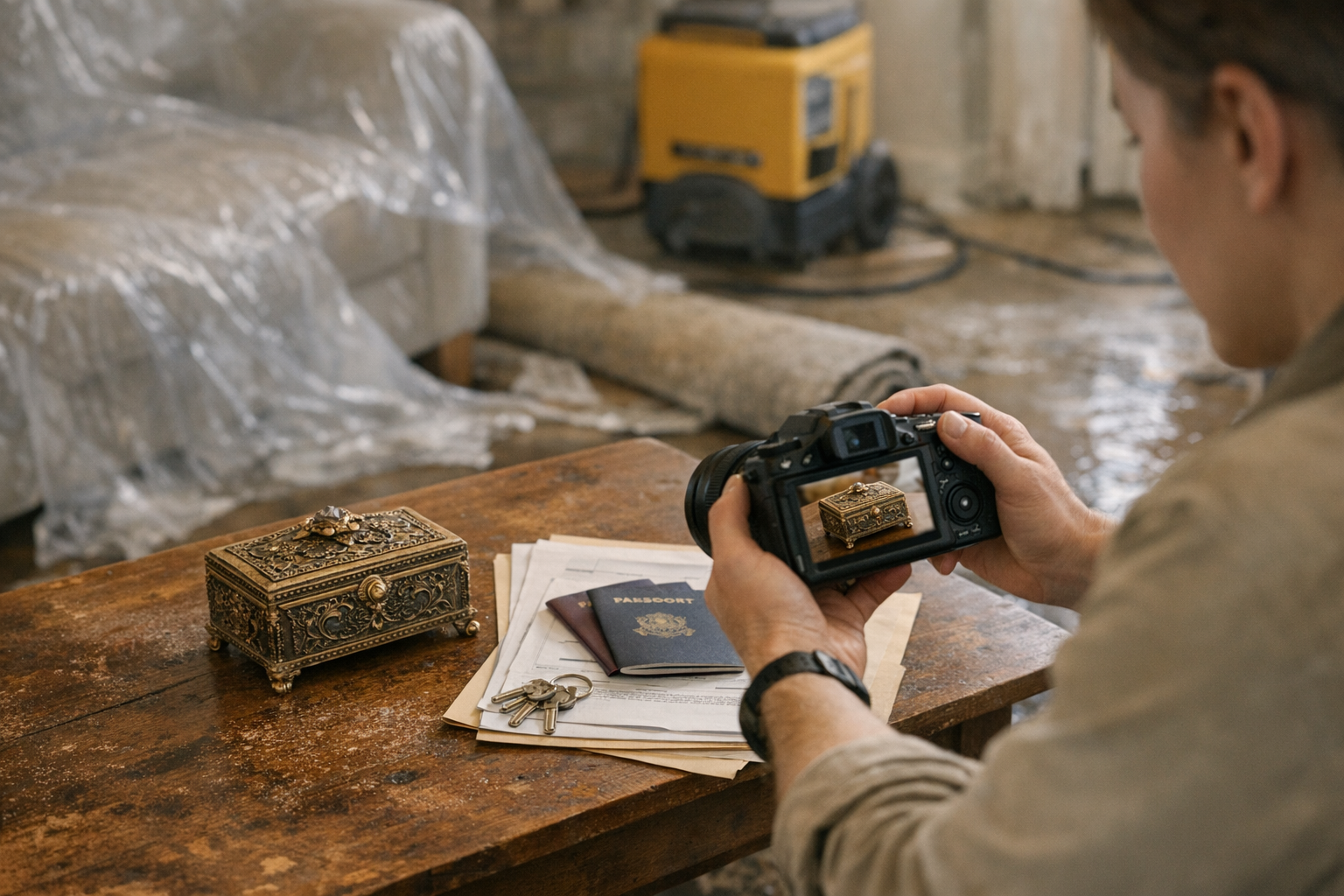
When fire, flood, or other disasters strike your home, protecting your valuables becomes a race against time. Smart homeowners **store valuables** systematically before restoration crews arrive, preventing theft, damage, and insurance complications that can turn recovery into a nightmare.
The window between disaster and restoration work often spans just 24-48 hours. During this critical period, your irreplaceable items face risks from secondary damage, contractor access, and exposure to the elements.
Create a Detailed Inventory Before Moving Anything
Document every valuable item before you **store valuables** elsewhere. Take high-resolution photos showing serial numbers, brand markings, and any existing damage from multiple angles.
Your inventory should capture specific details that insurance adjusters need. Record model numbers, purchase dates, and estimated replacement costs for electronics, jewelry, artwork, and collectibles.
Save your inventory to cloud storage immediately. Email copies to yourself and a trusted family member who lives elsewhere.
What to Include in Your Inventory
- Electronics: Serial numbers, purchase receipts, warranty information
- Jewelry: Appraisal certificates, detailed photos of unique markings
- Documents: Insurance policies, property deeds, birth certificates, passports
- Collectibles: Authentication papers, condition assessments, market valuations
- Firearms: Registration numbers, purchase documentation, secure storage requirements
Choose the Right Storage Method for Different Valuables
Small, high-value items need different protection than bulky furniture or electronics. Match your storage solution to the specific risks each item faces during **home restoration** work.
Bank Safety Deposit Boxes
Safety deposit boxes work best for jewelry, important documents, and small collectibles worth over $1,000. Most banks charge $20-200 annually and require 24-hour notice for access.
Avoid storing items you might need during restoration, like insurance policies or contractor agreements. Keep working copies of these documents accessible.
Climate-Controlled Storage Units
Rent a climate-controlled unit for furniture, large electronics, and temperature-sensitive items. Standard storage units without climate control can cause wood warping, metal corrosion, and electronic component failure.
Choose facilities with 24/7 security cameras and individual unit alarms. Location matters – select storage within 30 minutes of your home for easy access during restoration.
Waterproof Containers and Safes
Fire-resistant safes protect documents and small valuables that stay on-site. Look for safes rated for 1-2 hours at temperatures above 1,700°F.
Waterproof containers work for items stored in basements or areas where water damage remains possible. Military-surplus ammo cans provide excellent protection for electronics and documents at low cost.
Time Your Storage Strategy Around Restoration Phases
Restoration work happens in predictable phases, each creating different risks for your valuables. Plan your storage timeline around these phases to minimize exposure.
Emergency Services (Days 1-3)
Water extraction and debris removal crews need full access to affected areas. Move all valuables from these zones before emergency services begin.
Pack items in clearly labeled boxes and transport them immediately. Don’t wait for restoration contractors to work around your belongings.
Structural Drying and Demolition (Days 4-14)
Industrial fans, dehumidifiers, and demolition work create dust, vibration, and humidity changes throughout your home. Even undamaged rooms become risky for sensitive items.
Electronics and artwork suffer damage from humidity swings between 30-70%. Remove these items before drying equipment starts running.
Reconstruction and Finishing (Weeks 3-12)
Construction dust, paint fumes, and heavy foot traffic affect air quality and security. Keep valuables in secure storage until final cleanup is complete.
Return items only after restoration crews finish and you’ve completed a final walk-through with your project manager.
Secure Transportation and Handling Protocols
Moving valuables safely requires more planning than throwing items in your car. Use proper packing materials and secure transportation methods to prevent damage during transit.
Packing Materials That Actually Work
Bubble wrap works for most items, but electronics need anti-static bubble wrap to prevent electrical damage. Acid-free tissue paper protects photographs and documents from chemical deterioration.
Dish packs (heavy-duty boxes with built-in dividers) protect fragile items better than regular moving boxes. These boxes cost $3-5 each but prevent hundreds in damage.
Vehicle Security During Transport
Never leave valuables visible in vehicles, even for quick stops. Use trunk space or covered cargo areas in SUVs and trucks.
Make multiple trips rather than overloading your vehicle. A single car accident could destroy everything you’re trying to protect.
Work with Restoration Contractors to Store Valuables Safely
Professional restoration companies often provide content pack-out services for severely damaged homes. These services include inventory, cleaning, and secure storage of your belongings.
Ask potential contractors about their content handling procedures. Companies should provide detailed inventories, climate-controlled storage, and item-by-item condition reports.
Questions to Ask Restoration Contractors
- Do you provide content pack-out services or work with preferred vendors?
- What insurance coverage protects my belongings in your custody?
- How do you track and inventory items during storage?
- What security measures protect stored contents?
- When can I access my belongings during restoration?
Use filters on restoration directories to find contractors who offer content services. Check reviews specifically mentioning valuable item handling and customer satisfaction with pack-out services.
Insurance Considerations for Stored Valuables
Your homeowner’s insurance may not cover valuables stored off-site during restoration. Contact your insurance agent before moving items to understand coverage gaps.
Document all storage costs with receipts. Many policies reimburse reasonable storage expenses during covered restoration periods.
Consider adding a personal property floater to your policy for high-value items. These endorsements provide broader coverage than standard homeowner’s policies.
Coverage Limits to Review
- Jewelry: Standard policies limit jewelry coverage to $1,500-2,500 total
- Electronics: Coverage may exclude items over 10 years old
- Collectibles: Policies often cap coverage at $200-500 per item
- Cash and securities: Usually limited to $200-500 total
Red Flags: When Storage Plans Go Wrong
Rushed storage decisions create more problems than they solve. Avoid these common mistakes that leave valuables vulnerable during restoration projects.
Don’t store items in unheated garages, barns, or sheds during winter months. Temperature extremes crack wood finishes, damage electronics, and create condensation inside containers.
Never store valuables with friends or relatives without updating your insurance. Most homeowner’s policies don’t cover items stored at other residences.
Avoid storage facilities without adequate security. Facilities should have controlled access, security cameras, and on-site management during business hours.
Recovery and Return: Getting Your Valuables Back
Plan your return strategy before restoration work begins. Create a priority list of items you’ll need first when you move back home.
Inspect stored items carefully when retrieving them. Document any damage that occurred during storage for insurance claims.
Consider professional cleaning for items stored during restoration work. Even sealed containers can allow dust and odors to penetrate during extended storage periods.
Protecting your valuables during restoration requires quick action and careful planning. The right storage strategy preserves both your possessions and your peace of mind while contractors rebuild your home. Browse disaster cleanup and restoration listings to find contractors who can help protect your belongings during recovery.