
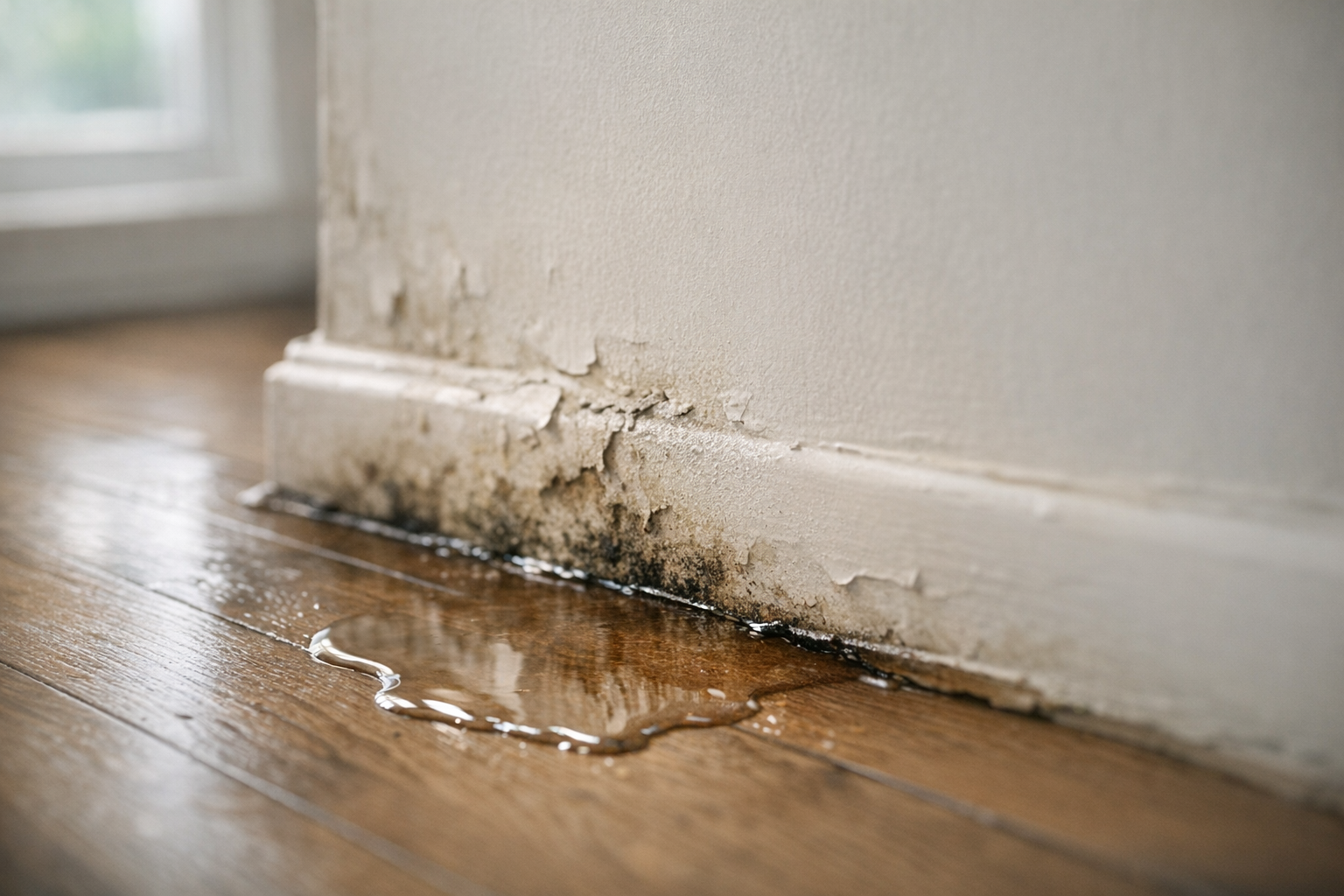
That small puddle from your leaky window or the damp spot behind your washing machine might seem harmless. Spring weather brings increased humidity and frequent storms that create perfect conditions for minor water damage to quickly escalate into expensive disasters.
Most homeowners wait too long to address these seemingly insignificant water issues. Within 48 hours, what starts as surface moisture penetrates deep into building materials, creating hidden problems that cost thousands to repair.
How Minor Water Damage Spreads in Spring Conditions
Minor water damage behaves like a slow-moving flood beneath your home’s surfaces. Spring’s combination of temperature fluctuations and increased moisture creates ideal conditions for water to migrate through porous materials.
Water moves through drywall at approximately one inch per hour under normal conditions. Spring humidity slows evaporation, allowing moisture to penetrate deeper into wall cavities, insulation, and subflooring.
Temperature swings between cool nights and warm days create condensation cycles that compound the problem. This cycle draws moisture deeper into building materials while preventing proper drying.
The 24-Hour Damage Timeline
Water damage follows a predictable progression that accelerates during spring months:
- 0-24 hours: Surface absorption begins, drywall starts swelling, carpet padding absorbs moisture
- 24-48 hours: Wood swelling occurs, metal components begin oxidizing, mold spores activate
- 48-72 hours: Mold growth becomes visible, structural weakening begins, odors develop
- 1-2 weeks: Serious structural damage, extensive mold colonies, contamination spreads
The Real Cost of Delayed Action on Water Issues
Addressing water damage during the first 48 hours typically costs between $300-$1,200 for professional remediation. Waiting just one week can increase costs to $3,000-$8,000 as the damage spreads.
Insurance companies often reduce coverage for damage that homeowners could have prevented through prompt action. Claims adjusters specifically look for evidence that property owners recognized and ignored early warning signs.
The hidden costs extend beyond immediate repairs. Secondary damage includes increased energy bills from compromised insulation, health issues from mold exposure, and decreased property values from structural problems.
Structural Consequences You Can’t See
Water travels along structural elements like floor joists and wall studs, weakening critical support systems. These components lose up to 30% of their load-bearing capacity when moisture content exceeds 19%.
Subflooring damage often goes undetected until floors start sagging or squeaking. By this point, replacement costs can reach $8-$12 per square foot compared to $2-$4 for early intervention.
Spring Risks That Amplify Minor Water Problems
Spring weather patterns create unique challenges that transform small water issues into major problems. Rapid temperature changes cause building materials to expand and contract, creating new entry points for moisture.
Spring risks include increased rainfall, snowmelt, and higher groundwater levels that put additional pressure on foundation waterproofing systems. Even properly sealed basements can develop moisture issues during heavy spring precipitation.
HVAC systems work harder during spring temperature swings, creating more condensation around ductwork and air handlers. This condensation often drips into areas where it goes unnoticed for weeks.
Seasonal Factors That Accelerate Damage
Spring creates a perfect storm of conditions that speed up water damage progression:
- Higher humidity levels: 60-80% relative humidity prevents proper drying and promotes mold growth
- Temperature fluctuations: Daily swings of 20-30 degrees create condensation cycles
- Increased precipitation: Spring storms overload drainage systems and stress building envelopes
- Ground saturation: Saturated soil creates hydrostatic pressure against foundations
Early Warning Signs Most Homeowners Miss
Professional restoration technicians recognize subtle indicators that most homeowners overlook. These early warning signs appear days or weeks before obvious damage becomes visible.
Musty odors are often the first detectable sign of hidden moisture problems. This smell indicates active microbial growth, which begins within 48-72 hours of water exposure.
Paint and wallpaper changes signal moisture infiltration behind wall surfaces. Look for slight bubbling, discoloration, or texture changes that seem minor but indicate serious problems.
Professional Detection Methods
Restoration professionals use moisture meters to detect water content in materials before visible damage occurs. These instruments can identify problems when moisture levels exceed 15-17% in wood or 1-2% in concrete.
Thermal imaging cameras reveal temperature differences that indicate moisture presence behind walls and under flooring. These tools detect problems that won’t become visible for weeks.
Air quality testing identifies elevated spore counts that signal mold growth in hidden areas. Professional assessment can detect contamination levels 100 times lower than what human senses can perceive.
Why Professional Assessment Prevents Disaster
Professional water damage assessment goes far beyond what homeowners can detect with visual inspection. Certified technicians use calibrated equipment to measure moisture levels, air quality, and structural integrity.
Restoration professionals understand how water moves through different building materials and can predict where damage will spread. This knowledge allows them to address problems before they become expensive disasters.
A comprehensive assessment includes moisture mapping, air sampling, and structural evaluation. These services typically cost $200-$400 but can prevent thousands in future damage.
What Professional Assessment Includes
Certified restoration technicians provide detailed documentation of current conditions and potential risks:
- Moisture content mapping: Precise measurements of water levels in all affected materials
- Structural integrity evaluation: Assessment of load-bearing components and safety concerns
- Air quality testing: Detection of mold spores, bacteria, and other contaminants
- Damage progression prediction: Professional estimate of how problems will develop if left untreated
Finding Qualified Restoration Professionals
Not all restoration companies provide comprehensive assessment services. Look for certified technicians who use professional-grade moisture detection equipment and provide detailed written reports.
Check for IICRC (Institute of Inspection, Cleaning and Restoration Certification) credentials, which indicate proper training in water damage assessment and remediation techniques. These certifications require ongoing education and testing.
Review customer feedback specifically about assessment accuracy and early detection services. Companies that excel at preventing major damage will have testimonials about catching problems early.
Questions to Ask Restoration Companies
When evaluating restoration professionals, ask specific questions about their assessment capabilities:
- What type of moisture detection equipment do you use?
- Do you provide thermal imaging as part of your standard assessment?
- Will you test air quality and check for mold contamination?
- Do you offer written reports with moisture measurements and recommendations?
- What certifications do your technicians hold?
Taking Action Before Problems Escalate
The window for preventing minor water damage from becoming a major disaster closes quickly. Spring conditions accelerate this timeline, making immediate professional assessment even more important.
Document any water issues with photos and notes about when you first noticed them. This information helps restoration professionals understand how the problem developed and predict its progression.
Don’t attempt to dry out water damage with fans or dehumidifiers alone. These methods only address surface moisture while deeper penetration continues spreading through building materials.
Professional intervention during the first 48 hours can prevent 80-90% of secondary damage that occurs when water problems go untreated. The cost savings from early action typically exceed assessment fees by 10-20 times.
Spring’s unique combination of humidity, temperature swings, and increased precipitation makes this season particularly dangerous for unaddressed water issues. What seems like minor damage today can become a major disaster within days.
Professional assessment provides the detailed analysis needed to prevent small problems from escalating into expensive repairs. Browse qualified Disaster Cleanup & Restoration professionals at https://restorationlocator.com to find certified technicians in your area who offer comprehensive water damage assessment services.