
A garage that handles summer fine can fail fast once temperatures drop below freezing. Burst pipes, cracked concrete, and frozen door tracks turn a storage space into a repair bill. Winter garage preparation protects your vehicles, stored belongings, and the structure attached to your home.
This post walks you step by step through sealing, insulating, and inspecting your garage before the first hard freeze. Each section gives specific actions you can finish in a weekend.
Why Winter Garage Preparation Matters More Than People Expect
Garages share a wall with your house but rarely share its insulation. That gap makes them the first place cold weather causes damage.
Water lines running along an uninsulated garage ceiling can freeze at 20°F within hours. A single burst pipe releases hundreds of gallons, soaking drywall and flooring in minutes.
Concrete floors crack when moisture seeps into surface pores and freezes. Repeated freeze-thaw cycles widen those cracks each winter until the slab needs patching.
Step-by-Step Winter Garage Preparation Checklist
Work from the outside in. Sealing the shell first keeps your insulation work from being wasted.
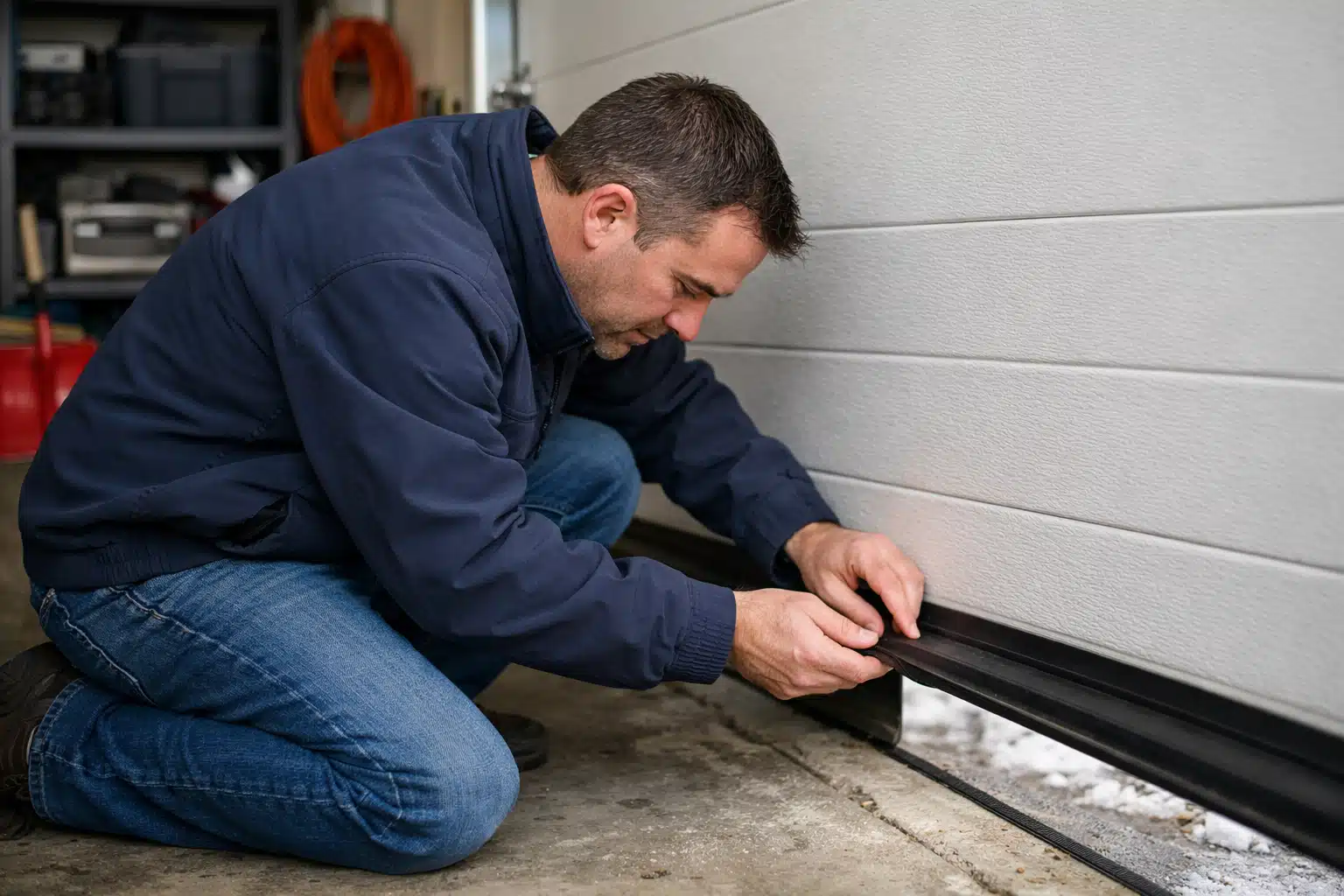
- Inspect the garage door seal. Replace the bottom rubber gasket if it is cracked, stiff, or lets light through.
- Weatherstrip the side and top edges. Use vinyl or rubber stripping rated for sub-freezing temperatures.
- Seal wall and foundation cracks. Fill gaps with exterior-grade caulk or expanding foam before snow arrives.
- Insulate the garage door. Add rigid foam panels cut to fit each door section.
- Wrap exposed water pipes. Use foam pipe sleeves or heat tape on any line running along ceilings or exterior walls.
- Protect the floor. Apply a concrete sealer and keep a squeegee handy for melting snow runoff.
- Service the garage door opener. Lubricate tracks, rollers, and springs with a silicone-based product.
Checking the Garage Door Seal First
The bottom seal is where most cold air enters. Close the door and look for daylight along the bottom edge from inside.
A worn seal costs under $30 to replace and takes 30 minutes. Skipping it undoes every other step you take.
Sealing Cracks in Walls and Foundation
Hairline cracks near the floor let in cold air and ground moisture. Water that enters and freezes pushes those cracks wider each cycle.
Fill cracks under a quarter inch with masonry caulk. For wider gaps, use hydraulic cement rated for freezing conditions.
Cold Weather Maintenance for Garage Pipes and Plumbing
Frozen pipes cause the most expensive garage damage every winter. Cold weather maintenance for plumbing centers on insulation and airflow control.
Wrap any pipe within three feet of an exterior wall. Foam sleeves cost a few dollars per section and slip on without tools.
For pipes in garages that drop below freezing, add electric heat tape. Plug it into a GFCI outlet and follow the wattage rating on the box.
What To Do If a Pipe Already Froze
A frozen pipe feels solid and produces no water when the tap opens. Shut off the main water supply before thawing begins.
Open the affected faucet so melting water has somewhere to drain. Apply gentle heat with a hair dryer, never an open flame.
If a pipe has already burst, stop the water and document the damage with photos. Then find a restoration company before mold sets in.
Protecting the Garage Floor From Freeze-Thaw Damage
Concrete absorbs water, and absorbed water expands when it freezes. That expansion is what cracks and spalls garage slabs.
A penetrating concrete sealer blocks moisture from entering the surface. Apply it in fall when temperatures stay above 50°F for curing.
Snow and road salt dripping off your car accelerate surface damage. Rinse the floor on warmer days and park over a containment mat.
Managing Snowmelt and Runoff
A car covered in snow drops gallons of slush as it warms inside. That meltwater pools, refreezes overnight, and seeps into cracks.
- Lay rubber containment mats under each parking spot
- Slope mats slightly toward the door for drainage
- Keep a push broom or squeegee by the entrance
- Clear slush before it refreezes on the slab
Insulating the Garage for Stable Temperatures
An insulated garage holds heat longer and reduces pipe freeze risk. The walls and door matter most since the ceiling shares attic space.
Batt insulation rated R-13 fits standard 2×4 wall framing. For the door, rigid foam panels add R-value without heavy weight.
If you run a space heater, pick a model with a tip-over shutoff. Never leave it running overnight in an unattended garage.
Preparing Stored Items for Freezing Temperatures
Cold ruins more than pipes. Paint, batteries, and liquids left in an unheated garage degrade or freeze.
- Paint and adhesives: Move latex paint indoors; it separates after freezing
- Canned food: Relocate it, since cans split when contents freeze
- Car batteries: Keep connections clean; cold cuts cranking power
- Propane tanks: Store upright and never inside a heated space
When Winter Damage Calls for a Restoration Company
Some winter garage damage moves faster than a weekend fix. Standing water from a burst pipe needs extraction within 24 to 48 hours.
Water that reaches drywall or shared walls can spread into your home. Mold begins forming in damp materials within two days.
Use Restoration Locator to find water damage and cleanup providers near you. Filter listings by location, sort by proximity, and check reviews before you call.
How To Pick the Right Provider
Look for companies listing water extraction and structural drying specifically. Read recent reviews that mention response time during freeze season.
Sort directory results by distance so help arrives fast. Faster response means less water migrating into your living space.
Key Takeaways for Winter Garage Preparation
Seal the door and cracks first, then insulate pipes and walls before the first freeze. Protect the concrete floor from freeze-thaw cycles and manage snowmelt all season.
If a pipe bursts or water reaches your drywall, act within 48 hours to limit damage. Browse Disaster Cleanup & Restoration listings at Restoration Locator and start your search today.