
Cold air finds every gap in your home, and the wrong insulation lets heat escape faster than a cracked window. Your winter insulation choice affects your heating bills from the first frost to the spring thaw. This article breaks down which materials hold heat best, where to install them, and how to find a qualified installer.
You will learn how R-value works in cold climates, which insulation types perform best in attics versus crawl spaces, and the common mistakes that waste money. Each section gives you concrete numbers and real scenarios, not vague tips.
What R-Value Means for Winter Performance
R-value measures how well insulation resists heat flow. Higher R-value means better resistance and more warmth kept inside during cold months.
The U.S. Department of Energy sets recommended R-values by climate zone. A home in Minnesota needs far more than one in Georgia.
Here are the attic targets by region:
- Zones 1-3 (South): R-30 to R-49
- Zones 4-5 (Mid-Atlantic, Midwest): R-49 to R-60
- Zones 6-8 (Northern, Mountain): R-60 or higher
Walls usually sit between R-13 and R-21. Floors over unheated spaces need R-25 to R-30 in cold zones.
Adding more insulation past the recommended level gives diminishing returns. Hitting the right number matters more than piling on excess.
Comparing Insulation Materials for Cold Climates
Each material handles winter differently. Below is how the main types perform when temperatures drop.
Fiberglass Batts
Fiberglass batts are pre-cut rolls that fit between studs and joists. They cost the least and run about R-3.1 to R-3.4 per inch.
The weakness shows in cold weather: gaps around wiring and pipes let air leak. In an unfinished attic, poorly fitted batts can lose 20% of their rated value.
Blown-In Cellulose
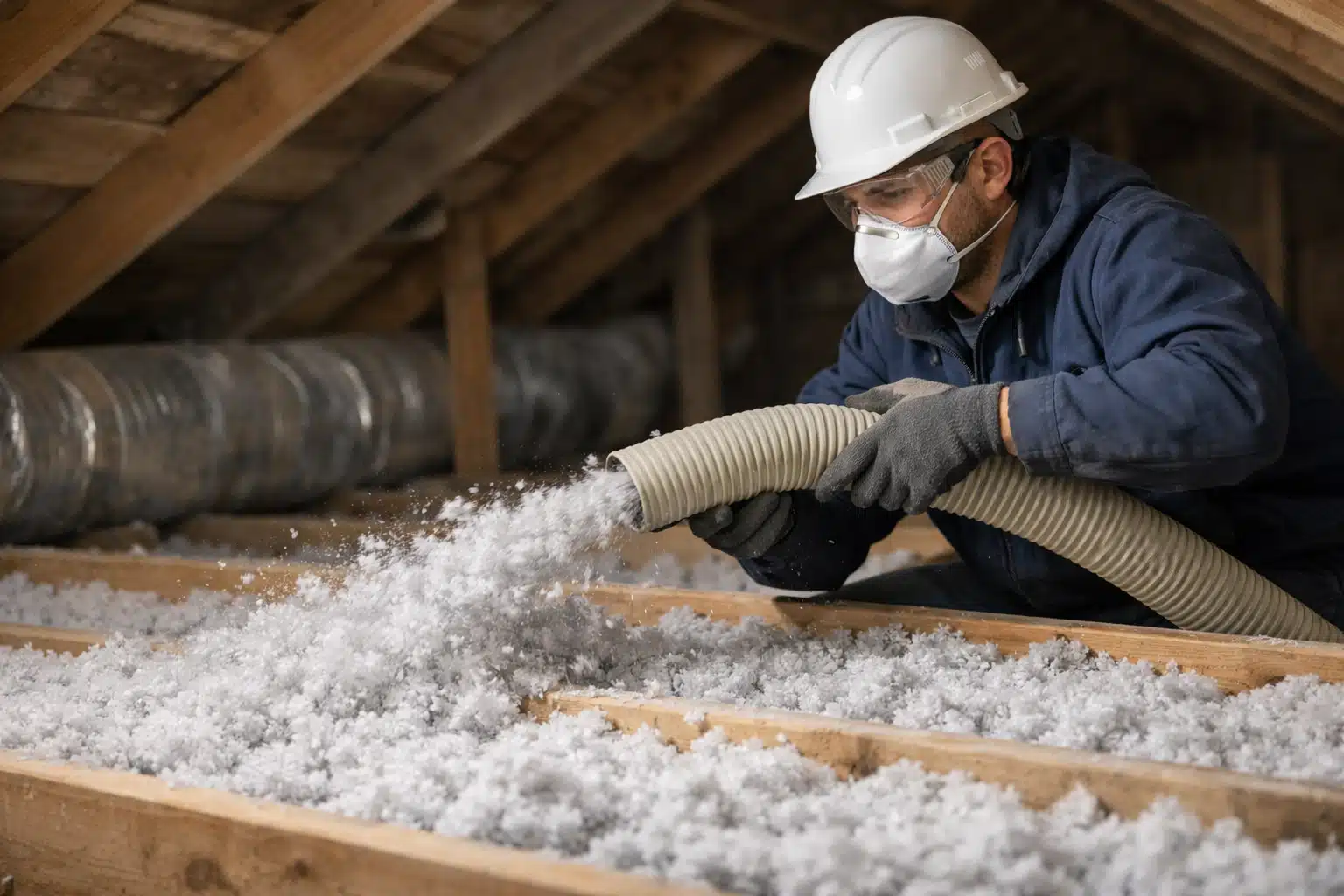
Blown-in cellulose fills irregular spaces that batts miss. Made from recycled paper, it delivers R-3.2 to R-3.8 per inch.
It settles over time, which drops performance. Installers account for this by adding extra depth during application.
Spray Foam
Closed-cell spray foam has the highest R-value per inch, around R-6 to R-7. It seals air leaks and blocks moisture, which makes it strong against winter drafts.
The cost runs two to three times higher than fiberglass. For rim joists and crawl spaces, the air-sealing benefit often justifies the price.
Mineral Wool
Mineral wool resists fire and holds R-4 to R-4.3 per inch. It keeps its shape in damp conditions better than fiberglass.
Basements and exterior walls in flood-prone regions benefit from its moisture tolerance.
Matching Insulation to the Right Area of Your Home
Your winter insulation choice should change based on where it goes. Heat rises, so the attic matters most.
Attics
Blown-in cellulose or fiberglass works best for open attic floors. It fills around joists and reaches corners that batts cannot.
Air-seal gaps around light fixtures and chimneys before insulating. Skipping this step lets warm air escape past even thick insulation.
Walls
Existing walls are hard to reach without removing drywall. Dense-pack cellulose, injected through small holes, fills cavities without a full teardown.
New construction allows batts or spray foam between open studs. Spray foam adds an air barrier that batts lack.
Basements and Crawl Spaces
Closed-cell spray foam or rigid foam board handles these damp areas best. Both resist moisture that would ruin fiberglass.
Insulating rim joists stops a surprising amount of cold air. This narrow gap at the top of basement walls leaks heat all winter.
How Energy Efficient Insulation Lowers Winter Bills
Energy efficient insulation cuts heating costs by reducing how hard your furnace works. The DOE estimates proper air sealing and insulation save 15% on heating and cooling.
Consider a two-story home in Ohio with an under-insulated attic at R-19. Bumping it to R-49 can trim $200 to $400 from a winter heating season.
The savings compound each year. A spray foam upgrade in a leaky crawl space often pays back within five to seven heating seasons.
Common Mistakes That Waste Heat
Even good materials fail when installed wrong. Watch for these errors:
- Compressing batts to fit tight spaces, which lowers R-value
- Leaving gaps around pipes, wires, and recessed lights
- Skipping the vapor barrier in cold climates, causing condensation
- Blocking soffit vents in the attic, which traps moisture
- Ignoring the rim joist, a top source of basement drafts
A moisture problem from poor installation can lead to mold or rot. That turns a simple upgrade into a repair job.
Finding a Qualified Insulation Installer
Water damage, mold, or old wet insulation sometimes calls for removal before new material goes in. Restoration specialists handle both the cleanup and the replacement.
On https://restorationlocator.com, you can find providers who work on insulation after storm or flood damage. Use the directory to match a specialist to your situation.
When comparing listings, do the following:
- Sort by location to find installers near your home
- Check reviews for comments on winter performance and cleanliness
- Filter listings by water or mold restoration if old insulation is damaged
- Compare ratings across several providers before booking
Ask any installer about their recommended R-value for your climate zone. A knowledgeable one will reference DOE guidelines without prompting.
Quick Reference: Material by Location
Use this side-by-side list to match materials to spaces:
- Attic floor: Blown-in cellulose or fiberglass
- Open walls: Spray foam or batts
- Finished walls: Dense-pack cellulose
- Basement rim joist: Closed-cell spray foam
- Crawl space: Rigid foam board or spray foam
- Damp or flood-prone areas: Mineral wool or closed-cell foam
Conclusion
The right winter insulation choice comes down to matching R-value to your climate zone and the right material to each area of your home. Attics need depth, basements need moisture resistance, and every space needs careful air sealing. A skilled installer makes the difference between real savings and wasted money.
Ready to upgrade or replace damaged insulation? Browse Disaster Cleanup & Restoration listings on https://restorationlocator.com and start your search today.
Sources
- U.S. Department of Energy – Insulation
- ENERGY STAR – Seal and Insulate
- U.S. Department of Energy – Types of Insulation