
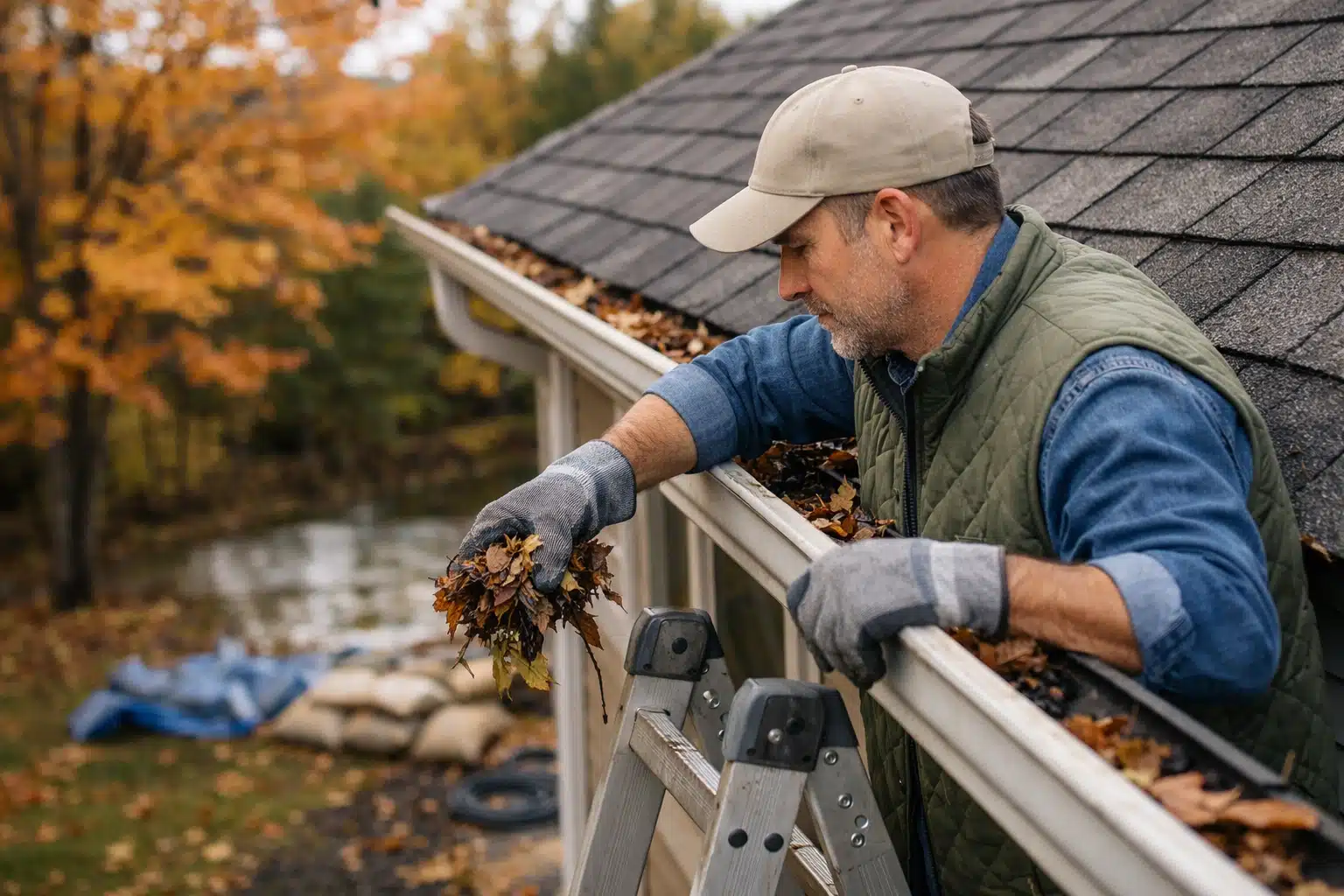
Fall rain mixed with falling leaves creates a flood risk most homeowners miss until water is already in the basement. Fall flood preparation means clearing the drainage paths that autumn debris blocks, then checking the systems that keep groundwater out of your home.
This post covers the autumn-specific threats, a step-by-step prep checklist, and how to line up a restoration contractor before you need one.
Why Fall Flooding Is Different From Spring Flooding
Fall floods are driven by clogged drainage, not melting snow. Dead leaves, acorns, and pine needles pile into gutters and storm drains right as rain increases.
Three autumn conditions stack the odds against your home:
- Leaf litter blocks gutters, downspouts, and street storm grates within days of a heavy drop.
- Saturated soil from earlier rain cannot absorb new water, pushing it toward foundations.
- Early freezes crack hoses and exterior pipes that then burst during the next thaw.
Hurricane remnants add a fourth layer along the East and Gulf coasts. The Atlantic season peaks in September, when soil moisture is highest.
A Step-by-Step Fall Flood Preparation Checklist
Work from the roof down, then move to the ground and interior. Each step targets a failure point that shows up in autumn claims.
- Clear gutters twice. Once in early October, again after the heaviest leaf drop. A single clog can send water straight down an exterior wall.
- Extend downspouts at least 6 feet from the foundation. Leaf-matted splash blocks are a common cause of basement seepage.
- Test your sump pump. Pour a bucket of water into the pit. If it does not kick on, replace it before storm season.
- Add a battery backup to the sump pump. Fall storms knock out power exactly when the pump is working hardest.
- Clear the storm drain nearest your driveway or yard. Leaves flatten over grates and pond water against the house.
- Disconnect and drain garden hoses. A frozen hose bib can split and leak behind a wall once temperatures swing.
- Seal foundation cracks with hydraulic cement. Even hairline gaps widen under saturated-soil pressure.
- Grade soil away from the house. Settling over summer often tilts beds back toward the foundation.
Photograph each area after you finish. Dated photos speed up any insurance claim later.
Inside the Home
Move cardboard boxes and electronics off basement floors onto shelves. Water that enters a finished basement wicks into drywall within hours.
Install a water alarm near the sump pit and water heater. A $15 sensor catches slow leaks before they spread.
Reading Your Property’s Seasonal Flooding Risks
Your flood exposure depends on where water collects, not just whether you sit in a mapped flood zone. Walk your yard during the next hard rain and note where puddles form and linger.
Low spots near the foundation signal grading problems. Water sheeting across a driveway toward the garage points to a drainage path that needs correction.
Check your FEMA Flood Map Service Center entry for your parcel. Homes outside high-risk zones still file a large share of flood claims, so a low rating is not a free pass against seasonal flooding risks.
Know Your Insurance Gap
Standard homeowners policies do not cover flood damage from rising groundwater. A separate flood policy has a 30-day waiting period in most cases.
Buying coverage in October rarely helps for a storm that same month. Line up a policy now if your area sees autumn flooding.
Line Up a Restoration Contractor Before the Storm
The worst time to find a water damage contractor is while standing in two inches of water. Phones jam, response times stretch, and you lose leverage on price.
Pre-select a provider during the calm weeks of early fall. Verify a few details before you save a company to your phone:
- 24/7 emergency response with a stated arrival window for your area.
- IICRC certification for water damage restoration technicians.
- Direct insurance billing so you avoid paying out of pocket upfront.
- Local presence rather than a distant call center dispatching crews hours away.
How to Shortlist Providers on Restoration Locator
Restoration Locator lets you filter the search to match autumn needs. Use these filters to narrow the field fast:
- Filter listings by location to find crews that reach you within an hour.
- Sort by service type for water extraction, structural drying, and mold remediation.
- Check reviews from past clients to confirm real response times during storms.
Save two or three providers, not one. If your first choice is booked during a regional flood event, a backup keeps your drying timeline on track.
What to Do in the First Hour of a Fall Flood
Fast action limits mold growth, which starts within 24 to 48 hours of water exposure. Your first hour sets the ceiling on total damage.
- Cut power to flooded areas at the breaker if you can reach it safely.
- Shut off the water source if the flood comes from a burst pipe, not outdoor runoff.
- Move valuables and electronics above the waterline.
- Photograph everything before you remove or clean anything.
- Call your restoration contractor from your pre-saved shortlist.
Do not wade into standing water near outlets or a submerged panel. Wait for power to be confirmed off.
Key Takeaways
Fall flood preparation comes down to clearing autumn debris, testing your sump pump, and fixing drainage before heavy rain arrives. Map where water collects on your property and close the insurance gap early.
The homeowners who recover fastest are the ones who picked a contractor before the water rose. Browse Disaster Cleanup & Restoration listings now at Restoration Locator and build your shortlist today.