
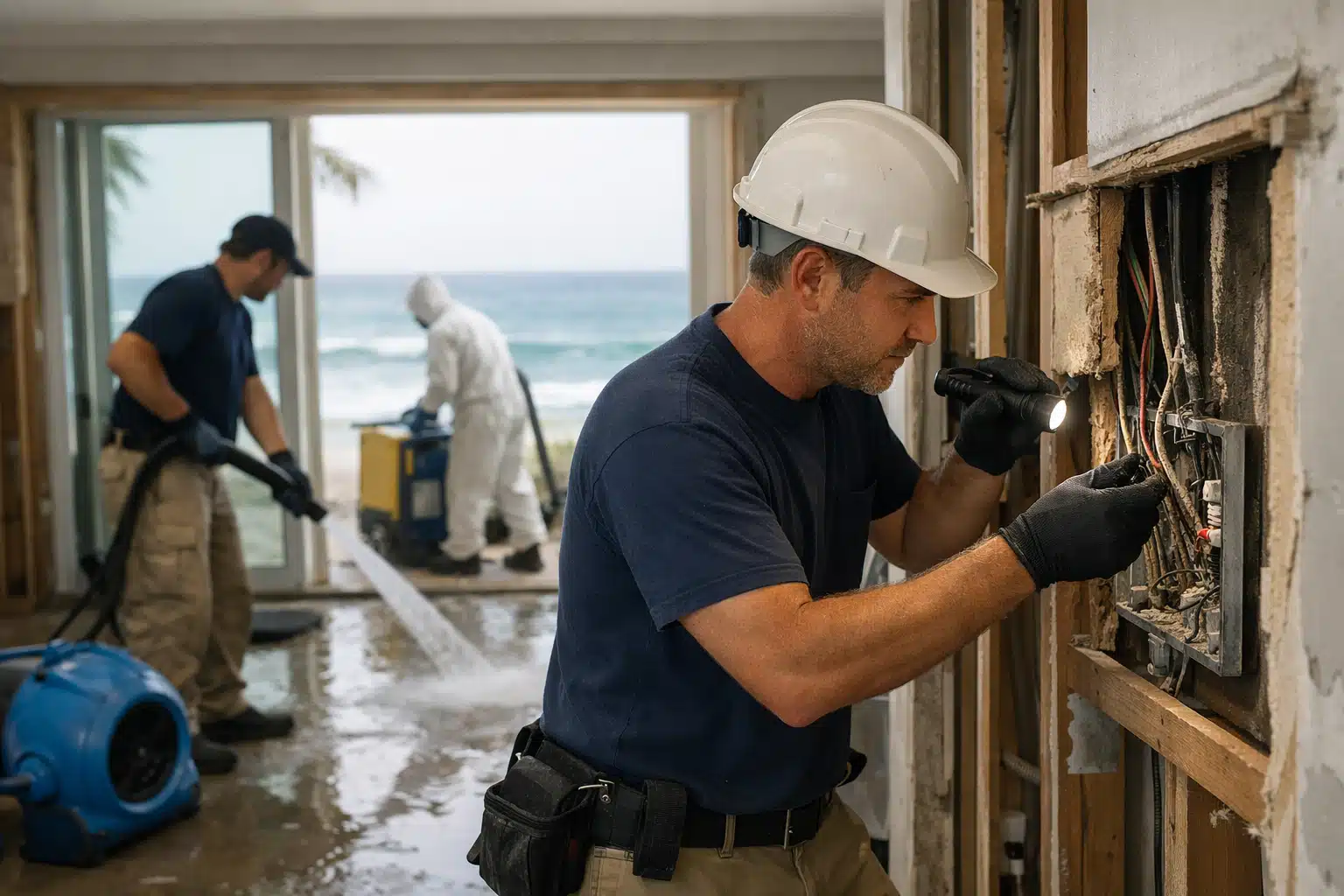
Saltwater intrusion damages a beachfront home differently than a burst pipe damages an inland house. The brine soaks into wall cavities, corrodes wiring, and keeps drywall wet long after standard drying would finish. Picking a beachfront restoration company that misses these details leaves hidden moisture and rust behind the repairs.
This post breaks down what separates true coastal specialists from general firms. You will learn which credentials matter, what questions to ask, and how to filter listings to find a match fast.
Why Beachfront Properties Need a Specialized Restoration Company
Beachfront damage combines several forces at once. Storm surge, wind-driven rain, salt corrosion, and high water tables all hit the same structure.
A standard water damage crew dries the floor and moves on. A coastal specialist tests for chloride contamination, which keeps materials wet and corrodes metal for months.
The salt problem most firms underestimate
Salt is hygroscopic, meaning it pulls moisture from the air back into dried materials. A wall that reads “dry” on a meter can rewet itself overnight near the ocean.
A qualified beachfront restoration company flushes salt-contaminated materials with clean water or removes them entirely. Crews without this knowledge trap salt inside walls, causing recurring mold and metal failure.
Flood zones change the repair rules
Most beachfront homes sit in FEMA flood zones. Repairs in these zones follow the 50% rule: if damage exceeds half the structure’s value, the rebuild must meet current flood codes.
A specialist knows how to document damage for this threshold. The wrong firm can trigger costly code upgrades or void your flood insurance claim.
Credentials to Verify Before You Hire
Certifications tell you whether a crew understands coastal conditions. Check for the following before signing anything.
- IICRC certification in Water Damage Restoration (WRT) and Applied Structural Drying (ASD).
- Flood insurance claim experience with NFIP documentation requirements.
- Mold remediation licensing where your state requires it, including Florida and Texas.
- Salt and chloride testing capability, confirmed in writing.
- Local permit familiarity for coastal construction control lines.
Ask each firm to confirm these in writing. A crew that handles beach properties weekly answers without hesitation.
Equipment that signals real coastal work
Coastal drying demands more than a few fans. Ask whether the firm owns desiccant dehumidifiers, which pull moisture in humid salt air where refrigerant units stall.
Firms doing genuine coastal property recovery also carry moisture meters calibrated for dense materials like stucco and concrete block. Thin drywall meters miss trapped water in these walls.
Questions That Separate Specialists From Generalists
Use these questions when you call providers found on a directory. The answers reveal real coastal expertise quickly.
- How do you test for salt contamination after saltwater intrusion? Listen for chloride testing, not just moisture readings.
- Have you worked within a FEMA flood zone and the 50% rule? A specialist explains documentation steps clearly.
- Do you coordinate with coastal permit offices? Beach rebuilds need setback and elevation approvals.
- What is your plan for hidden moisture in block walls? Expect mention of borescope inspections and extended drying.
- How soon can you mobilize after a named storm? Post-hurricane demand spikes, and slow response grows mold.
Vague answers mean the firm treats your home like an inland job. That gap shows up later as corrosion and recurring mold.
How to Compare Beachfront Restoration Companies on a Directory
A directory lets you shortlist qualified firms without cold-calling dozens of numbers. Use filters to match the exact conditions your property faces.
Filters worth using first
- Location radius: sort by distance so crews reach you before salt sets deeper.
- Service type: filter for water, storm, and mold work in one listing.
- Certifications listed: narrow to firms showing IICRC credentials up front.
- Reviews: read feedback from other coastal homeowners, not inland clients.
On Restoration Locator, you can sort by location and compare provider profiles side by side. This shortens the search during the hours that matter most after flooding.
Reading reviews for coastal clues
Scan reviews for words like storm surge, hurricane, salt, or flood zone. A firm with repeated coastal mentions has handled your situation before.
Watch for complaints about mold returning months later. That pattern points to a crew that dried the surface but ignored salt and block-wall moisture.
Red Flags When Choosing a Beachfront Restoration Company
Some warning signs appear before work begins. Spotting them early protects both your home and your insurance claim.
- No written drying plan with daily moisture logs.
- Refusal to test for salt after saltwater exposure.
- Unfamiliarity with the 50% rule or flood codes.
- Pressure to sign an open-ended assignment of benefits form.
- No local address near the coast, risking slow storm response.
Any one of these warrants a second opinion. Coastal repairs cost too much to redo after a shortcut.
Timing Your Coastal Property Recovery
Response speed decides how much you save. Saltwater that sits 48 hours corrodes wiring and feeds mold faster than freshwater.
Line up a firm before hurricane season, not during it. Many coastal homeowners add a shortlisted provider to their emergency plan each spring.
Keep two or three verified firms ready. When a storm names a landfall near you, demand surges and the best crews book out within days.
Conclusion
The right beachfront restoration company tests for salt, understands flood codes, and mobilizes fast after storms. Verify IICRC credentials, ask about chloride testing, and confirm flood zone experience before you hire. Compare providers by location and reviews so your coastal property recovery starts without delay.
Browse Disaster Cleanup & Restoration listings now at Restoration Locator and build your storm-ready shortlist today.