After a flood recedes or a wildfire burns out, homeowners face a choice that shapes the next decade. Rebuild exactly what stood before, or rebuild something that survives the next event. Green building recovery answers that question by pairing eco-friendly materials with disaster-resistant design.
This post explains what green building recovery means, how it lowers your risk of repeat damage, and which contractor traits signal real expertise. You will learn concrete practices, material choices, and how to filter directory listings to find the right rebuilder.
What Green Building Recovery Actually Means
Green building recovery is the practice of rebuilding damaged structures using resource-efficient materials and methods that reduce environmental impact and future disaster vulnerability. It goes beyond cosmetic repair.
The difference shows up in the details. A standard rebuild replaces wet drywall with identical drywall. A green rebuild swaps in mold-resistant, recycled-content panels rated for high moisture.
Two goals drive the work at once:
- Lower carbon and waste from materials, demolition, and energy use.
- Stronger resistance to the hazard that caused the damage.
A home flooded twice in five years needs more than fresh paint. It needs elevated systems and materials that shrug off water.
Why Eco-Friendly Rebuilding Reduces Repeat Damage
Disaster-resistant design and green design overlap more than most homeowners expect. Both reward durability, tight building envelopes, and materials that last.
Flood-Prone Homes
After Hurricane Harvey, many Houston rebuilds used closed-cell spray foam and cementitious board below the flood line. Closed-cell foam resists water absorption and adds structural rigidity.
Compare that to fiberglass batts, which soak up floodwater and breed mold. The green material happens to be the flood-smart material.
Wildfire Zones
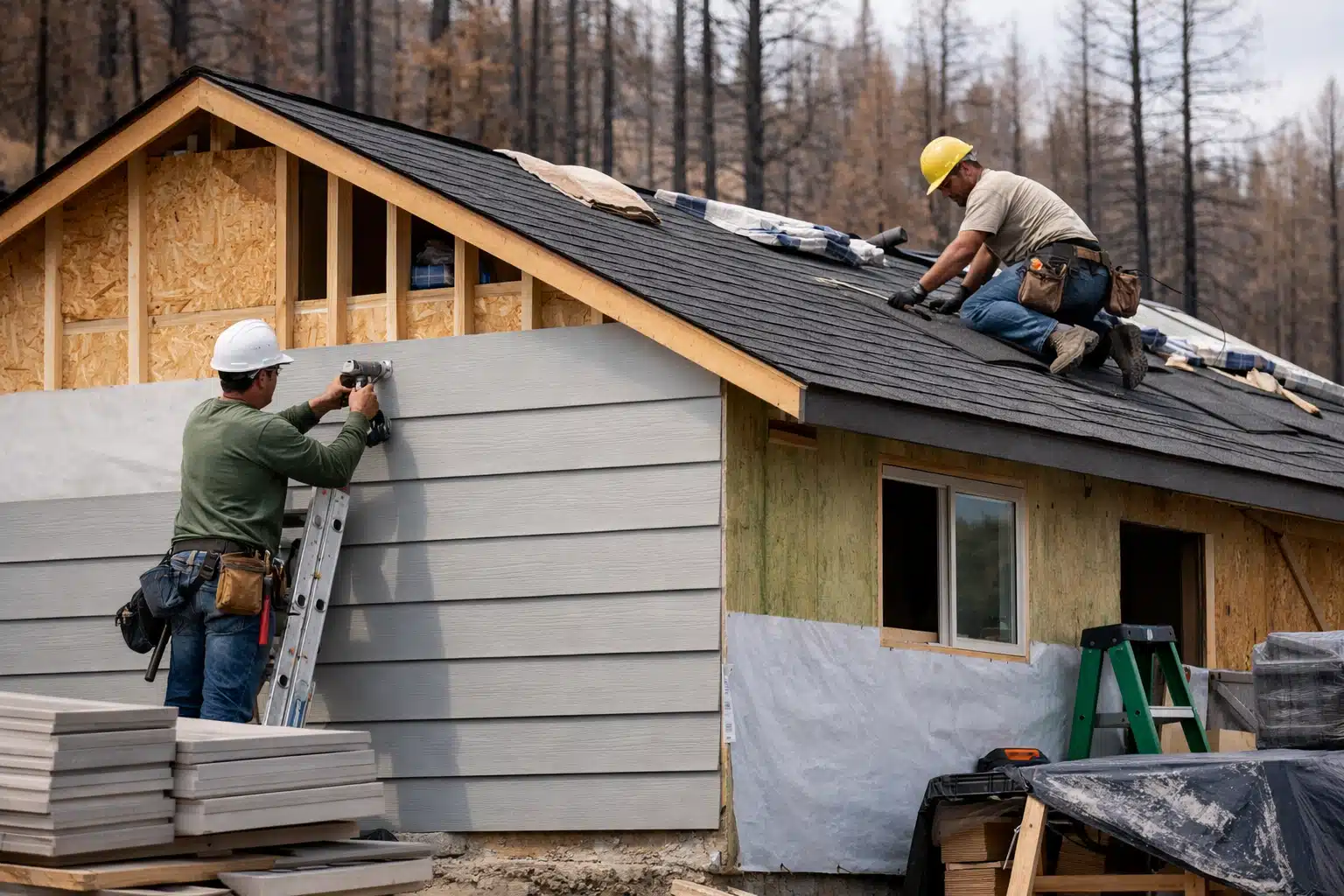
In California’s fire corridors, rebuilds now use fiber-cement siding and Class A roofing made from recycled steel or clay. Both cut embodied carbon and resist ember ignition.
FEMA data links non-combustible exterior materials to lower structure loss during wind-driven fires. The eco-conscious choice doubles as the survival choice.
High-Wind Regions
Structural insulated panels (SIPs) hold up under hurricane-force wind better than stick framing. They also cut heating and cooling loads by 40 to 60 percent, according to Oak Ridge National Laboratory testing.
Green Materials That Serve Double Duty
The strongest recovery materials protect both the planet and the structure. Here are ones with proven track records in restoration work:
- Reclaimed and FSC-certified lumber — lower forestry impact, and old-growth reclaimed stock resists warping.
- Recycled-content mineral wool insulation — non-combustible, moisture-tolerant, and fire-rated.
- Low-VOC sealants and paints — safer indoor air after mold or smoke remediation.
- Cool roofing membranes — reflect heat, cut energy bills, and carry Class A fire ratings.
- Permeable hardscape — reduces runoff around foundations prone to flooding.
Each choice ties an environmental benefit to a hazard-specific defense. That link is the point of green building recovery.
Energy Systems That Keep You Running After the Next Event
Disaster recovery is a chance to add resilience most homes lack. Grid failure follows nearly every major storm.
Rooftop solar paired with battery storage keeps refrigerators, medical devices, and sump pumps running during outages. A sump pump that stays powered can stop the second flood before it starts.
Heat pump systems replace aging furnaces during rebuilds. They cut emissions and remove combustion risk from fire-damaged homes.
How to Vet a Green Recovery Contractor
Not every restorer who claims green expertise has it. Look for verifiable signals, not marketing language.
Certifications Worth Checking
- IICRC certification for water, fire, and mold restoration standards.
- LEED accreditation or GreenBuilding training among project leads.
- Manufacturer certifications for spray foam, SIPs, or cool roofing installation.
Questions to Ask Before Hiring
- Which flood-line materials do you specify, and why?
- Can you show a past rebuild that survived a later event?
- How do you handle demolition waste diversion and recycling?
- Do you install to code-plus standards for the local hazard?
A contractor who answers with specifics has done the work. Vague replies signal a paint-and-drywall crew wearing a green label.
Using Restoration Locator to Find the Right Rebuilder
Finding a restorer who understands both recovery and eco-friendly rebuilding takes filtering. Restoration Locator organizes listings so you can narrow the field fast.
Here is how to use the directory for a green rebuild:
- Sort by location to find crews familiar with your regional hazard, from flood zones to fire corridors.
- Filter listings by service type such as water damage, fire restoration, or mold remediation.
- Check reviews on each provider for mentions of material upgrades and code-plus rebuilding.
- Compare listings for certifications and specialty capabilities before you request a quote.
Reviews that name specific materials or resilience features point to contractors who practice real sustainable restoration.
Cost, Payback, and Insurance Realities
Green rebuilds carry a higher upfront cost, roughly 2 to 10 percent above standard repair. The payback comes from three directions.
- Lower energy bills from tighter envelopes and efficient systems.
- Reduced future claims when materials survive the next event.
- Insurance discounts some carriers offer for fortified or resilient construction.
Ask your insurer about ordinance-or-law coverage. It can pay the difference to rebuild to current, stronger codes after a covered loss.
Common Mistakes During Green Recovery
Speed pressure after a disaster leads to shortcuts. Avoid these errors:
- Rushing demolition before salvaging reusable framing or fixtures.
- Rebuilding to old code when code-plus costs little more.
- Skipping a moisture map that guides where flood-smart materials belong.
- Ignoring air sealing, which drives both energy loss and mold risk.
A restorer who slows down at the planning stage saves you money later.
Key Takeaways
Green building recovery rebuilds damaged homes to resist the next disaster while cutting waste and energy use. The best materials protect the structure and the environment at the same time. Vet contractors by certifications and past rebuilds, not slogans.
Ready to rebuild smarter after damage? Browse Disaster Cleanup & Restoration listings and start your search for a green recovery contractor at https://restorationlocator.com.