
A burst washing machine hose can release 650 gallons of water per hour, and most homeowners find out only after the ceiling below starts sagging. A water damage sensor catches that leak in the first minute, not the first hour. This post breaks down the sensor technologies available in 2026 and shows you which one fits your home.
You will learn how the main sensor types differ, what to check before buying, and where each one belongs in your house. If a leak does slip past your defenses, you will also know how to find cleanup help fast.
What a Water Damage Sensor Actually Does
A water damage sensor is a device that detects the presence of water where it should not be and sends an alert. Most trigger when moisture bridges two metal contacts or when humidity spikes past a set threshold.
The 2026 generation moved past simple beepers. Many models now shut off your main water supply automatically when they sense a leak.
That single feature separates a $15 puck that chirps in an empty house from a system that prevents a ,000 hardwood floor replacement.
Water Damage Sensor Types Compared for 2026
Sensor technology splits into four categories this year. Each fits a different part of the home and a different budget.
1. Spot Detectors (Contact Sensors)
Spot detectors sit flat on the floor and trigger when water touches their contacts. They cost $10 to $30 each and run for two to three years on a coin battery.
Place them under water heaters, dishwashers, and sump pumps. The weakness is coverage — one puck watches one puddle.
- Best for: Renters and single high-risk appliances
- 2026 upgrade: Freeze alerts that warn before pipes burst
- Limitation: No protection outside a few inches of the device
2. Cable and Rope Sensors
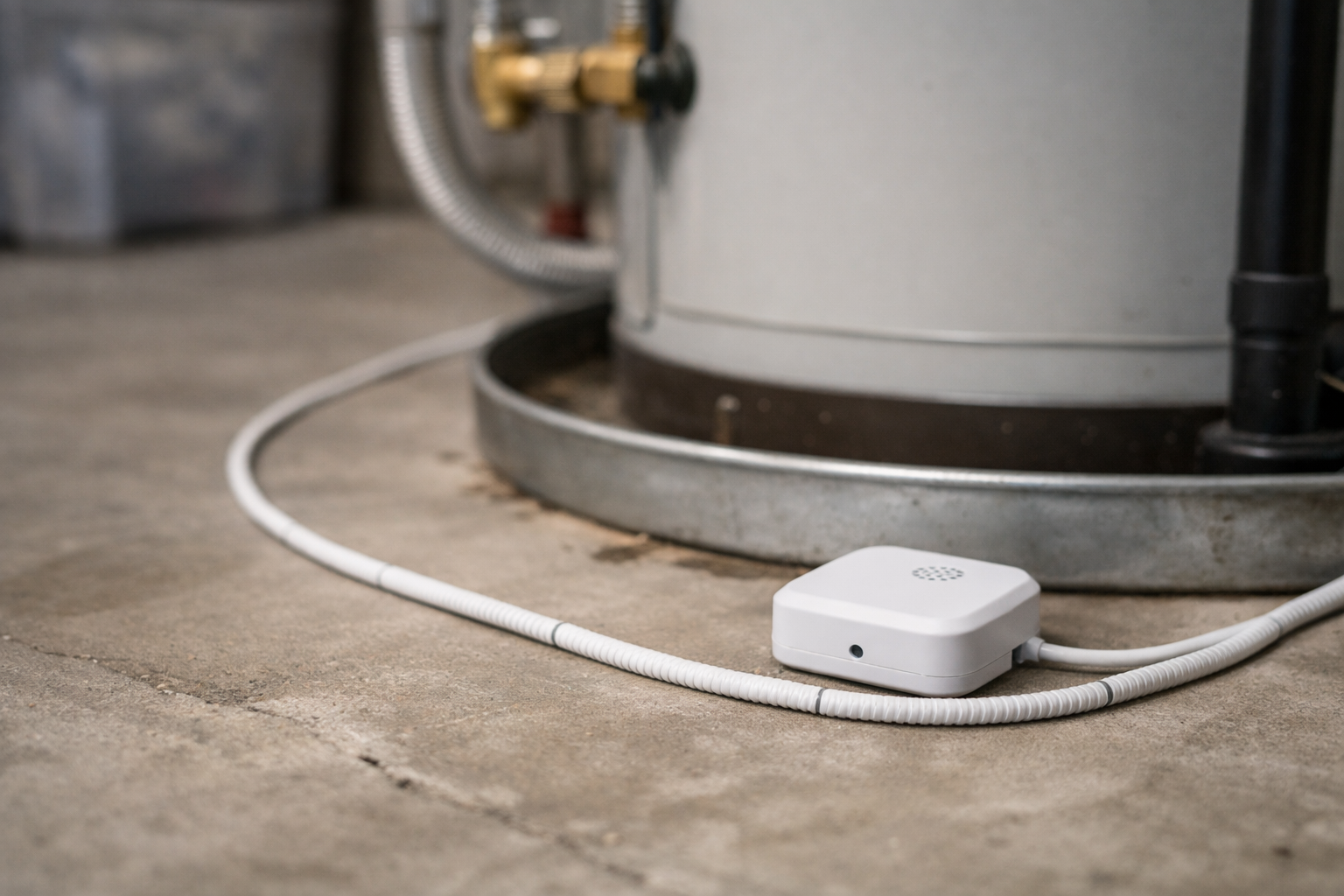
Cable sensors detect water anywhere along a length of cord, not a single point. A six-foot rope can wrap the base of a boiler or trace a basement wall.
They cost $40 to $90 and suit spaces where you cannot predict the leak location. Finished basements and utility closets benefit most.
3. Flow-Based Whole-Home Monitors
Flow monitors clamp onto your main water line and measure usage patterns. A running faucet at 3 a.m. or a slow pinhole leak both register as abnormal flow.
The 2026 models learn your household rhythm within a week. When flow breaks the pattern, they close a motorized valve and cut the supply.
Expect $500 to $700 plus installation. This is the strongest defense against catastrophic pipe failures.
4. Smart Hub Sensor Networks
Hub-based systems tie dozens of spot and cable sensors into one app. The 2026 versions use local processing, so alerts fire even when your internet drops.
They support home monitoring across multiple properties from one dashboard. Landlords and second-home owners rely on this setup.
Sensor Type at a Glance
- Spot detector: $10–$30 · one location · easiest install
- Cable sensor: $40–$90 · linear coverage · basements
- Flow monitor: $500–$700 · whole home · auto shutoff
- Hub network: $150–$400+ · scalable · multi-property home monitoring
How to Choose the Right Water Damage Sensor
Match the sensor to your biggest risk, not to the flashiest features. Follow these steps.
- Map your leak sources. List every water heater, washer, dishwasher, and supply line.
- Rank by damage potential. A slab-level water heater beats a first-floor bathroom for urgency.
- Check for auto-shutoff. If nobody is home during workdays, prioritize a valve-closing model.
- Verify offline alerts. Confirm the sensor works when Wi-Fi fails, since storms knock out both power and internet.
- Confirm battery life. Look for low-battery warnings sent to your phone, not just a local chirp.
Placement That Catches Leaks Early
Sensor placement matters more than sensor brand. A $600 monitor on the wrong pipe misses the leak entirely.
Put spot detectors at the lowest point near each appliance, since water flows down. In a basement, set them at floor drains and along the foundation wall.
- Water heater pan: Inside the drain pan, not beside it
- Under sinks: At the back where supply lines connect
- Washing machine: Behind the unit, against the wall
- Sump pit: At the overflow line, not the bottom
What a Sensor Cannot Do
A water damage sensor warns you, but it does not dry the structure. Drywall soaks up water fast, and mold can start within 24 to 48 hours.
Even with fast detection, a backed-up sewer line or an overnight pipe burst leaves standing water. At that point you need extraction, drying equipment, and moisture readings inside the walls.
This is where a detection device hands off to a cleanup crew. The sensor bought you time — a restoration team removes the damage.
Finding Help When a Sensor Alert Comes Too Late
When water is already on your floor, minutes decide whether flooring can be saved. Restoration Locator lists Disaster Cleanup & Restoration providers by service area.
Use the directory to act fast:
- Filter listings by location to find crews near your address
- Sort by service type for water extraction and structural drying
- Check reviews to see how providers handled real flood jobs
Many listed providers respond around the clock for active water emergencies.
Conclusion
Pick a water damage sensor based on your home’s biggest leak risk, and add auto-shutoff if the house sits empty during the day. Spot detectors cover single appliances, flow monitors protect the whole supply line, and hub networks handle multiple properties. No sensor dries a soaked floor, though — that job belongs to a cleanup crew.
Browse Disaster Cleanup & Restoration listings at https://restorationlocator.com and find a provider before a leak turns into a rebuild.