
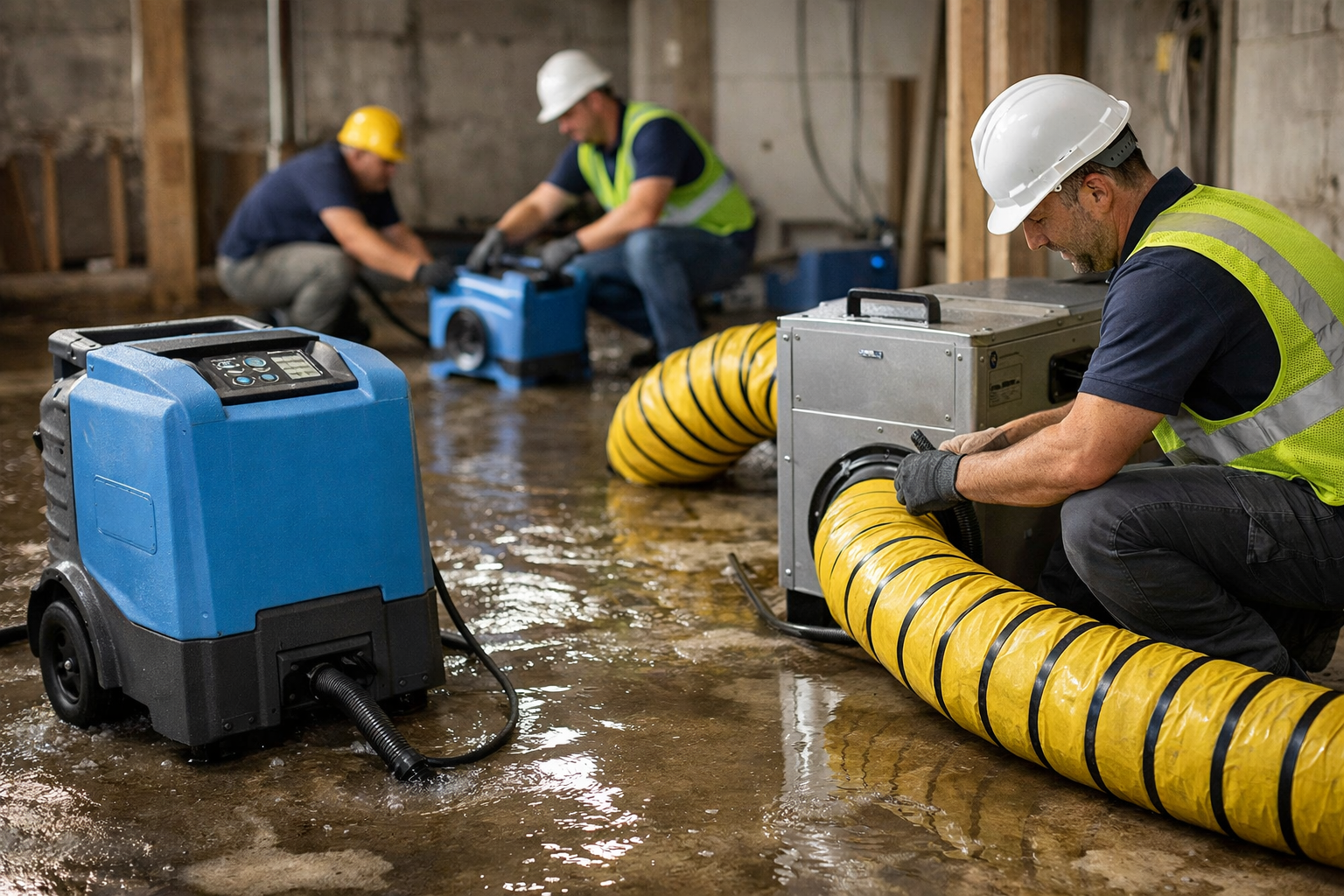
A flooded basement in July dries differently than one flooded in January. Higher outdoor humidity, warmer air, and faster mold growth change which machines a crew needs. Matching summer restoration equipment to seasonal conditions decides whether a home dries in three days or ten.
This post covers which machines matter most in hot, humid months. It explains how heat and moisture affect drying speed, mold risk, and equipment selection. It shows how to vet providers on their equipment before hiring.
Why Summer Restoration Equipment Differs From Winter Setups
Summer moisture removal fights against warm, saturated air. Warm air holds more water vapor, which slows evaporation from wet materials. A dehumidifier that works fine at 40°F struggles when ambient humidity climbs past 65%.
Grain depression is the difference between the moisture in incoming air and the air a dehumidifier releases. In summer, machines with low grain depression fall behind. Crews need units rated for high-humidity input to keep drying on schedule.
The mold clock speeds up in heat
Mold can start growing on wet drywall within 24 to 48 hours. Summer temperatures near 80°F push that timeline to the faster end. A restoration company running undersized machines loses that race.
This is the reason equipment quality matters more between June and September. The margin for error shrinks when heat accelerates microbial growth. Slow drying in summer means secondary damage on top of the original loss.
The Machines That Carry Summer Jobs
Effective summer drying depends on a few specific machine categories. Each handles a part of the heat-and-humidity problem. Here is what strong crews bring to a July water loss:
- Low-grain refrigerant (LGR) dehumidifiers — pull water from air even when relative humidity stays high. They outperform standard refrigerant units in summer conditions.
- Desiccant dehumidifiers — use silica-based media instead of cooling coils. They work in extreme humidity where refrigerant units stall.
- Axial air movers — push large air volumes across wet floors and walls to speed evaporation.
- Air scrubbers with HEPA filtration — capture mold spores that multiply faster in warm air.
- Thermal imaging cameras — find hidden moisture behind walls before it feeds mold growth.
LGR versus desiccant in real summer jobs
LGR dehumidifiers suit most residential summer losses. They handle relative humidity up to roughly 90% and drain into standard pumps. A three-bedroom home flooded by a burst supply line usually dries with two or three LGR units.
Desiccant units earn their place in worse conditions. A commercial warehouse with a leaking roof in August, no working AC, and 85°F interior air needs desiccant power. These machines keep working when refrigerant coils would freeze or lose efficiency.
How Heat Changes Air Mover Strategy
Air movers speed evaporation, but summer heat adds a trap. Pushing warm, humid air across wet materials without matching dehumidification just spreads moisture. Balanced setups pair air movers with enough dehumidifier capacity.
A common summer mistake is over-fanning and under-drying. A crew drops ten air movers in a wet living room but only one small dehumidifier. Humidity spikes indoors, and materials stay damp for days.
Reading the psychrometric numbers
Skilled technicians track temperature, relative humidity, and grains per pound at each visit. In summer, they aim to keep indoor relative humidity below 50% to stop mold. Daily readings prove the equipment is actually winning the fight.
Ask a provider whether they log psychrometric data. Crews that document readings run the right equipment counts. Crews that guess tend to leave hidden moisture behind.
Power and Cooling Challenges in Hot Months
Summer restoration equipment draws heavy amperage. Running six air movers, two LGR units, and an air scrubber can trip household circuits. Strong companies bring their own power distribution and generators.
Heat inside a closed-up home stresses both machines and workers. Refrigerant dehumidifiers vent warm exhaust, raising room temperature further. Crews sometimes stage portable AC or cooling to keep equipment inside its operating range.
- Check that a provider carries generators for outdoor or off-grid summer jobs.
- Ask how they manage room heat from stacked equipment.
- Confirm they size electrical loads before plugging in a full drying setup.
How to Vet a Provider’s Equipment Before You Hire
The right questions reveal whether a company owns adequate professional tools or rents undersized units. Use this short list when calling around:
- What dehumidifier type do you use for summer losses? Look for LGR or desiccant answers, not vague replies.
- Do you take daily moisture readings? Documentation signals a disciplined crew.
- How do you handle high indoor humidity? A clear plan shows seasonal know-how.
- Do you use thermal imaging or moisture meters? Hidden moisture detection prevents repeat mold.
- How many machines will this job need? A specific number beats a rough guess.
Use RestorationLocator filters to shortlist crews
On https://restorationlocator.com, sort listings by location to find crews near your loss. Faster arrival matters most in summer, when mold moves quickly. Check reviews for mentions of drying speed and moisture readings.
Filter by service type to match water, storm, or mold work. Read reviews that describe how a company handled a humid-season job. Comments about thorough drying and low reported humidity signal real capability.
Seasonal Equipment Checklist for Homeowners
Homeowners can spot a well-equipped summer crew on arrival. Watch for the following signs during the first hour on site:
- Technicians take moisture and humidity readings before placing machines.
- They set dehumidifiers matched to room size and moisture load.
- They seal off wet zones to concentrate drying and limit spore spread.
- They explain a target dry-down date based on readings.
- They return to check numbers, not just to pick up machines.
A crew that skips readings and drops fans is guessing. In summer, guessing costs extra days and invites mold. The equipment behavior tells you more than any sales pitch.
What Poor Equipment Costs You in Summer
Undersized drying setups turn a small loss into a rebuild. Damp framing in August grows mold inside a week. Repairs then include demolition, remediation, and reconstruction instead of a simple dry-out.
Insurance adjusters scrutinize drying logs on summer claims. Documented psychrometric readings support faster claim approval. Companies with proper professional tools and records protect both the home and the payout.
Conclusion
Summer conditions demand machines built for heat and heavy humidity, plus crews who track daily readings. LGR and desiccant dehumidifiers, balanced air movers, and thermal imaging separate strong providers from weak ones. Vet equipment before you hire, and watch how a crew behaves in the first hour.
Ready to find a crew equipped for hot-weather losses? Browse Disaster Cleanup & Restoration listings now at https://restorationlocator.com and start your search today.