
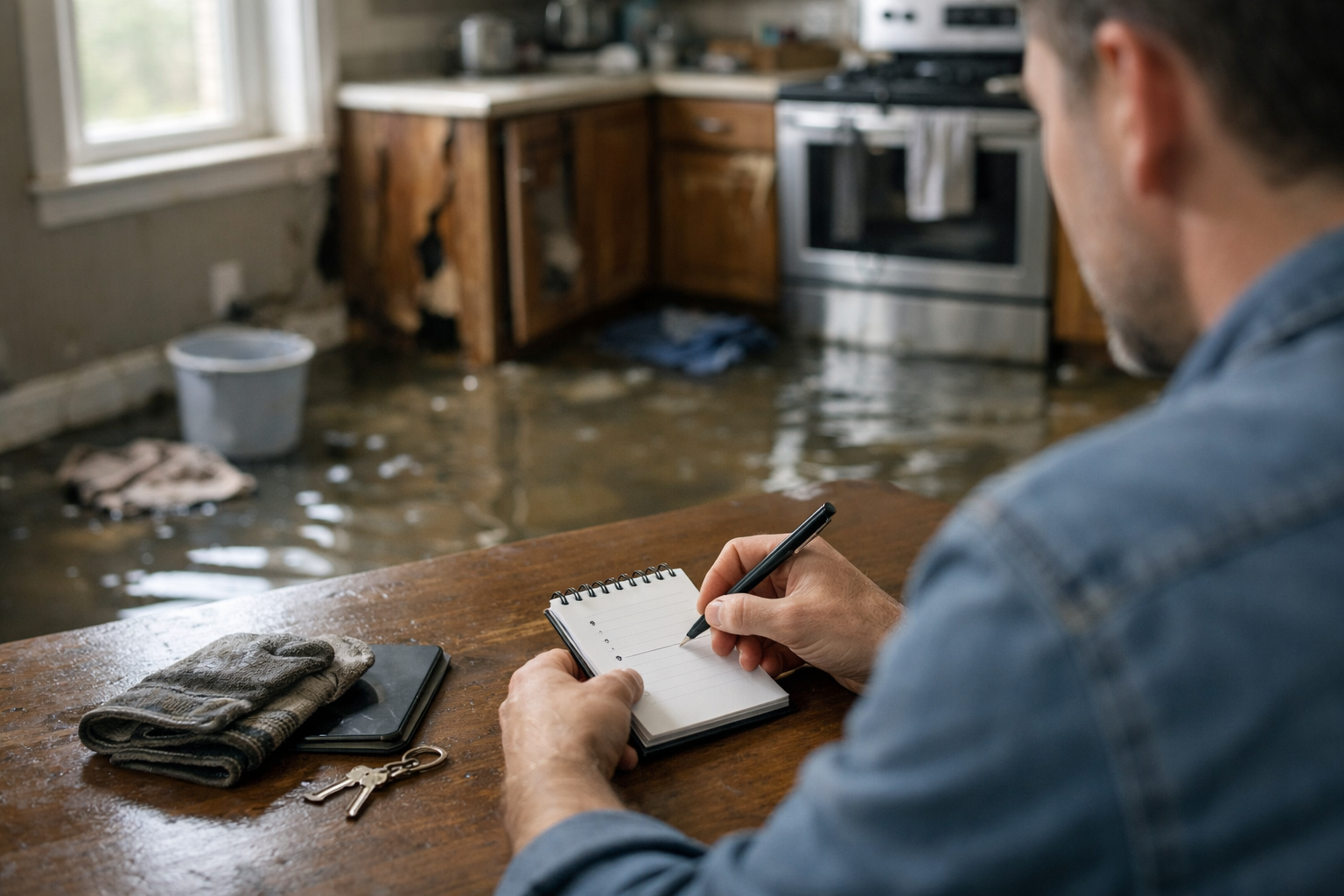
The night a burst pipe floods your kitchen, the damage you can see is only half the problem. The other half shows up days later as insomnia, short temper, and a knot in your stomach every time you walk past the ruined room. Stress management after a home disaster matters as much as drying out the drywall.
This post covers how disaster stress shows up, the mental health resources that help, and concrete steps to steady yourself. It also explains how choosing the right cleanup company reduces the emotional load during home disaster recovery.
Why a Home Disaster Hits Your Mental Health So Hard
A home disaster threatens your sense of safety, not just your property. Your house is where you sleep, raise kids, and store irreplaceable items. Losing part of it triggers a grief response.
Disaster survivors frequently report symptoms that mirror acute stress reactions. The Substance Abuse and Mental Health Services Administration (SAMHSA) tracks patterns after floods, fires, and storms.
Common reactions in the first two weeks include:
- Sleep disruption — waking at 3 a.m. replaying the event
- Decision fatigue — freezing over small choices like which contractor to call
- Irritability — snapping at family members over minor things
- Physical symptoms — headaches, appetite changes, chest tightness
- Hypervigilance — flinching at rain sounds after a flood
Knowing that anxiety is a predictable response, not a personal weakness, lowers the shame around it. That single shift helps many homeowners ask for support sooner.
Stress Management Steps for the First 72 Hours
The first three days set the tone for your recovery. Your goal is stability, not fixing everything at once. Follow these steps in order.
- Handle safety and shelter first. Confirm the structure is safe or arrange a place to stay. A settled body calms a racing mind.
- Write down three tasks per day. Not thirty. Three. A short list prevents the paralysis that comes with an overwhelming to-do pile.
- Photograph everything before touching it. Documentation for insurance removes a future stressor and gives you a sense of control.
- Eat and hydrate on a schedule. Skipped meals worsen anxiety. Set phone alarms if you forget.
- Tell one person the full story. Speaking the event aloud reduces its grip. Choose someone who listens without fixing.
Notice that hiring a restoration crew appears nowhere in the first two steps. Your nervous system needs a baseline before you make big financial decisions.
What to Skip in the First Week
Avoid major, permanent choices when you are flooded with cortisol. Do not sign long contracts under pressure. Do not throw out sentimental items in a cleaning frenzy you might regret.
Mental Health Resources Built for Disaster Survivors
Free, confidential support exists for people affected by home disasters. Many homeowners never learn about it until months later.
The Disaster Distress Helpline from SAMHSA offers 24/7 crisis counseling for anyone affected by natural or human-caused disasters. It is free and multilingual.
Other support worth knowing:
- American Red Cross disaster mental health teams — deploy after large events and offer on-site emotional support
- Local community mental health centers — provide sliding-scale counseling for ongoing anxiety
- Your insurance provider’s assistance program — some policies include short-term counseling coverage
- Faith and community groups — practical help plus a network that reduces isolation
If anxiety persists beyond a month or blocks daily function, that points to acute stress or PTSD. A licensed therapist trained in trauma can help you recover.
A Real Example
A homeowner after a chimney fire described the worst part as the smell. Weeks after cleanup, the smoke odor returned in her mind at random moments. A trauma counselor named this a sensory trigger and gave her grounding exercises. The flashbacks faded within six weeks.
How Choosing the Right Restoration Company Reduces Anxiety
A reliable cleanup crew removes a huge share of your mental load. A vague or unresponsive one adds to it. The company you pick affects your emotional recovery directly.
Warning signs that a provider will increase your stress:
- Refuses to put the scope of work in writing
- Pressures you to sign before your insurer approves
- Cannot give a clear timeline for drying and rebuild
- Has no reviews or a pattern of complaints about communication
Clear communication is the trait that lowers homeowner anxiety most. A crew that texts daily updates keeps your imagination from filling gaps with worst-case thinking.
Using Restoration Locator to Screen Providers
The directory at Restoration Locator lets you compare companies before you commit. Use these filters to protect your peace of mind:
- Sort by location to find crews that respond fast in a flood or fire
- Check reviews for repeated mentions of communication and follow-through
- Filter listings by service type — water, fire, mold, or storm — to match your exact damage
- Compare response times so you are not left waiting during peak season
Reading three or four reviews that mention how a company handled a stressed homeowner tells you more than any sales pitch.
Building a Daily Routine During a Long Rebuild
Home disaster recovery can stretch for months. Anxiety climbs when your life feels suspended. A simple daily structure gives your mind something steady to hold.
Anchor each day with three fixed points:
- A morning ritual — coffee, a walk, or ten minutes of quiet before checking damage updates
- One recovery task — a single insurance call or a single decision, then stop
- A protected evening — no contractor calls, no claim paperwork after a set hour
Protecting the evening matters most. Homeowners who answer restoration texts at 10 p.m. report the worst sleep and the slowest emotional recovery.
Helping Children and Partners Cope
Kids read your stress and mirror it. Keep their routines intact where you can — same bedtime, same lunchbox. Give short, honest answers about what happened.
Partners cope at different speeds. One may want to rebuild immediately; the other may need to grieve. Naming that difference out loud prevents resentment during a hard stretch.
Signs You Should Seek More Support
Most disaster stress eases as your home comes back together. Some signs mean you should reach out to a professional sooner rather than later.
- Panic attacks or a racing heart that will not settle
- Drinking or medication use to get through the day
- Withdrawing from people who want to help
- Thoughts of hopelessness or self-harm
If any of these appear, contact the Disaster Distress Helpline or a licensed counselor. Getting help early shortens the recovery.
Key Takeaways
Anxiety after a home disaster is a predictable response, and stress management works best when you stabilize your body before tackling big decisions. Free crisis resources like the Disaster Distress Helpline exist for exactly this moment. A restoration company with clear communication and strong reviews removes much of the emotional weight.
Ready to lower the stress of home disaster recovery? Browse Disaster Cleanup & Restoration listings on https://restorationlocator.com and find a responsive crew near you today.