
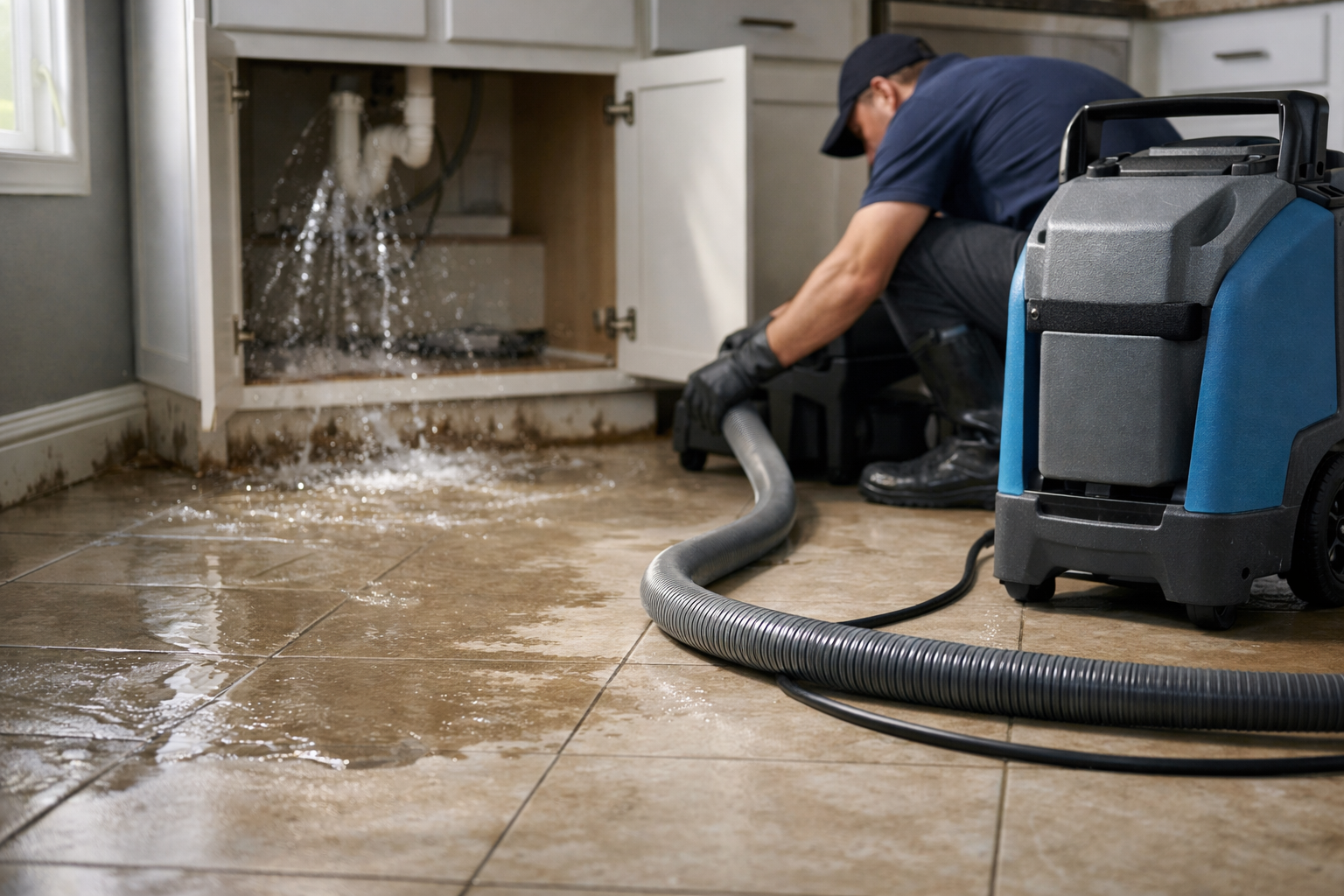
A burst supply line under a kitchen sink can release up to 5 gallons of water per minute. Within the first hour, that water has soaked baseboards, wicked up drywall, and traveled under cabinets you cannot see. To prevent water damage spread, the clock that matters most starts the moment the water appears.
This post breaks down how fast water damage moves, what happens at each stage, and the exact steps that limit the damage. You will learn where the hidden spread happens and how to find help fast.
How Fast Water Damage Actually Spreads
Water damage follows a predictable timeline. Each stage adds cost and shrinks your chances of saving materials. The difference between a $1,500 cleanup and a $15,000 rebuild is measured in hours.
The First 24 Hours
Water moves by gravity and capillary action within minutes. Drywall wicks moisture upward at roughly one inch per hour. Hardwood flooring begins to cup and swell as the fibers absorb water.
By hour six, water has spread beneath flooring and into wall cavities. Paper backing on drywall starts to break down. Furniture legs stain carpet, and metal fasteners begin to rust.
Days One Through Four
Mold spores activate in as little as 24 to 48 hours under the right conditions. Warm, damp drywall and carpet padding become breeding grounds. What started as a plumbing problem becomes a health hazard.
- Hour 1: Water spreads across floors and into porous materials
- Hour 6: Drywall swells, subflooring absorbs moisture
- 24-48 hours: Mold begins to colonize damp surfaces
- Day 3-4: Wood warps, metal corrodes, odors set in
- Week 1+: Structural weakening and widespread mold growth
Why Quick Action Restoration Beats Waiting
Quick action restoration is the practice of extracting water and drying structures before secondary damage sets in. The goal is to stop moisture migration before it reaches materials that cannot be salvaged.
Waiting even 12 hours changes the math. Wet carpet can often be saved if dried within 48 hours. Beyond that window, the padding underneath usually needs replacement.
What Fast Response Saves
A neighbor of mine had a washing machine hose fail at 2 a.m. He caught it by 6 a.m. and had extraction crews on site by 8 a.m. His hardwood floors dried without cupping because the water sat for less than eight hours.
A second homeowner on the same street found a slow shower leak two weeks later. The subfloor had rotted, and mold had spread behind the tile wall. His repair bill was ten times higher for a smaller leak.
Steps to Prevent Water Damage Spread
Follow these steps in order when you find water. Each one limits how far the damage travels.
- Stop the source. Shut off the main water valve or the local supply line feeding the leak.
- Cut power to the area. Turn off electricity at the breaker if water is near outlets or appliances.
- Move belongings. Lift furniture, electronics, and boxes off wet floors.
- Remove standing water. Use a wet vac, towels, or a mop to pull up as much as you can.
- Increase airflow. Open windows, run fans, and start a dehumidifier if you have one.
- Document everything. Photograph the damage before cleanup for your insurance claim.
- Call a restoration crew. Extraction equipment and industrial dryers do what household tools cannot.
What You Cannot See Matters Most
Surface water is the smallest part of the problem. Moisture hides inside wall cavities, under flooring, and above ceilings. A restoration crew uses moisture meters and thermal cameras to find it.
Skipping this hidden inspection is how mold takes hold weeks later. The room looks dry, but the framing behind the drywall is still wet.
Categories of Water That Change Your Response
The type of water dictates how fast you must act and who should handle it. The three categories reflect contamination levels.
- Clean water (Category 1): From supply lines or rainwater. Lowest health risk, but it degrades to Category 2 within 48 hours.
- Gray water (Category 2): From appliances or sinks. Contains contaminants that can cause illness.
- Black water (Category 3): From sewage or flooding. Requires trained crews with protective equipment.
Any clean water left standing turns into gray water fast. This is another reason speed matters more than most people expect.
How to Find the Right Restoration Crew Fast
When water is spreading, you do not have time to research a dozen companies. A directory lets you compare local crews in one place. Restoration Locator organizes providers so you can act within minutes.
Use These Filters to Narrow Your Search
- Sort by location to find crews closest to your property for faster arrival.
- Filter listings by service type to match water damage and mold work.
- Check reviews for mentions of response time and communication.
- Look for 24/7 availability since most water emergencies start at night.
Questions to Ask Before Hiring
Ask how quickly a crew can arrive on site. Ask whether they use moisture meters to verify drying. Ask if they document readings for your insurance provider.
A crew that measures moisture before and after drying gives you proof the job was done right. That documentation protects you if problems appear later.
Common Mistakes That Let Damage Spread
Small errors during the first hours cause the biggest losses. Avoid these traps.
- Waiting to call for help because the water seems minor
- Using only household fans that move air but do not remove humidity
- Leaving wet baseboards in place, trapping moisture against framing
- Assuming a dry surface means a dry wall cavity
- Turning off equipment overnight, which lets materials reabsorb moisture
Restoration crews run drying equipment continuously for a reason. Stopping early undoes the progress made during the day.
Key Takeaways
Water damage spreads within minutes and mold can start within 48 hours. The steps you take in the first hours decide whether you face a cleanup or a rebuild. Fast extraction, hidden-moisture detection, and continuous drying stop the spread.
Find local crews that respond fast on Restoration Locator. Browse Disaster Cleanup & Restoration listings now at https://restorationlocator.com and start your search today.