Floodwater that enters a home after a hurricane carries more than mud. It moves raw sewage, agricultural runoff, and decomposing organic matter into living spaces. Biohazard cleanup addresses these contamination risks that standard water extraction cannot touch.
Storm damage and biological hazards arrive together. A single foot of floodwater can introduce bacteria, viruses, and chemical residues into your walls and flooring. This post explains the specific hazards storms create and how to identify a provider equipped to remove them.
You will learn what post-storm biohazards look like, why timing matters, and how to vet cleanup crews before they enter your property.
Why Post-Storm Environments Create Biohazard Risks
Category 3 water, known as black water, is the reason storms demand biohazard cleanup. The IICRC classifies floodwater from rivers, storm surge, and overflowing sewer lines as grossly contaminated. It carries pathogens capable of causing serious illness.
Storm surge pushes coastal water inland. That water mixes with septic systems, gas station runoff, and industrial chemicals along the way.
Specific contaminants found after major storms
- Sewage backup — Overwhelmed municipal systems force raw waste into homes through drains and toilets.
- Agricultural runoff — Rural flooding carries pesticides, fertilizers, and animal waste from farmland.
- Bloodborne pathogens — Structural collapse and injury scenes leave biological material behind.
- Decomposition — Trapped animals and spoiled food breed bacteria in standing water.
- Mold spores — Warm, wet drywall grows colonies within 24 to 48 hours.
Each hazard requires different handling. A crew trained only in water extraction will spread contamination rather than contain it.
The 48-Hour Window and Why It Matters
Mold begins colonizing wet materials within 24 to 48 hours of a flood. Bacteria multiply faster in warm post-storm conditions, especially when power outages disable air conditioning.
After Hurricane Harvey, homes that sat in humid Houston heat for a week developed mold behind walls that looked dry on the surface. Delay turns a containable problem into a whole-house remediation.
What happens during that window
- Hours 0-24: Pathogens from floodwater saturate porous materials.
- Hours 24-48: Mold spores germinate on drywall, carpet padding, and wood framing.
- Days 3-7: Colonies spread into cavities and HVAC systems.
- Week 2 onward: Structural rot and airborne spore counts climb.
Acting inside the first 48 hours limits both health risk and demolition scope. A qualified biohazard crew arrives with containment barriers, not just fans.
What Biohazard Cleanup Involves After a Storm
Biohazard cleanup is the removal, disinfection, and safe disposal of biologically contaminated materials. For storm recovery, this goes beyond drying a structure.
The steps a qualified crew follows
- Assessment and testing — Technicians identify the water category and map contamination zones.
- Containment — Plastic barriers and negative air pressure stop spores from spreading.
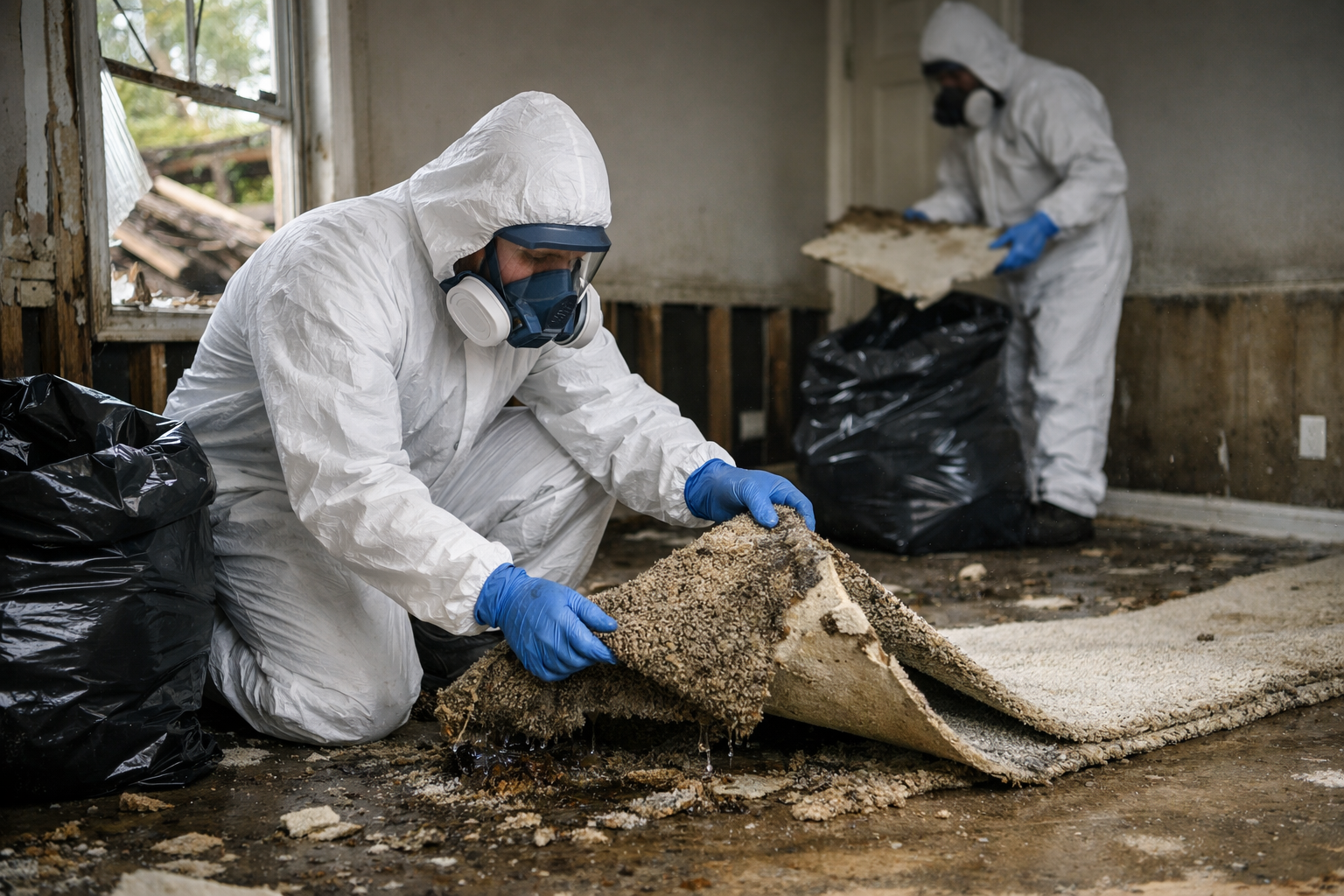
- Extraction and removal — Saturated porous materials get cut out and bagged as regulated waste.
- Disinfection — EPA-registered antimicrobials treat framing and hard surfaces.
- Drying and verification — Moisture meters confirm materials reach safe levels before rebuild.
Porous materials soaked in black water cannot be salvaged. Carpet, insulation, and drywall below the flood line get removed and discarded under waste regulations.
Protective equipment and disposal rules
Crews handling Category 3 water wear respirators, sealed suits, and gloves. Contaminated debris goes into labeled biohazard containers, not curbside bins.
Improper disposal spreads pathogens to sanitation workers and neighborhoods. Licensed providers follow state and federal waste transport rules.
How to Evaluate a Biohazard Cleanup Provider
The right provider holds specific certifications and carries the proper insurance for biological work. Water damage credentials alone are not enough for sewage or bloodborne contamination.
Credentials to confirm before hiring
- IICRC certification — Look for Applied Microbial Remediation Technician (AMRT) training.
- OSHA bloodborne pathogen compliance — Required for handling biological material.
- State biohazard or medical waste transport license — Confirms legal disposal authority.
- Liability and pollution insurance — Protects you if contamination spreads during work.
Ask how the crew documents contamination for insurance claims. Photo logs and moisture readings support your reimbursement.
Using the directory to compare providers
On Restoration Locator, you can filter listings by service type and location. Narrow results to biohazard and water damage specialists near your flood zone.
Check reviews on each listing for mentions of storm and sewage work. Sort by location to reach crews that can arrive inside the 48-hour window.
Red Flags During Post-Storm Recovery
Disaster events attract unqualified operators. After large storms, out-of-state crews arrive without local licensing or biohazard training.
- No written scope — Reputable crews provide documented assessment before demolition.
- Curbside dumping — Biohazard waste tossed with regular trash signals no license.
- Cash-only demands — Legitimate providers work with insurance adjusters.
- Skipping containment — Fans without barriers spread spores across the home.
Verify credentials before anyone cuts into contaminated drywall. A rushed crew can turn one flooded room into a whole-structure problem.
Coordinating Cleanup With Insurance and Storm Recovery
Flood-related biohazard cleanup often falls under separate coverage from standard homeowners policies. Federal flood insurance and named-storm endorsements handle different scenarios.
Document everything before removal begins. Photograph the flood line, standing water, and any sewage evidence for your adjuster.
Qualified providers coordinate directly with insurers during storm recovery. They supply moisture logs, material inventories, and disposal manifests that support claims.
Conclusion
Post-storm floodwater carries sewage, pathogens, and mold that standard drying cannot remove. Acting inside the first 48 hours limits both health risk and structural damage. The right biohazard cleanup crew holds IICRC and OSHA credentials, follows containment protocols, and disposes of waste legally.
Compare qualified biohazard and water damage providers by location and reviews on Restoration Locator. Start your search today.