
Summer floods carry a hidden danger that winter floods rarely do: heat. Warm water and high humidity turn standing floodwater into a breeding ground for bacteria and mold within 24 hours. That makes summer flood cleanup a race against time, not just a matter of mopping up.
This post covers the safety precautions specific to warm-weather flooding. You will learn how to protect yourself from heat-related illness during cleanup, when to walk away, and how to find help fast.
Why Summer Flood Cleanup Is Different
Heat speeds up everything that goes wrong after a flood. Bacteria like E. coli and Legionella multiply faster in warm water than in cold. Mold spores can visibly colonize drywall in 48 hours during a humid July week.
Cleanup workers face a second threat: their own bodies. Wearing rubber boots and gloves in 90-degree heat raises the risk of heat exhaustion. You are fighting contamination and dehydration at the same time.
The 24-Hour Window
Mold growth begins within 24 to 48 hours of water exposure. In summer, aim for the shorter end of that range. Every hour you wait in warm, humid conditions makes remediation harder and more expensive.
Step-by-Step Summer Flood Cleanup
Follow these steps in order. Skipping the safety checks at the start puts you at real risk of electrocution or infection.
- Confirm the power is off. Do not enter standing water until the main breaker is shut down. If the panel is wet or underwater, wait for an electrician.
- Check the water source. Groundwater and river flooding is category 3 water, meaning it contains sewage and chemicals. Treat all summer floodwater as contaminated.
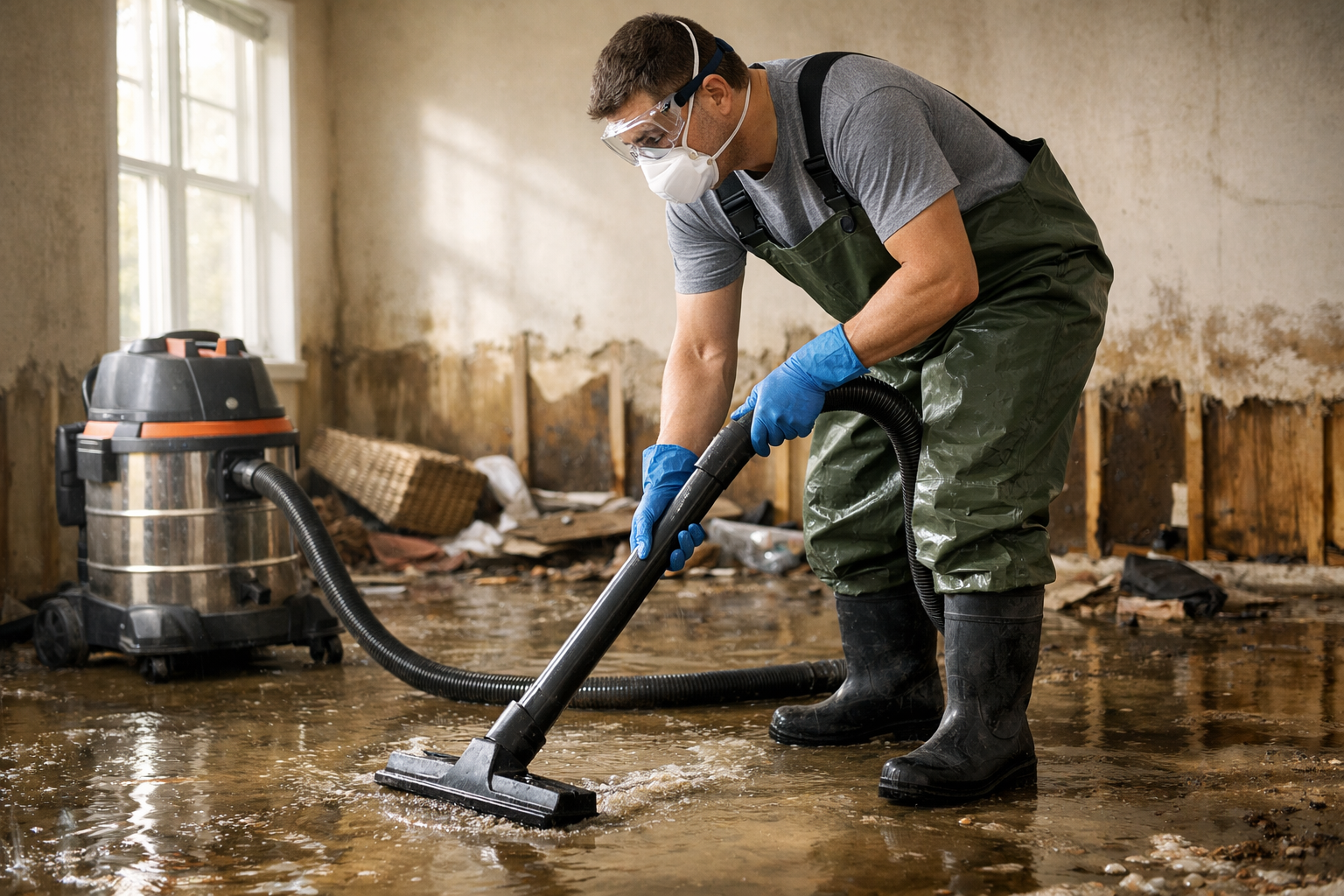
- Dress for contamination and heat. Wear waterproof boots, N95 or better respirator, gloves, and eye protection. Take breaks every 20 minutes in the shade.
- Photograph everything before moving it. Insurers need dated images of water lines and damaged items for claims.
- Remove standing water quickly. Use a wet vac or pump. Warm standing water grows bacteria hour by hour.
- Discard porous items soaked by category 3 water. Carpet, mattresses, and upholstered furniture cannot be cleaned safely.
- Dry the space aggressively. Run fans and a dehumidifier. Open windows only if outdoor humidity is lower than inside.
Heat and Humidity: The Summer-Specific Risks
Heat exhaustion is the injury most homeowners overlook during summer flood cleanup. Symptoms include dizziness, nausea, heavy sweating, and a rapid pulse. Stop work and cool down at the first sign.
Protect Yourself From Heat Illness
- Drink water every 15 to 20 minutes, even if you do not feel thirsty.
- Work during early morning hours before indoor temperatures climb past 85 degrees.
- Never work alone. Heat stroke can cause confusion before collapse.
- Watch for mosquitoes. Standing floodwater breeds them within days, raising West Nile risk.
These flood safety tips matter more in July than in January. A cold-weather flood forgives a slow response. A summer flood does not.
Mold: The Summer Cleanup Enemy
Mold is a fungal growth that spreads on damp surfaces and releases spores into the air. In summer humidity, it can cover a wall cavity before you notice a smell. Homes without air conditioning are at the highest risk.
Where Summer Mold Hides
- Behind baseboards and inside wall cavities
- Under vinyl flooring and carpet padding
- Inside HVAC ducts, which spread spores when the AC runs
- In closets and corners with poor airflow
If mold covers more than 10 square feet, the EPA recommends hiring a remediation company. Larger contamination needs containment and negative air pressure equipment.
When to Call a Restoration Company
Call a restoration company when floodwater is contaminated, mold has spread, or the affected area is larger than a single room. Category 3 water and hidden moisture inside walls need commercial drying equipment. Warm-weather timelines leave little room for trial and error.
How to Find the Right Provider Fast
Restoration Locator lets you compare local companies by what matters during a summer emergency. Speed and credentials come first when mold is already growing.
- Sort by location to find crews that can arrive same day.
- Filter listings by water damage and mold remediation capability.
- Check reviews for mentions of fast response and clear insurance billing.
- Look for certifications like IICRC training in the company profile.
What Not to Do After a Summer Flood
Some common reactions make summer flood damage worse. Avoid these mistakes during cleanup.
- Do not run central AC if you suspect mold in the ducts. It spreads spores room to room.
- Do not close up the house and leave. Trapped heat and moisture accelerate growth.
- Do not eat or drink near floodwater contact zones without washing first.
- Do not save soaked drywall touched by contaminated water. Cut it out above the water line.
Protecting Your Health During Cleanup
Wash hands and any exposed skin after every contact with floodwater. Keep open wounds covered and clean. Contaminated water can cause infection quickly in warm conditions.
Get a tetanus booster if yours is more than 10 years old. Nail punctures and metal cuts are common during debris removal. A summer flood site is full of both.
Key Takeaways
Summer flood cleanup is a fight against heat, bacteria, and fast-growing mold, and the first 24 hours decide the outcome. Protect yourself from heat illness while you remove water and dry the space aggressively. Contaminated water and hidden mold call for trained help with commercial equipment.
Start your search for local crews on Restoration Locator and compare providers by response time, certifications, and reviews.