
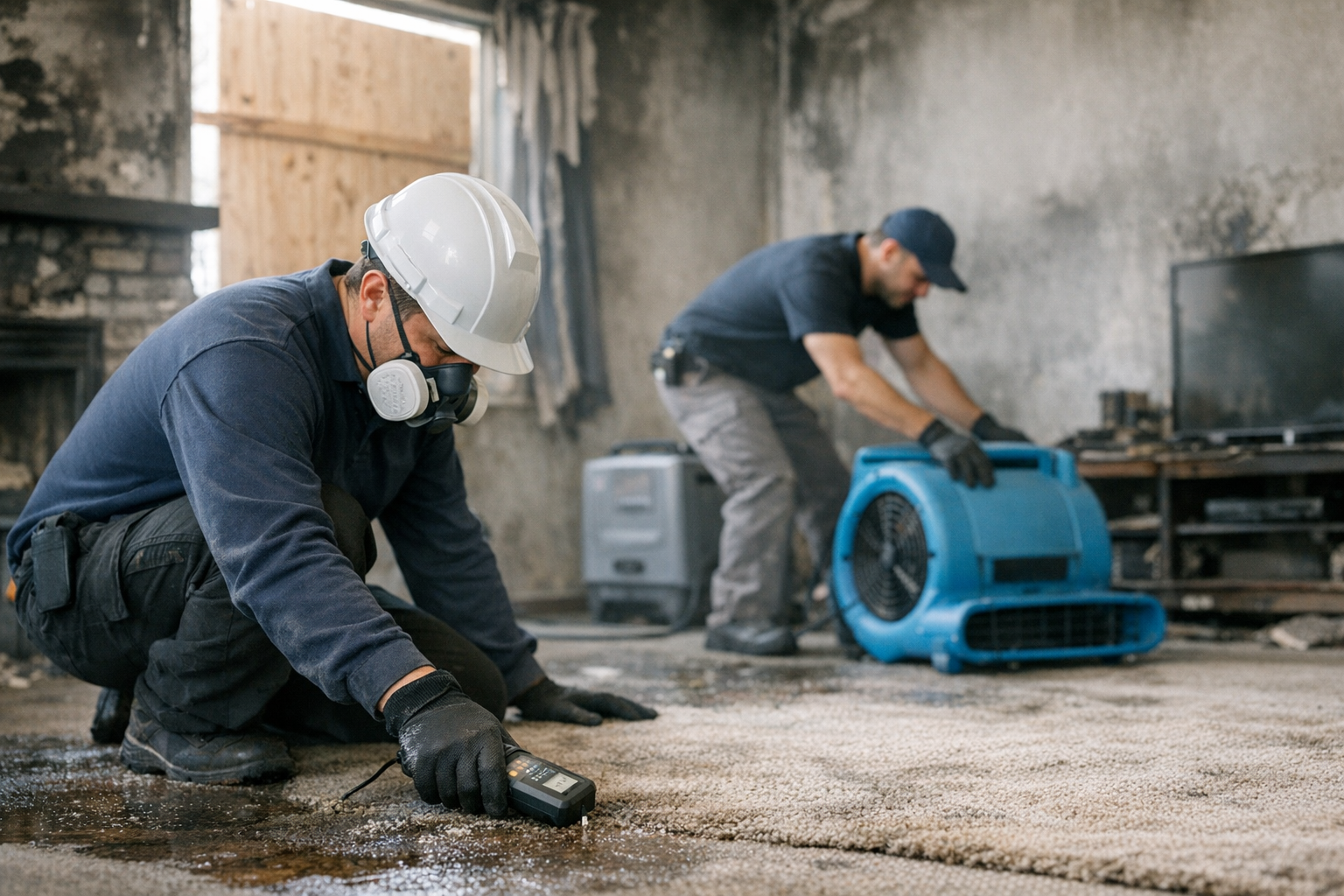
A house fire leaves behind more than charred walls. Smoke residue seeps into drywall, soot coats every surface, and water from firefighting efforts soaks carpets and subfloors. Fire cleanup is the work of reversing this layered damage before it becomes permanent.
This article breaks down the exact tasks fire restoration crews handle. You will learn what happens during each phase, why timing matters, and how to find qualified help.
By the end, you will know what to expect from the recovery process and how to vet a crew before they set foot in your home.
What Fire Cleanup Actually Involves
Fire cleanup is the removal of soot, smoke odor, ash, and water damage left after a fire is extinguished. It restores a structure to a safe, livable condition. The work goes far beyond sweeping up debris.
Three types of damage exist after most residential fires:
- Fire and heat damage — charred framing, melted fixtures, scorched surfaces
- Smoke and soot damage — oily residue that stains walls and corrodes metal
- Water damage — from sprinklers and fire hoses, leading to mold within 48 hours
Each type demands a different method. A crew that treats only the visible char misses the smoke residue hiding inside HVAC ducts and wall cavities.
The Specific Tasks Restoration Crews Perform
Fire restoration is a sequence of defined jobs, not one big cleanup. Here is what trained crews do, step by step.
1. Assessment and Securing the Property
Crews first document damage room by room for insurance claims. They board up broken windows and tarp damaged roof sections. This stops weather and intruders from causing more loss.
A common early task is testing soot type. Dry soot from fast-burning wood wipes away. Wet, oily soot from smoldering plastics or grease smears and requires solvents.
2. Water Extraction and Structural Drying
Firefighting water gets removed within hours, not days. Crews use truck-mounted extractors, then place air movers and dehumidifiers. Moisture meters track drying inside walls and floors.
Skipping this step invites mold. A kitchen fire that seems contained can rot a subfloor two rooms away if water sits.
3. Soot and Residue Removal
Soot is acidic and corrodes surfaces fast. Brass tarnishes within hours, and finished wood etches within days. Crews work in priority order to stop these losses.
Methods depend on the material:
- Dry chemical sponges for flat walls and ceilings
- Abrasive blasting with dry ice or soda for charred framing
- Immersion cleaning for removable hardware and fixtures
- HEPA vacuuming for fine ash on upholstery and vents
4. Smoke Odor Neutralization
Smoke odor hides in porous materials long after surfaces look clean. Crews use thermal fogging to penetrate the same pathways smoke traveled. Ozone generators and hydroxyl machines break down odor molecules.
A crew that masks odor with deodorizers instead of neutralizing it leaves a problem that returns on humid days.
5. Content Cleaning and Pack-Out
Salvageable belongings get inventoried and moved offsite for cleaning. This is called a pack-out. Clothes go to ozone or ultrasonic cleaning, and documents may be freeze-dried.
Electronics need special handling. Soot residue inside a computer keeps corroding circuits until a technician cleans it.
6. Demolition and Reconstruction Prep
Materials too damaged to clean get removed. Crews tear out scorched drywall, insulation, and flooring. They cut back to clean framing so reconstruction starts on a sound base.
Why the Recovery Process Demands Speed
The first 24 to 48 hours decide how much gets saved. Acidic soot and standing water cause ongoing damage every hour they remain. A fast response often means the difference between cleaning and replacing.
The recovery process follows a rough timeline:
- Hours 1–8: assessment, board-up, water extraction
- Days 1–3: structural drying, soot removal, content pack-out
- Days 3–10: odor neutralization, deep cleaning, demolition
- Weeks 2+: reconstruction and final restoration
Insurance carriers expect prompt mitigation. Delays that worsen damage can reduce a claim payout.
How to Vet a Fire Cleanup Provider
Not every crew handles fire work to the same standard. Smoke and soot demand training that general cleaners lack. Use specific questions before you hire.
Ask any provider these questions:
- Are you IICRC-certified in fire and smoke restoration?
- Do you carry liability insurance and workers’ compensation?
- Can you bill my insurance carrier directly?
- What method do you use for smoke odor removal?
- Do you offer a written scope of work before starting?
A crew that cannot name its odor removal method is a warning sign. Specifics signal real training.
Using Restoration Locator to Find a Crew
The directory at restorationlocator.com lists fire damage specialists by area. You can find help without calling ten numbers blind.
To narrow your search:
- Sort by location to find crews that respond fast in your area
- Check reviews for mentions of fire and smoke jobs, not just water
- Filter listings for providers that list certifications
- Compare two or three before deciding on scope and pricing
Common Mistakes Homeowners Make After a Fire
Acting too soon, in the wrong way, causes added damage. A few errors show up repeatedly in fire jobs.
- Wiping soot off walls yourself — this grinds oily residue deeper and stains paint permanently
- Running the HVAC system — this spreads soot and odor into clean rooms
- Throwing out items before documenting — insurers need proof of loss
- Waiting on the insurer to act — mitigation should start before claim approval
Leave soot and water to a trained crew. Your job is to document, stay out of unsafe areas, and call for help fast.
What Fire Cleanup Costs and What Affects It
Fire cleanup pricing depends on damage type, square footage, and smoke spread. Soot that reaches every room costs more than a contained garage fire. Water damage adds drying and mold treatment to the bill.
Factors that move the price:
- Size of the affected area and number of rooms
- Type of soot — oily residue takes longer to clean
- Whether a pack-out and content cleaning are needed
- Amount of demolition and reconstruction required
Most homeowner policies cover fire damage cleanup. Confirm coverage and keep every receipt and photo.
Conclusion
Fire cleanup is a sequence of precise tasks: water extraction, soot removal, odor neutralization, and content recovery. Speed protects your belongings and your insurance claim. Hiring a certified crew early gives the recovery process the best chance.
Find vetted fire damage specialists in your area on restorationlocator.com. Start your search today and connect with a crew that handles smoke and soot the right way.