
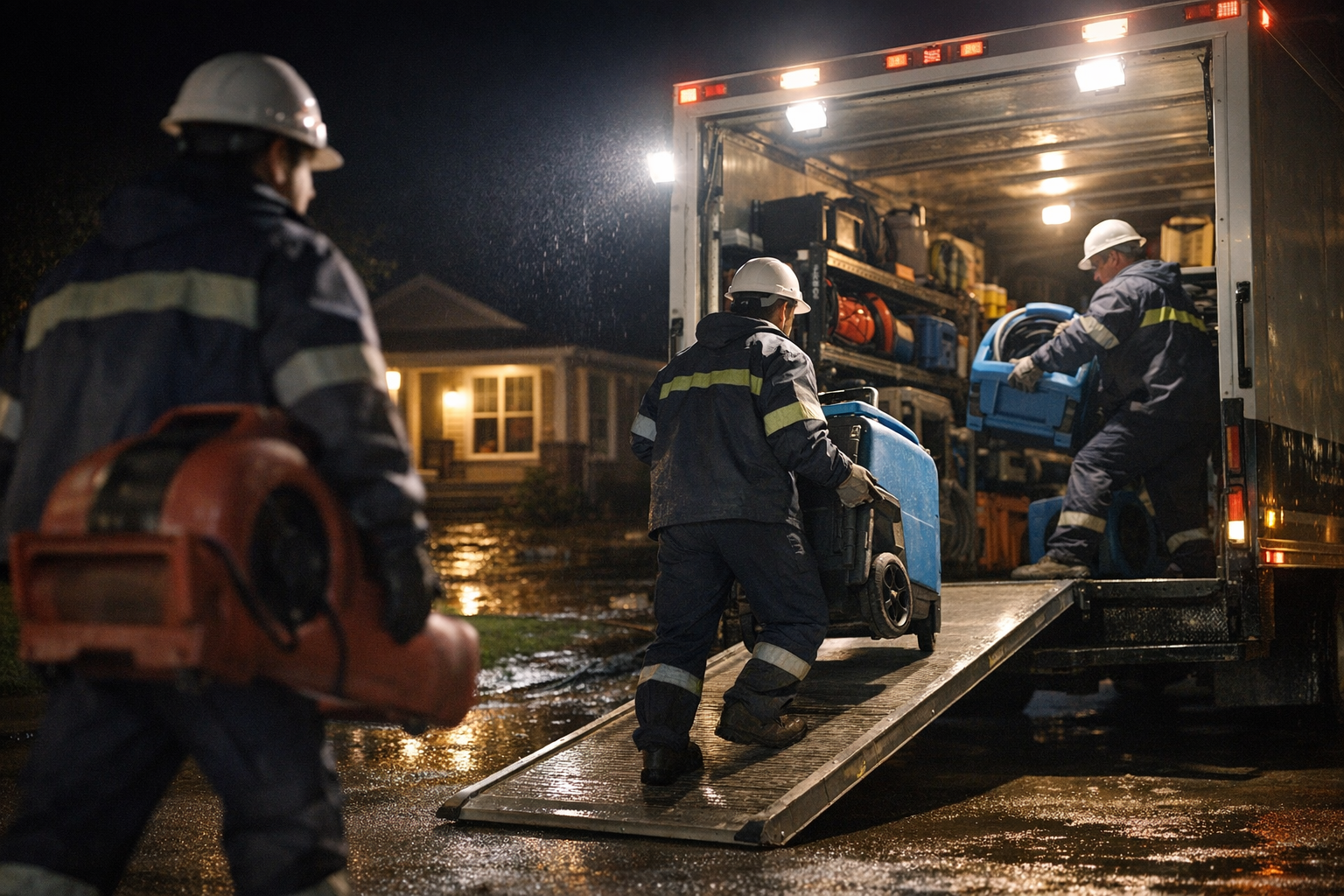
Why 24/7 Availability Matters More Than You Think
Water doesn’t wait for business hours to flood your basement. Fire doesn’t check the calendar before igniting. When disaster strikes at 2 AM on Sunday, you need emergency restoration services that answer the phone and arrive within hours, not days.
The difference between immediate response and waiting until Monday morning can mean thousands of dollars in additional damage. Water spreads 20% farther every hour it sits untreated. Mold spores begin growing within 24-48 hours of water exposure.
This guide shows you exactly what to look for when choosing a restoration company with true round-the-clock emergency response capabilities.
What True Emergency Restoration Services Include
Emergency restoration services go beyond just answering phones after hours. They maintain fully staffed crews, equipment inventories, and response vehicles ready for immediate deployment.
A legitimate 24/7 restoration company has crew members on call every night and weekend. They don’t outsource emergency calls to answering services that schedule appointments for the next business day.
Real emergency response includes immediate damage assessment, water extraction, structural drying, board-up services, and temporary repairs to prevent further damage.
Equipment Readiness Standards
True emergency providers maintain backup equipment inventories specifically for after-hours calls. Industrial dehumidifiers, water extractors, and air movers sit ready in service vehicles or nearby storage facilities.
Ask potential contractors about their equipment availability at 3 AM on a holiday. Companies with genuine 24/7 availability can provide specific details about their emergency equipment staging.
Response Time Commitments
Professional emergency restoration companies commit to specific response windows, typically 60-90 minutes for water emergencies and 2-4 hours for fire damage assessment.
These timeframes matter because water damage doubles in severity every 12 hours without intervention. Fire damage continues through ongoing chemical reactions and residual heat exposure.
Red Flags That Signal Fake 24/7 Services
Many restoration companies advertise 24/7 services but only provide basic phone coverage. Their actual crews work standard business hours with occasional overtime for true emergencies.
Warning Signs to Avoid
- Generic answering services: If you reach a call center that takes messages rather than dispatching crews directly
- Callback delays: Companies that promise to “call you back within 4 hours” for emergency situations
- Weekend surcharges: Legitimate emergency services include off-hours response in their standard pricing
- Vague response commitments: Phrases like “as soon as possible” instead of specific time windows
- No local presence: Companies without local offices often lack true emergency response capabilities
The Subcontractor Problem
Some companies farm out emergency calls to independent contractors who may not share the same training, equipment, or response standards.
Ask directly whether emergency crews are company employees or subcontractors. Employee-based companies typically provide more consistent emergency response quality.
Questions That Reveal True Emergency Capabilities
The right questions expose whether a restoration company can deliver genuine emergency response or just emergency phone answering.
Staff and Crew Questions
“How many crew members do you have on call tonight?” Companies with real emergency services can give specific numbers.
“Who specifically responds to a 2 AM water emergency call?” Look for named crew leaders or specific team designations, not vague promises about “available staff.”
Equipment and Response Questions
“What equipment do your emergency crews carry in their vehicles?” True emergency responders maintain pre-loaded service trucks with extraction equipment, moisture meters, and temporary repair materials.
“How quickly can you have industrial dehumidifiers operating in my building?” Professional emergency teams should commit to equipment deployment within hours, not days.
Process and Timeline Questions
“Walk me through exactly what happens when I call your emergency line at midnight.” Legitimate services can describe their entire emergency response protocol step-by-step.
“Do you provide written damage assessments during emergency calls?” Professional emergency responders document initial damage for insurance purposes during their first visit.
Insurance Considerations for Emergency Services
Insurance companies often require immediate action to prevent additional damage. Many policies include specific language about “reasonable and necessary” steps to minimize loss.
Emergency restoration work performed within 72 hours typically receives full insurance coverage without extensive documentation requirements.
Companies experienced with emergency insurance claims can begin work immediately while handling insurance communication and documentation requirements.
Documentation Standards
Professional emergency responders photograph damage before beginning work and provide detailed written reports within 24 hours.
They maintain chain-of-custody documentation for any personal property removed during emergency stabilization work.
Geographic Coverage and Response Areas
True emergency services require local presence and reasonable travel distances. Companies operating from locations 45+ minutes away cannot provide effective emergency response.
Ask about specific coverage areas and response time commitments for your exact location. Urban areas should expect faster response than rural locations, but both should receive definitive time commitments.
Some companies maintain multiple service locations or satellite equipment storage to improve emergency response coverage across wider geographic areas.
Seasonal Availability Factors
Winter weather, hurricane seasons, and natural disaster periods strain emergency restoration capacity. Companies with adequate staff and equipment maintain response capabilities even during high-demand periods.
Ask about emergency response during major weather events. Established companies can describe their disaster response protocols and backup resource arrangements.
Technology and Communication Standards
Modern emergency restoration companies use mobile technology for rapid damage assessment and real-time communication with property owners and insurance representatives.
Look for companies that provide photo documentation, moisture readings, and written reports through mobile apps or online portals within hours of emergency response.
GPS tracking and crew dispatch systems help emergency providers coordinate multiple simultaneous responses and provide accurate arrival time estimates.
Customer Communication Protocols
Professional emergency services establish clear communication schedules and provide regular updates throughout the restoration process.
They assign specific project coordinators who remain available for questions and provide direct contact information beyond general company phone numbers.
Cost Structure for Emergency Response
Legitimate emergency restoration services include after-hours response in their standard pricing structure. Companies that add significant surcharges for weekend or nighttime calls often provide substandard emergency coverage.
Emergency assessment and immediate damage mitigation work should receive firm pricing quotes within 24 hours of initial response.
Transparent pricing includes separate line items for emergency response, equipment usage, materials, and ongoing restoration work.
Payment and Approval Processes
Experienced emergency providers can begin work with insurance claim numbers and handle direct billing arrangements with major insurance carriers.
They provide clear authorization forms that specify emergency work scope and cost estimates before beginning restoration activities.
Finding Verified Emergency Restoration Providers
Professional restoration directories help property owners locate companies with verified emergency response capabilities in their specific geographic areas.
Look for directory listings that include specific emergency response information, crew availability details, and customer reviews of actual emergency service experiences.
Filter directory searches by emergency response capabilities, local presence, and insurance carrier relationships to identify qualified providers before disaster strikes.
Established restoration companies maintain professional certifications from organizations like the Institute of Inspection, Cleaning and Restoration Certification (IICRC) and participate in continuing education programs.
Check directory listings for certification details, emergency response testimonials, and specific service area coverage information. Browse verified emergency restoration providers on https://restorationlocator.com to find qualified companies in your area before you need them.