
A closed guest bedroom or finished basement can grow mold in six weeks of winter neglect. Cold surfaces, trapped moisture, and stagnant air create ideal conditions for spores. This article shows you how to prevent winter mold in rooms you rarely open, using specific methods that address the real causes.
You will find out why unused rooms fail first, which humidity numbers matter, and how to schedule inspections that catch problems early. Each section gives concrete steps, not vague warnings.
Why Unused Rooms Grow Mold Faster in Winter
Mold needs three things: moisture, a food source, and still air. Unused rooms supply all three during cold months.
When you shut a door and close a vent, you cut off the airflow that keeps surfaces dry. Warm indoor air carries moisture, and it condenses on cold exterior walls and windows.
A spare room on the north side of a house often sits 8-12 degrees colder than the main living space. That temperature gap turns drywall and baseboards into condensation traps.
The Hidden Food Sources
Mold feeds on cellulose and organic dust. Seldom-used rooms hold plenty of both.
- Cardboard boxes stacked in a closed guest room or basement
- Stored fabric like winter bedding, curtains, and upholstered furniture
- Paper and books left in sealed storage rooms
- Dust buildup on undisturbed surfaces that absorbs humidity
Clearing clutter from a closed room removes both the food and the moisture-holding material.
How to Prevent Winter Mold in Rooms You Rarely Use
The fix starts with controlling humidity below 50 percent. At that level, mold spores cannot germinate on most surfaces.
Follow these steps for each unused room before deep winter sets in:
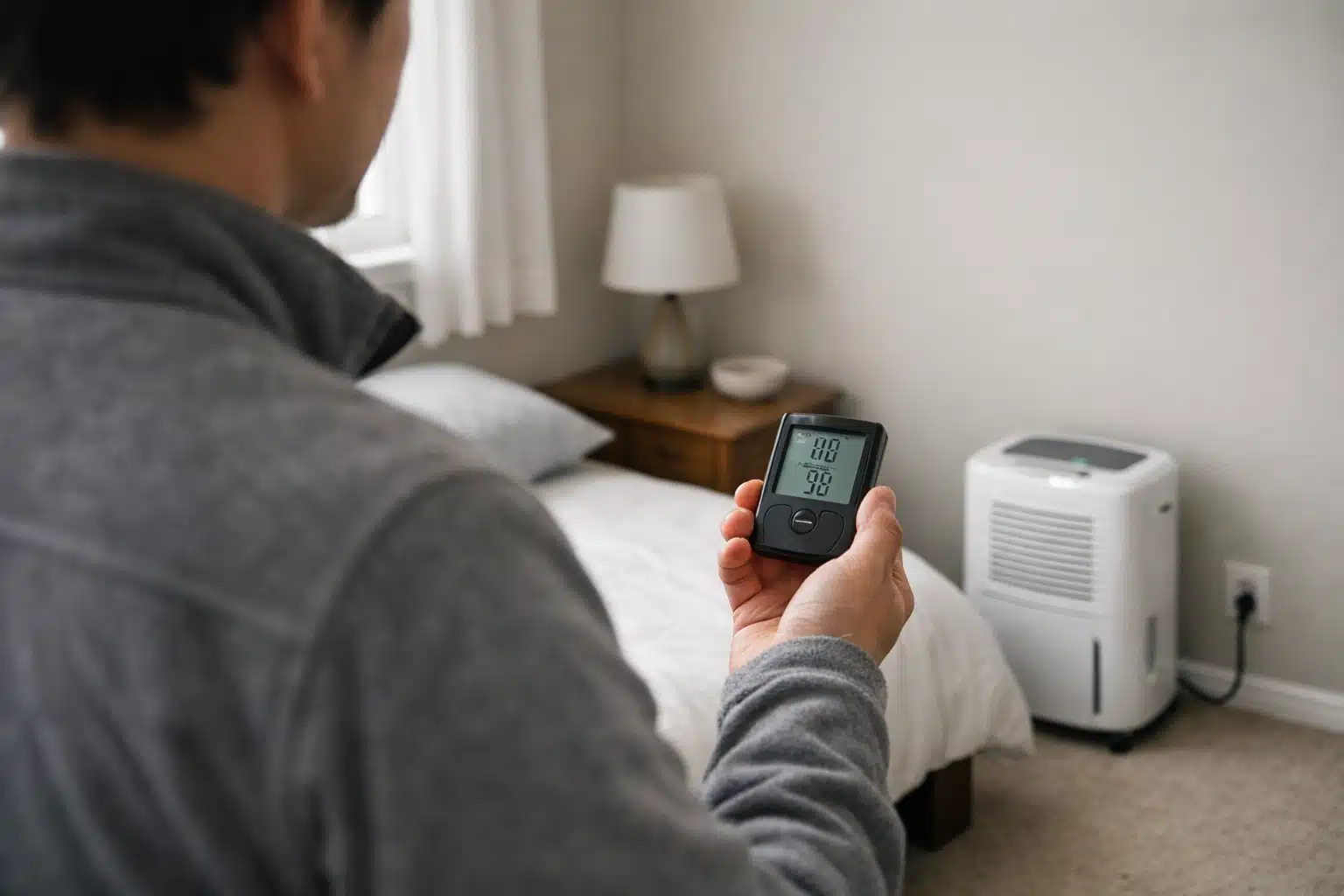
- Measure humidity with a hygrometer. Place a $15 digital unit in the room and check it weekly. Aim for 30-50 percent relative humidity.
- Run a small dehumidifier if readings climb. A compact unit set to 45 percent handles a 300-square-foot room without draining your power bill.
- Keep the heat on low. Set the room to no colder than 60°F. Warmer walls condense less moisture.
- Crack the door daily or weekly. Even five minutes of airflow equalizes temperature and humidity with the rest of the house.
- Pull furniture off exterior walls. Leave a two-inch gap so air circulates behind headboards and dressers.
These five moves cover the main causes of mold in cold, closed spaces.
Target the Coldest Surfaces First
Condensation forms where warm air meets the coldest spot. In most unused rooms, that means windows and exterior-facing corners.
Wipe down window frames and sills when you spot beading water. Check behind curtains, since trapped air there stays damp longer.
If a corner feels cold to the touch, add a small fan pointed at it for an hour a few times a week. Moving air prevents the still pocket where mold starts.
Unused Room Maintenance Checklist for Winter
Unused room maintenance means a short, repeatable routine rather than one big cleanup. A monthly walkthrough catches problems while they are small.
Use this checklist on the first weekend of each winter month:
- Open the door and let air move for 10 minutes
- Read the hygrometer and note the number
- Press a hand on exterior walls to feel for damp spots
- Look at window sills, closet corners, and baseboards for discoloration
- Smell the air; a musty odor signals hidden moisture
- Check stored cardboard and fabric for soft or spotted areas
- Empty the dehumidifier tank or confirm the drain line runs clear
A musty smell with no visible growth means mold is behind drywall or under flooring. That finding warrants a closer look from a restoration specialist.
Basements and Attics Need Extra Attention
Basements hold the most risk because they combine cold concrete, poor airflow, and groundwater pressure. Concrete walls stay damp even when the room feels dry.
Run a dehumidifier continuously in an unused basement from December to March. Seal visible foundation cracks with hydraulic cement before they let in melt water.
Unused attics suffer when warm house air leaks up and hits cold roof sheathing. Check that insulation covers the floor evenly and that soffit vents stay unblocked.
Products That Help Keep Closed Rooms Dry
A few low-cost items handle most prevention work. None require installation beyond plugging in or placing on a shelf.
- Digital hygrometer: tracks humidity so you react before mold starts
- Compact dehumidifier: pulls 20-30 pints daily in rooms up to 1,500 square feet
- Moisture absorber tubs: calcium chloride buckets work in closets and small storage rooms without power
- Low-wattage space heater: holds a minimum temperature in rooms with weak heating
- Small circulation fan: breaks up still air in corners and behind furniture
Moisture absorber tubs cost a few dollars and work for weeks, which makes them good for a seldom-opened coat closet or pantry.
When Prevention Fails: Signs You Need a Specialist
Call a restoration specialist when mold covers more than 10 square feet. At that size, the EPA advises bringing in trained help rather than cleaning it yourself.
Other signs that point past DIY cleanup:
- Mold returns within weeks of cleaning the same spot
- A musty smell persists after you dry and ventilate the room
- Growth appears on drywall, insulation, or wood framing
- Family members report new coughing, congestion, or eye irritation
- You find water staining that spreads across a ceiling or wall
Surface mold on tile or glass wipes away. Mold growing into porous materials usually means removal of the affected section.
How to Choose a Restoration Provider
A directory lets you compare local providers side by side instead of guessing. On Restoration Locator, you can filter listings by location and category to find mold remediation near you.
When you review candidates, look for these markers:
- Read reviews that mention mold jobs, not just water cleanup
- Sort by location to shorten response time in an emergency
- Check for moisture testing that confirms the source before repairs
- Confirm containment practices so spores do not spread during removal
A provider who tests for the moisture source will stop the problem from returning next winter.
Key Takeaways
Keeping humidity under 50 percent, holding rooms above 60°F, and moving air weekly stops most winter mold in closed spaces. A monthly checklist and a cheap hygrometer catch trouble before it spreads behind walls.
When growth passes 10 square feet or keeps returning, a specialist should take over. Browse Disaster Cleanup & Restoration listings on Restoration Locator and start your search today.