
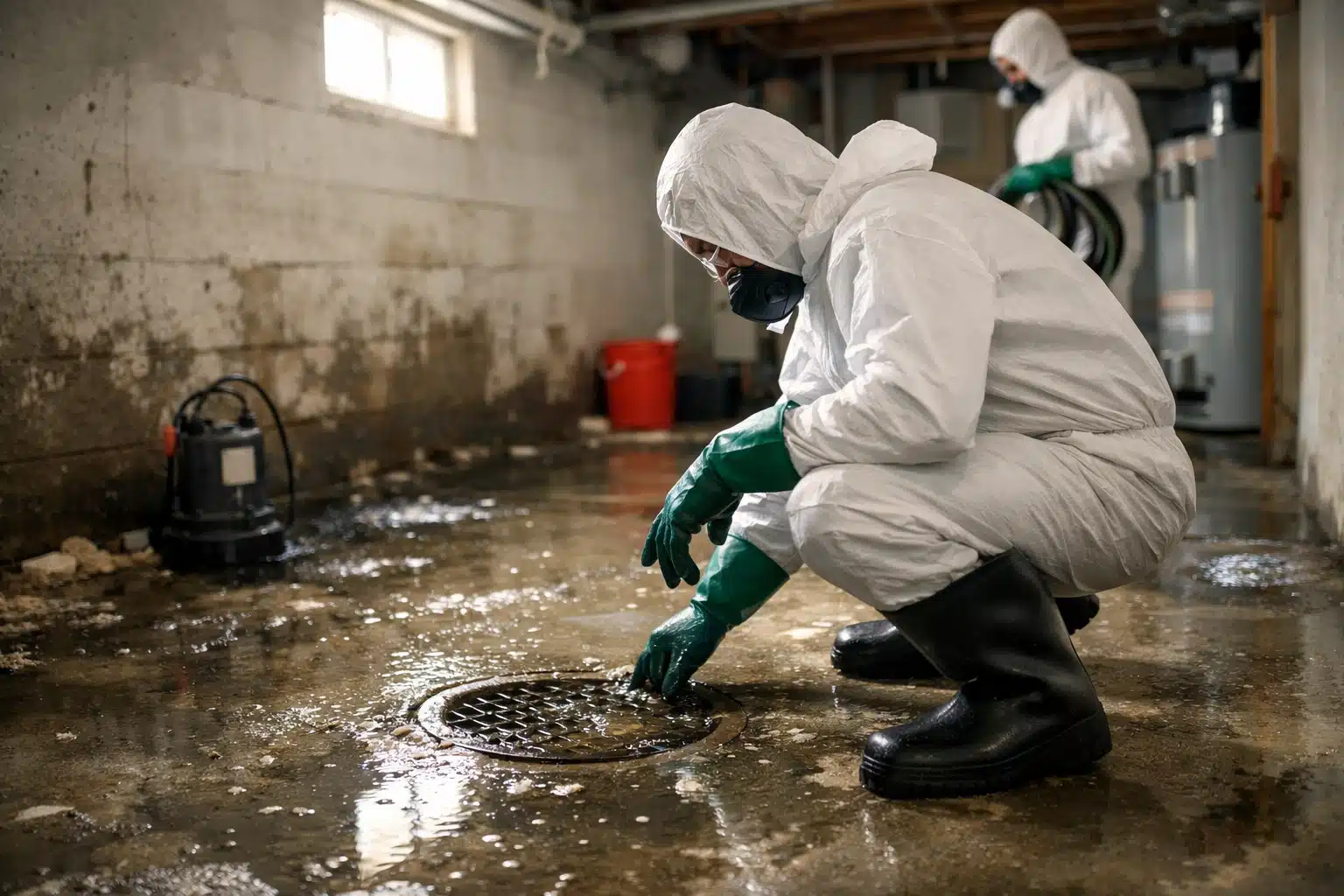
August and September bring a hidden plumbing risk that catches many homeowners off guard: the summer sewage backup. Heavy late-season storms, saturated ground, and tree roots at their peak growth combine to push raw sewage back into basements and floor drains.
This post breaks down the seasonal reasons behind these backups. You will learn what triggers them in late summer, how to respond in the first hour, and how to find qualified cleanup help fast.
Why Summer Sewage Backups Spike in Late August and September
A summer sewage backup happens when wastewater reverses direction and flows into your home instead of the municipal sewer. Late summer creates conditions that make this more likely than any other season.
The reasons are seasonal, not random. Four specific conditions stack up at the same time each year.
1. Intense Late-Summer Downpours Overwhelm Combined Sewers
Many older cities use combined sewer systems. Storm runoff and household wastewater share the same pipe.
A fast two-inch rain in late August can flood that shared line within minutes. When the main surcharges, sewage backs up into the lowest drains in your house.
2. Tree Roots Reach Peak Intrusion in Summer
Tree roots grow fastest during warm, wet months. By late summer, roots that entered pipe joints in spring have expanded into dense clogs.
A root mass that was a minor snag in May becomes a full blockage by September. This is one reason backups cluster at the end of summer.
3. Saturated Ground Raises the Water Table
Weeks of summer rain leave soil waterlogged. A high water table presses groundwater into cracked or offset sewer lines.
That extra volume leaves no room for your home’s wastewater. The result is slow drains that turn into backups after one more storm.
4. Grease Buildup From Summer Cooking
Grilling, frying, and canning season send more fats and oils down kitchen drains. In warm pipes, grease travels farther before it cools and hardens.
By late summer, grease layers narrow the pipe interior. Add a storm surge, and the line clogs completely.
Warning Signs a Backup Is Coming
Early signals give you a window to act before sewage reaches your floor. Watch for these specific symptoms after heavy rain.
- Gurgling toilets when you run the washing machine or sink.
- Multiple slow drains across different rooms at once.
- Water pooling around a basement floor drain after a storm.
- Sewage odor near the lowest drain in the house.
- Bubbling in the toilet bowl when no water is running.
Two or more of these signs together point to a main line problem, not a single clogged fixture.
What to Do in the First Hour of a Summer Sewage Backup
The first hour shapes how much damage you face and how safe your home stays. Follow these steps in order.
- Stop using water. Turn off taps, toilets, the dishwasher, and the washing machine. Every gallon adds to the backup.
- Keep people and pets away. Raw sewage carries E. coli, hepatitis A, and other pathogens.
- Cut power to the affected area if you can reach the breaker safely without standing in water.
- Open windows to vent gases and reduce odor buildup.
- Photograph everything before touching it. Your insurer will ask for documentation.
- Call a cleanup crew that handles sewage, not just general water damage.
Do not attempt to mop or shop-vac raw sewage yourself. Category 3 water, often called black water, requires protective equipment and biohazard disposal.
Why Sewage Cleanup Needs Specialized Help
Sewage is classified as Category 3 water, the most contaminated class. It demands removal methods beyond a standard wet-dry vacuum.
Porous items touched by black water usually cannot be saved. Drywall, carpet padding, and particleboard are discarded, not dried.
What a Qualified Crew Does
- Extracts standing sewage with truck-mounted equipment.
- Removes and bags contaminated porous materials.
- Applies EPA-registered antimicrobial treatments.
- Uses air movers and dehumidifiers to dry the structure.
- Tests moisture levels in walls and subfloor before closing up.
- Sort by location to find crews that can reach you within the hour.
- Filter listings by sewage and water damage capability, not just general restoration.
- Check reviews on past emergency cleanup jobs handled after storms.
- Look for 24/7 availability, since late-summer backups rarely happen during business hours.
- Confirm biohazard certification for Category 3 water handling.
- Schedule a camera inspection of your main line in late spring.
- Have roots cut before their summer growth peak.
- Collect cooking grease in a jar instead of pouring it down drains.
- Clear gutters so roof runoff drains away from your foundation.
A rushed drying job leaves hidden moisture that breeds mold within 48 hours. Verify that any crew documents moisture readings before and after.
How to Find the Right Cleanup Provider Fast
Speed matters, but matching the job to the right skill matters more. Restoration Locator lets you filter for the exact help a sewage backup demands.
Use These Filters to Narrow Your Search
Reviews that mention storm-season response times tell you more than a star rating alone. Read for details on how fast the crew arrived and whether drying was verified.
Preventing Next Year’s Late Summer Backup
Most summer backups are preventable with targeted steps before storm season peaks. Act in early summer, before the ground saturates.
Backwater Valve Installation
A backwater valve lets wastewater exit but blocks it from flowing back in. This is the single most effective defense against municipal surcharge.
Many cities offer rebates for installation. Check your local public works department before storm season.
Annual Root and Grease Maintenance
Sump Pump and Drain Checks
Test your sump pump before July. A failed pump during an August storm turns a minor event into a flooded basement.
Keep a battery backup on hand. Power loss during a storm is a common reason pumps fail at the worst moment.
What Insurance Covers for Sewage Backups
Standard homeowner policies usually exclude sewer backup damage. Coverage requires a separate sewer backup endorsement, often costing a modest annual premium.
Buy this rider before storm season, not after a loss. Document your home’s condition with photos so future claims move faster.
Key Takeaways
Late summer backups come from a predictable stack of causes: storm surge, peak root growth, high water tables, and grease buildup. Fast action in the first hour limits contamination and cost, and sewage always calls for certified Category 3 help.
Prevention beats cleanup every time, so install a backwater valve and inspect your line before storm season. When a backup hits, match the job to the right crew.
Start your search for sewage and emergency cleanup help at https://restorationlocator.com and filter by location to find crews ready to respond.