
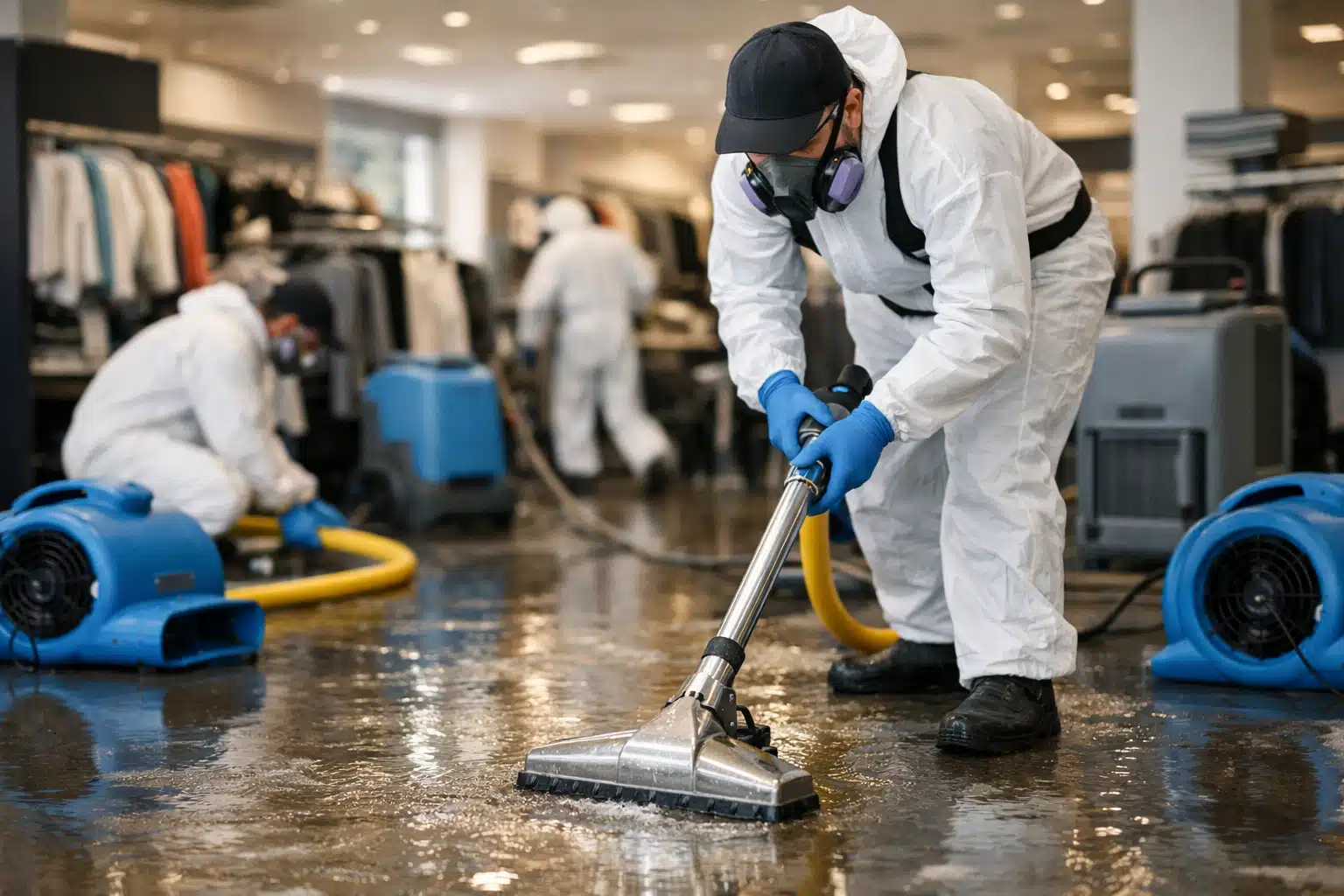
A burst pipe on a Friday night can flood 8,000 square feet of retail space before Monday’s opening. For commercial properties, every hour after a disaster carries a dollar figure. Commercial disaster recovery is the coordinated work of stabilizing, cleaning, and restoring a business property after fire, water, storm, or contamination damage.
This article breaks down why speed changes the entire recovery equation. You will learn the exact time windows that matter, how to vet a responder before you need one, and which building types face the tightest clocks.
Why Speed Defines Commercial Disaster Recovery
The first 24 to 48 hours determine whether damage stays contained or multiplies. Water spreads. Mold colonizes. Smoke residue etches metal and glass permanently.
A restaurant that loses walk-in refrigeration faces spoiled inventory within hours. A medical office with water intrusion risks losing patient records and regulated equipment. The financial gap between a same-day response and a two-day delay can run into six figures.
The 48-Hour Mold Window
Mold begins growing on wet drywall and carpet within 24 to 48 hours. Once it takes hold, remediation costs climb and the affected zone expands.
A responder arriving inside that window can extract water and set air movers before spores activate. Arriving after it means tearing out material that could have been saved.
Category 3 Water Cannot Wait
Category 3 water is contaminated water from sewage backups, river flooding, or standing water that grew bacteria. It requires immediate handling and cannot be dried in place.
For a grocery store or food-service tenant, this water triggers health code violations if left untreated. Fast extraction and sanitizing keep the business licensed to reopen.
The Real Cost of Downtime for Businesses
Downtime is the period a commercial property cannot generate revenue after a disaster. It is the hidden cost most owners underestimate.
Consider a warehouse distribution center. A single day offline means missed shipments, contract penalties, and idle payroll. The building repair might cost $50,000, but the lost throughput can dwarf that number.
- Retail: Lost daily sales plus customer traffic that shifts to competitors and may not return.
- Hospitality: Cancelled bookings, refund obligations, and damaged online reviews.
- Manufacturing: Halted production lines and contract penalty clauses.
- Office tenants: Displaced staff, remote-work scramble, and lease disputes over habitability.
Fast recovery protects business continuity by shrinking the window between the disaster and the day doors reopen.
Time-Sensitive Steps in the First 24 Hours
A structured first day limits damage and sets up faster restoration. Follow this order after the property is safe to enter.
- Stop the source. Shut off water, gas, or power feeding the damage. Document the shutoff time.
- Photograph everything. Capture wide shots and close-ups before anyone moves items. Insurers require this record.
- Call your insurer and a restoration responder in parallel. Do not wait for adjuster approval to begin emergency mitigation.
- Begin water extraction. Standing water must leave the building within hours, not days.
- Set drying equipment. Air movers and dehumidifiers should run continuously until moisture readings normalize.
- Secure the perimeter. Board broken windows and tarp roof breaches to block further intrusion.
Most policies require owners to take reasonable steps to prevent further loss. Acting fast satisfies that duty and speeds your claim.
How to Choose a Commercial Restoration Responder Before Disaster Strikes
The best time to pick a responder is before you need one. Buildings that pre-select a partner recover days faster than those calling around during a crisis.
Verify 24/7 Emergency Dispatch
Disasters do not respect business hours. Confirm the responder answers calls at 2 a.m. and can mobilize a crew the same night.
Ask about their guaranteed on-site window. A commitment of two to four hours for local jobs signals real emergency capacity.
Confirm Commercial-Scale Equipment
A 40,000-square-foot flood needs truck-mounted extractors and dozens of air movers. A residential-focused company cannot scale to that overnight.
Match the responder’s fleet to your building size before you sign anything.
Check Certifications and Insurance Coordination
Look for IICRC certification in water damage and applied structural drying. Ask whether the responder bills insurers directly and documents to claim standards.
Use RestorationLocator to Compare Responders
Our directory lets you shortlist commercial-ready partners fast. Use these steps to narrow the field:
- Sort by location to find responders that can reach your property quickly.
- Filter listings by commercial capability and emergency availability.
- Check reviews from other business owners about response times and claim handling.
- Compare two or three listings side by side before committing.
Building Types With the Tightest Recovery Clocks
Some commercial properties face harder deadlines than others. Knowing your category helps you plan the right response speed.
Healthcare and Labs
Clinics, dental offices, and labs handle regulated materials and sensitive equipment. Water or contamination triggers compliance rules that demand documented, rapid cleanup.
Food Service and Grocery
Health inspectors can shutter a food business over standing water or sewage. Quick sanitizing and moisture removal keep permits intact.
Data-Dependent Offices
Server rooms and file storage face total loss from short water exposure. Minutes matter for pulling drives and drying hardware.
Multi-Tenant Buildings
One flooded unit affects neighbors below and beside it. A landlord who acts fast limits liability across multiple leases.
Building a Recovery Plan That Supports Business Continuity
A written recovery plan turns panic into procedure. Keep it accessible to managers, not buried in a shared drive.
Your plan should list the pre-selected responder, insurance contacts, and shutoff valve locations. It should name who has authority to approve emergency mitigation without a committee meeting.
- Store shutoff valve maps near each panel.
- Keep the responder’s listing bookmarked for fast access.
- Assign a backup decision-maker for after-hours events.
- Review and update contacts every six months.
Practiced plans cut the delay between the first alarm and the first air mover. That gap is where recovery time is won or lost.
Key Takeaways
Commercial disaster recovery rewards speed above almost everything else. The first 24 to 48 hours decide whether you dry a building or gut it. Pre-selecting a qualified responder protects both your property and your revenue stream.
Compare commercial restoration partners now on https://restorationlocator.com and build your recovery plan before the next storm hits. Start your search today.