
A summer grid failure during a 105°F afternoon turns a home into a health hazard within hours. An extreme heat power outage removes air conditioning, refrigeration, and medical equipment support all at once. Heat-related illness sends thousands of Americans to emergency rooms each summer, and outages make the risk sharper.
This post covers how to keep your body and home safe when the power fails during a heat wave. You will learn cooling tactics that work without electricity, food safety timelines, and how to line up cleanup help before you need it.
Why an Extreme Heat Power Outage Is More Dangerous Than a Cold One
An extreme heat power outage kills faster than most people assume. During the 2021 Pacific Northwest heat dome, indoor temperatures in some homes climbed past 100°F because air conditioning failed. The victims were often older adults living alone with the windows shut.
Cold outages give you blankets and layers as a backup. Heat gives you nothing passive to fall back on once your home warms up.
Two factors make heat outages worse:
- Compounding heat load — a closed house keeps absorbing heat for hours after the AC dies.
- Medical dependency — oxygen concentrators, insulin refrigeration, and CPAP machines stop working.
Build a Summer Blackout Preparation Kit Before the Grid Fails
Summer blackout preparation starts with supplies that address heat, not just darkness. A generic flashlight-and-batteries kit misses the point during a heat wave.
Water Beyond the Standard One Gallon
Store at least one gallon of water per person per day for three days. In extreme heat, push that to 1.5 gallons per person daily. Your body loses more fluid sweating in a hot house.
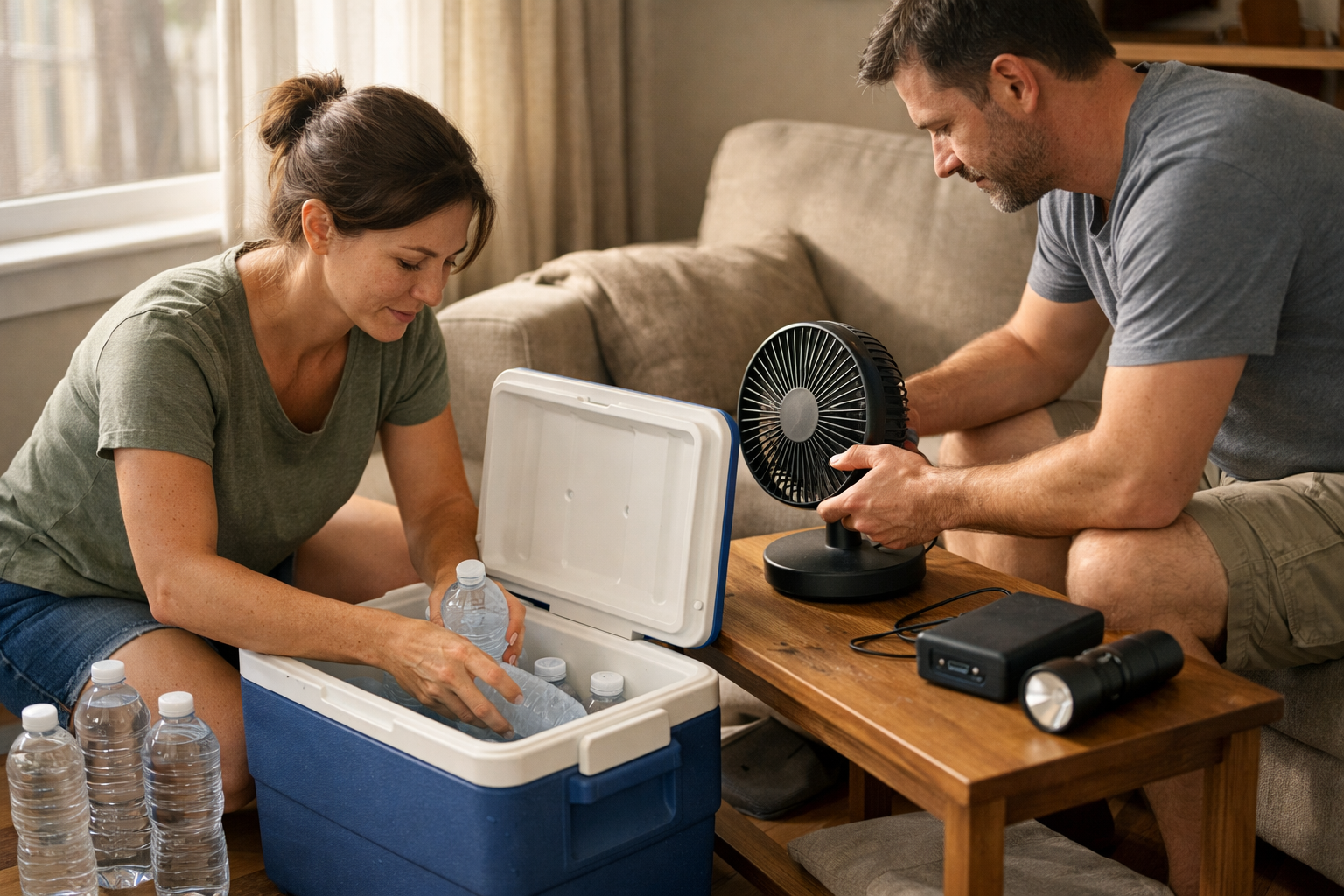
Freeze several water bottles now. They double as ice packs and drinking water as they thaw.
Battery-Powered Cooling
Buy a battery-operated fan and a rechargeable power bank sized for it. A single USB fan pointed at your neck lowers perceived temperature by several degrees.
Keep a portable power station charged if your budget allows. A 500Wh unit runs a fan overnight or powers a small medical device.
Cooling Supplies Checklist
- Instant cold packs (chemical, no freezer needed)
- Spray bottle for misting skin
- Cotton towels to soak and drape on your neck
- Electrolyte packets to replace salt lost in sweat
- A digital thermometer to track indoor temperature
How to Keep Your House Cool Without Power
You can slow indoor heat gain with the same physics builders use for passive cooling. Timing matters more than any single trick.
Seal the House During the Day
Close windows, blinds, and curtains before the outdoor temperature passes your indoor temperature. West-facing rooms heat fastest in the afternoon. Blackout curtains block a large share of radiant heat gain.
Open Up at Night
Open windows on opposite sides of the house once outdoor air drops below indoor air. Cross-ventilation flushes trapped heat before the next day. Close everything again at dawn.
Cool Your Body, Not the Room
Cooling your core beats trying to cool an entire house without power. Try these methods in order:
- Run cool water over your wrists and forearms every 30 minutes.
- Place a damp towel across the back of your neck.
- Take a cool shower if water pressure holds during the outage.
- Move to the lowest floor, where heat is lowest.
Food Safety Timelines During a Heat Wave Outage
A closed refrigerator holds safe temperatures for about four hours. A full freezer holds for 48 hours, and a half-full freezer for 24. High ambient heat shortens every one of these windows.
Follow this order to reduce loss and food-poisoning risk:
- Keep the fridge and freezer doors shut as much as you can.
- Move milk, meat, and leftovers to the freezer if the outage looks long.
- Pack a cooler with your frozen water bottles for items you access often.
- Toss any perishable food held above 40°F for more than two hours.
When in doubt, throw it out. A summer stomach illness during an ongoing outage compounds dehydration fast.
Protect Vulnerable People First
Heat kills the very young, older adults, and people with chronic illness before anyone else. Check on neighbors who live alone within the first two hours of an outage.
Watch for warning signs of heat illness:
- Heat exhaustion — heavy sweating, weakness, nausea, cool clammy skin.
- Heat stroke — hot dry skin, confusion, body temperature above 103°F, no sweating.
Heat stroke is a medical emergency. Call 911, move the person to shade, and apply cool water until help arrives.
Have a Cooling Escape Plan
Decide where you go if your home passes 90°F indoors. Many cities open designated cooling centers during heat emergencies. Libraries, malls, and community centers hold cooler temperatures for hours.
Map two locations within driving distance now. Keep your car fuel tank above half during heat-wave forecasts in case an outage traps you at home.
What Happens After the Power Returns
Heat outages create secondary damage most homeowners overlook. Prolonged high humidity and warmth breed mold in as little as 24 to 48 hours. Spoiled food left in a warm freezer can leave lasting odors and bacterial residue.
Damage to Watch For
- Mold growth on walls, carpet, and HVAC vents from trapped humidity.
- Water damage if a sump pump failed during a summer storm-driven outage.
- Odor and contamination from thawed food in freezers and fridges.
Storm systems that knock out summer power lines often bring flooding too. A single event can leave you with heat damage, water intrusion, and mold at the same time.
Find Restoration Help Before the Next Outage
Lining up a cleanup provider before disaster hits saves days of scrambling. Restoration Locator lets you compare vetted providers in your area for mold, water, and storm damage.
Use the directory to prepare in advance:
- Sort by location to find crews near your home.
- Filter listings by mold remediation and water damage capability.
- Check reviews on response time during past summer storm events.
Save two or three provider contacts now. When an outage causes mold or water damage, you skip the frantic search and get help faster.
Conclusion
Surviving an extreme heat power outage comes down to cooling your body, guarding your food, and protecting the people most at risk. Prepare a heat-specific kit, seal your home during the day, and know your nearest cooling center. Have restoration contacts ready for the mold and water damage that summer outages leave behind.
Browse Disaster Cleanup & Restoration listings at https://restorationlocator.com and line up your provider before the next heat wave.